By the Gandermountains.us team ·
As an Amazon Associate, we earn from qualifying purchases. See our Affiliate Disclosure for how links on this site work.
Gandermountains.us is an independent gear guide. We are not affiliated with Gander Mountain, Gander Outdoors, or Camping World, and Gander Mountain is a trademark of its owner. Nothing on this page is sold by or endorsed by the brand. When we name a product below, it is a current alternative from a real manufacturer — not Gander Mountain gear, and we will not pretend otherwise.
Disclosure: As an Amazon Associate, Gandermountains.us earns from qualifying purchases made through links in this guide, at no extra cost to you. That support keeps our independent gear guides free to read.
A good camping stove does not have to cost a fortune. Every stove in this guide is a real, currently sold model from a manufacturer still making outdoor gear, and each one is plausibly priced under $100. Gander Mountain's own stores closed after the company's 2017 bankruptcy, so this independent guide covers current alternatives from brands such as MSR, SOTO, Coleman, Primus, Gas One, Solo Stove and Fire-Maple — not Gander Mountain-branded gear. Use the table below to find your use case, then read the section for the details that matter: fuel type, boil time, weight, wind performance and stability. Our Gander Mountain camping gear guide covers the rest of the camp kitchen, and our camping gear hub has more buying advice.
At a glance: budget camping stoves under $100
| Stove | Best for | Type |
|---|---|---|
| MSR PocketRocket 2 | Best overall | Canister, 2.6 oz |
| SOTO WindMaster | Best in wind | Canister, regulated, 3.1 oz |
| MSR PocketRocket Deluxe | Best cold-weather | Canister, regulated, 2.9 oz |
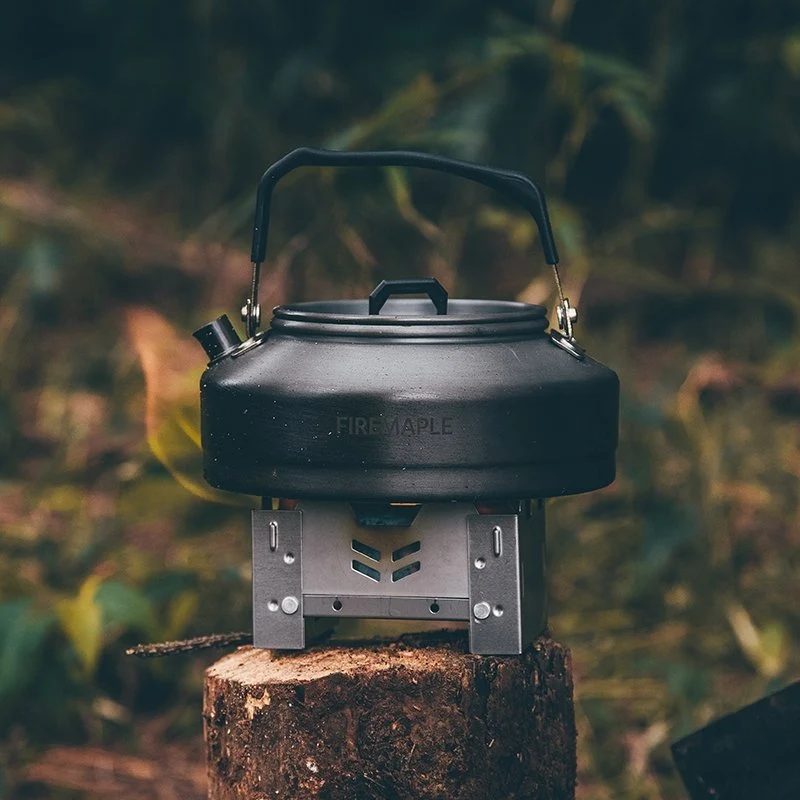
| Fire-Maple Fixed Star X2 | Best all-in-one | Integrated system, 22 oz |
| Coleman Classic 2-Burner | Best car camping | Propane, 2-burner |
| Gas One GS-3400P | Best tabletop | Dual-fuel butane/propane |
Best Overall Canister Stove for Backpacking and Camping
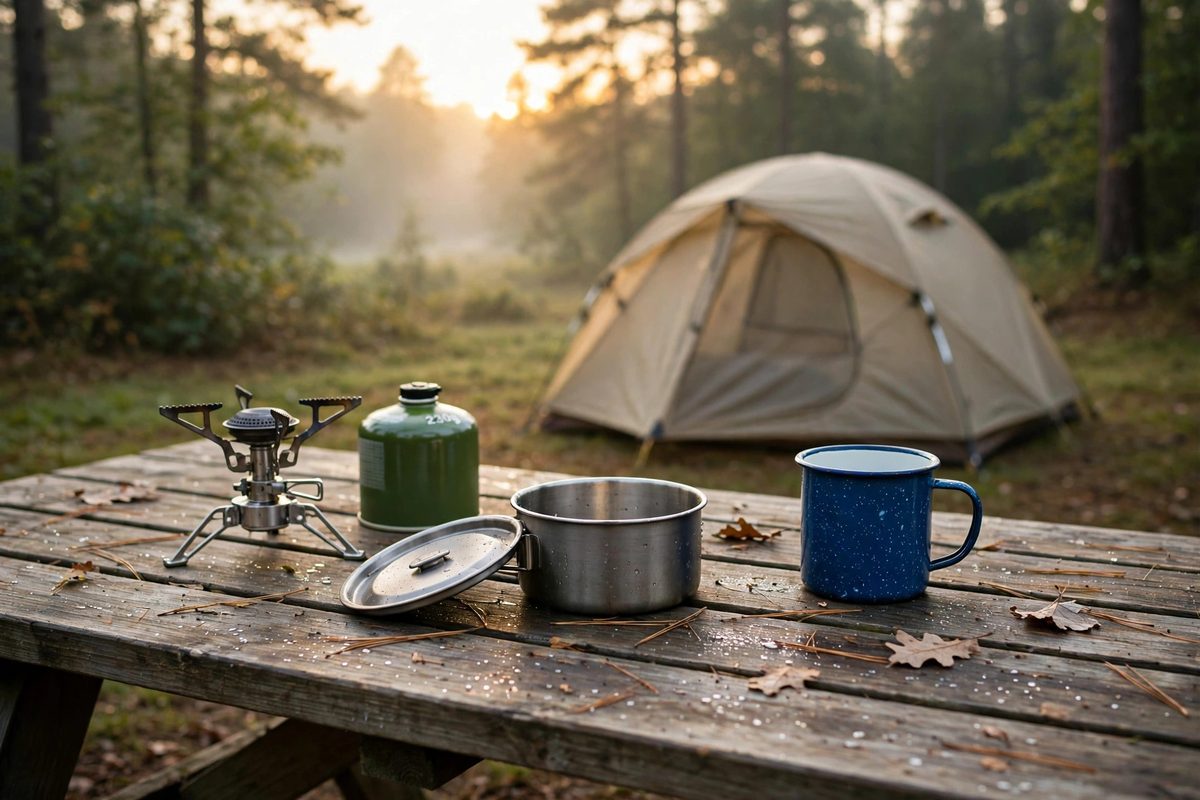
If you buy one stove, make it a small canister burner that screws onto a threaded isobutane-propane canister. That setup weighs a few ounces, packs inside a pot, lights in seconds, and boils a litre of water in about 3 to 4 minutes. Both picks here use that standard fitting, so fuel canisters are easy to find at outdoor shops, and both have folding pot supports that hold pots from a small mug to a 1-litre pot.
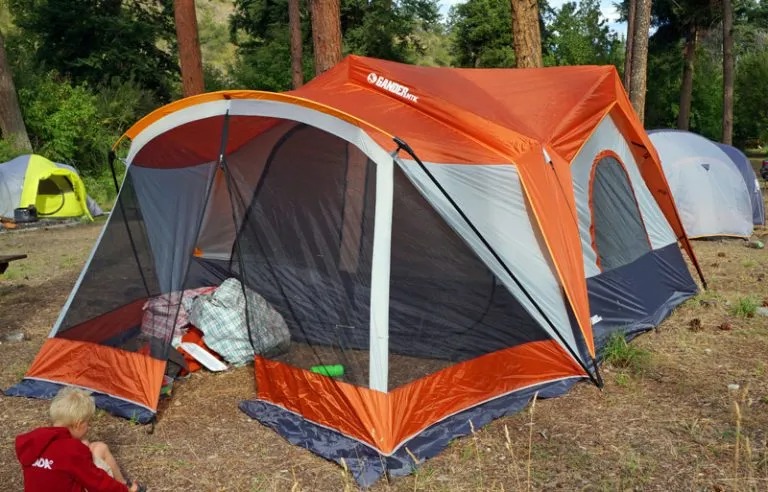
Check boil time, weight and simmer control before you buy. A stove that only boils is fine for freeze-dried meals, but a valve that throttles low lets you cook rice, sauces and pancakes without scorching them. Look for a wide burner head for even heat and a stove that sits low on the canister for stability. For the rest of the kit, see our camping gear guide and our guide to choosing a tent for the shelter it cooks beside.
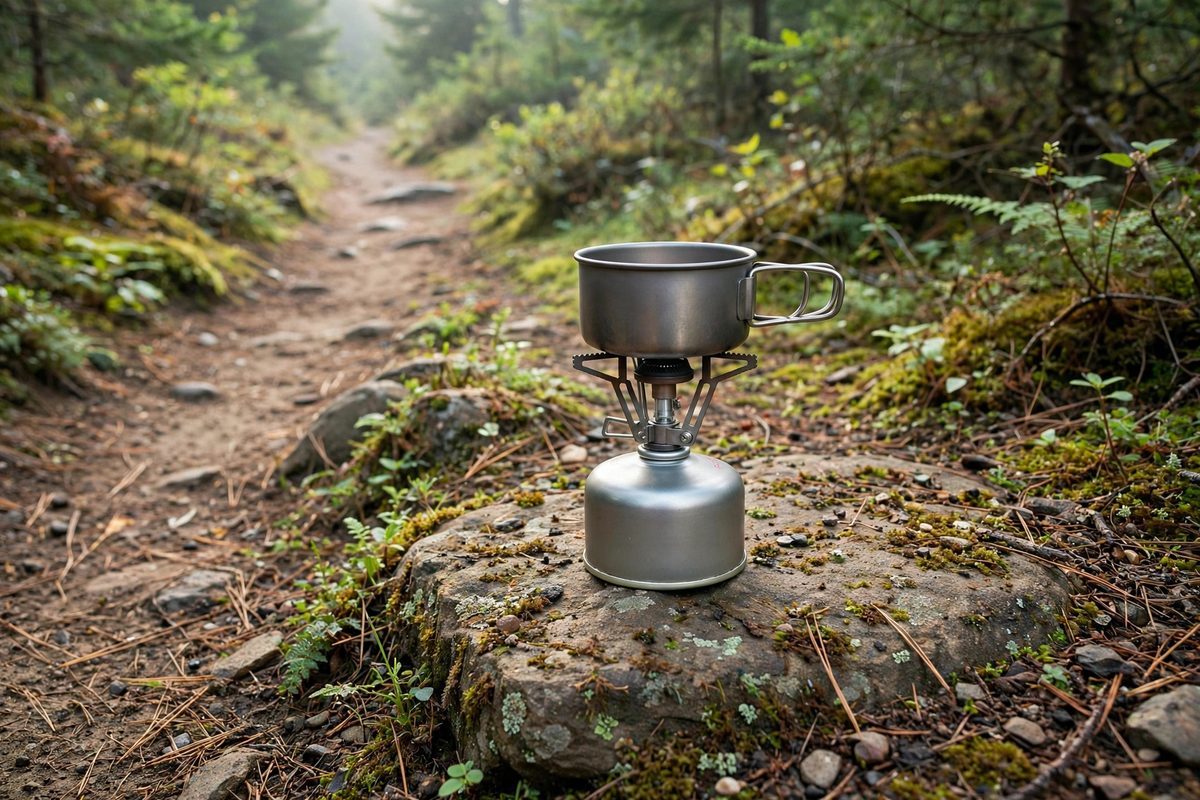
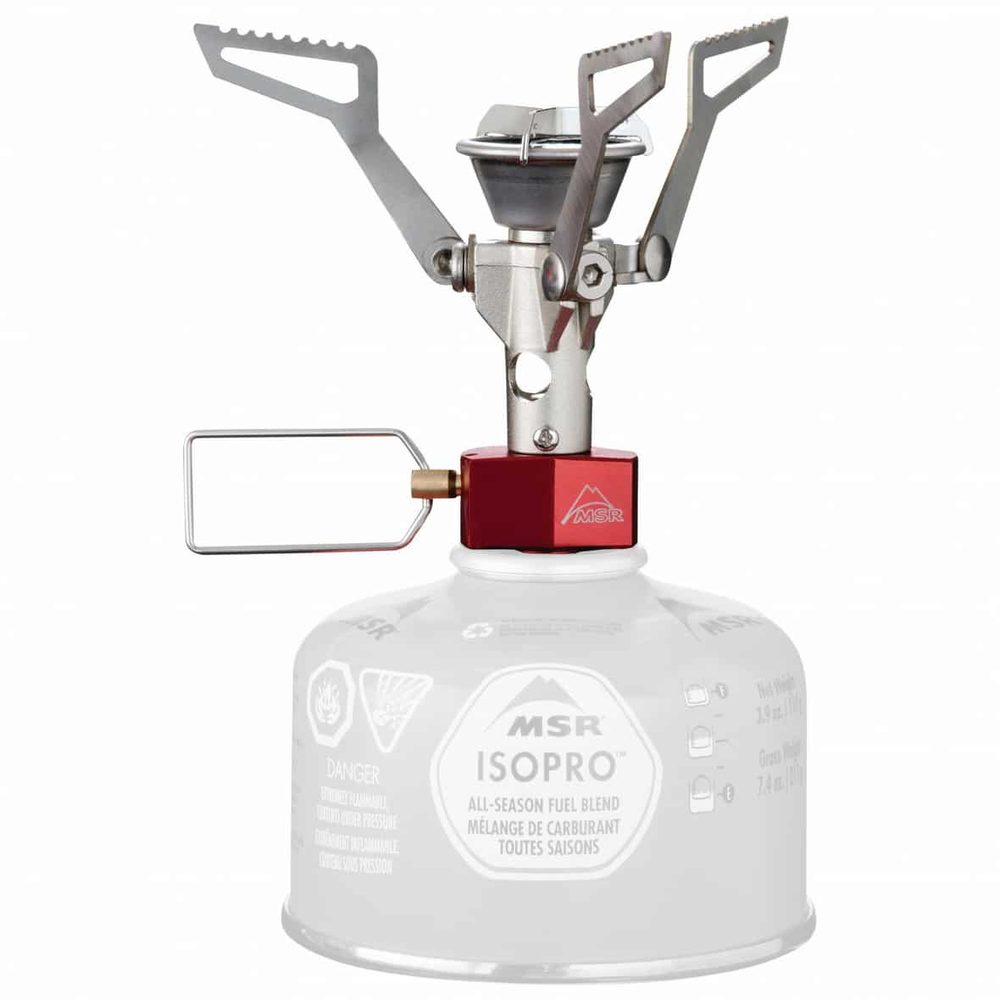
MSR PocketRocket 2 Ultralight Camping and Backpacking Stove
The best-known ultralight canister stove for a reason: 2.6 oz, folds to the size of a golf ball, and boils a litre of water in about 3.5 minutes on isobutane-propane canisters. Precise flame control runs from a full flame down to a simmer. Check price on Amazon.
Check price on Amazon ↗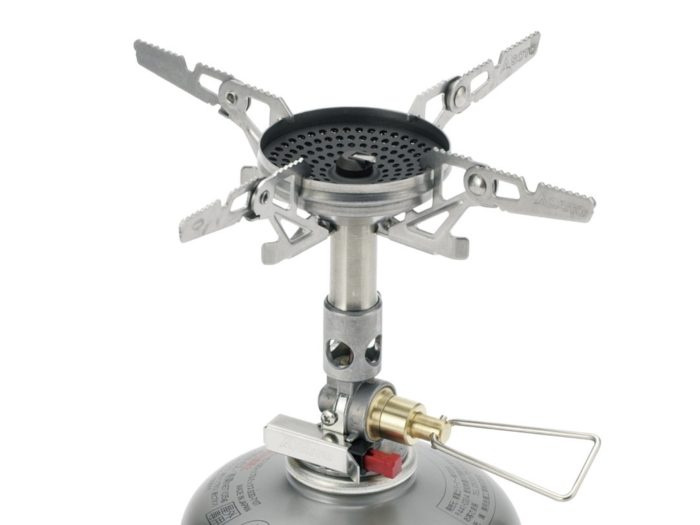
SOTO WindMaster Canister Stove with 4Flex
Built around wind resistance: a concave burner head sits the pot close to the flame, and a micro-regulator holds output steady as the canister cools and empties. At 3.1 oz with the 4Flex support, it is the calm-weather stove's windy-day upgrade. Check price on Amazon.
Check price on Amazon ↗Best Camping Stoves for Wind and Cold Weather
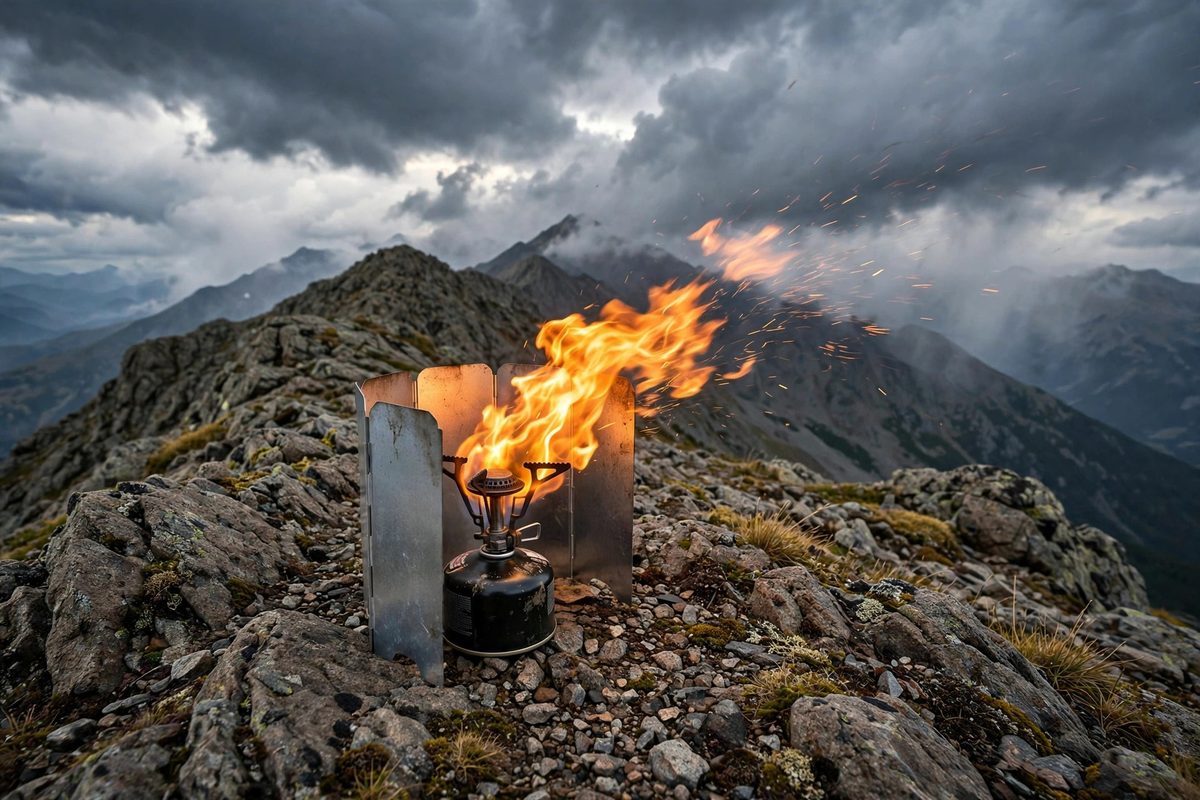
Unregulated canister stoves lose power as the canister cools and empties, which is exactly what happens on a cold morning at altitude. A pressure-regulated stove keeps its flame steady in those conditions, and a recessed burner head shields the flame from gusts. Both picks here are regulated, both have piezo ignition, and both weigh under 4 oz, so they work as backpacking stoves as well as camp stoves.
In real wind, technique matters as much as hardware: pitch the stove low, cook behind a rock or your pack, and use a windscreen that leaves a gap around the canister so heat cannot build up underneath it. Never fully enclose a fuel canister. If you camp in shoulder seasons, also read our cold-weather hiking layers guide — the same cold that chills a canister chills the cook.
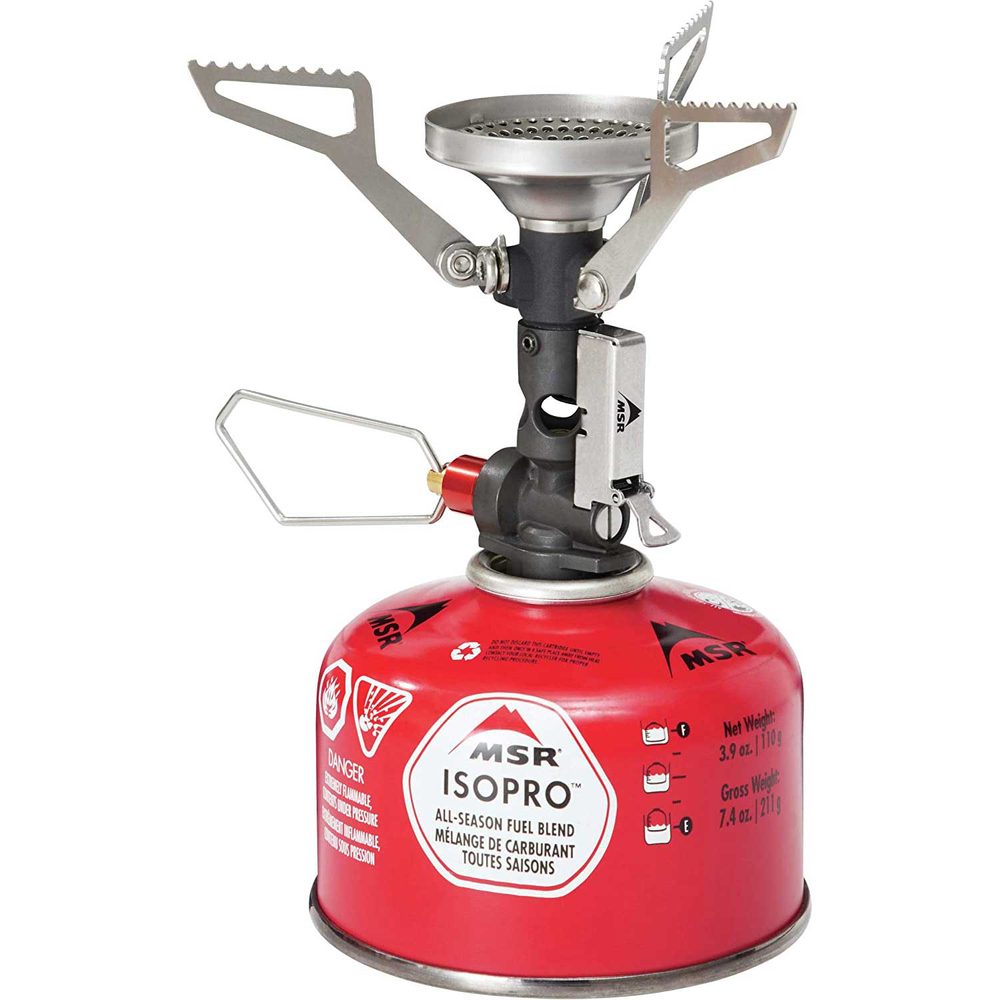
MSR PocketRocket Deluxe Ultralight Camping and Backpacking Stove
The PocketRocket 2 with a built-in pressure regulator and piezo igniter: 2.9 oz, a broad burner head, and steady output in cold weather and as the canister drains. Simmers well enough for real cooking, not just boiling. Check price on Amazon.
Check price on Amazon ↗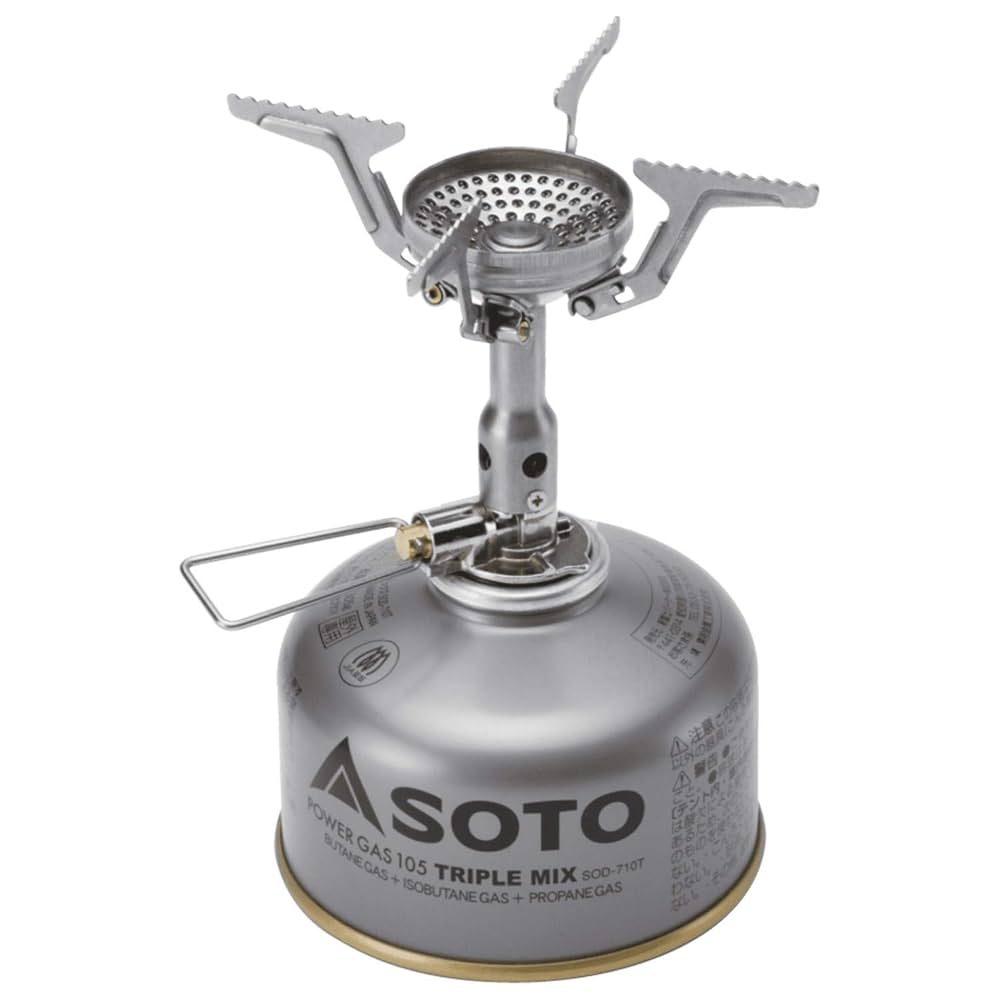
SOTO Amicus Camping Stove with Igniter and New River Pot
A 3.6 oz canister stove with a built-in igniter and a raised crown burner that holds a steady flame in wind. SOTO lists it at around $50, and it simmers better than most stoves at this price. The version linked here adds a nesting pot. Check price on Amazon.
Check price on Amazon ↗Best Ultralight Camping Stoves on a Budget
Ultralight stoves exist to disappear into a pack. The BRS-3000T weighs 25 grams — less than an ounce — and the Etekcity weighs 3.4 oz with its case. Both screw onto the same threaded canisters as the premium stoves, so the fuel system is identical; what you give up is wind resistance, simmer finesse and pot-support width. For boiling water for coffee, oatmeal and freeze-dried meals, that trade is usually worth it.
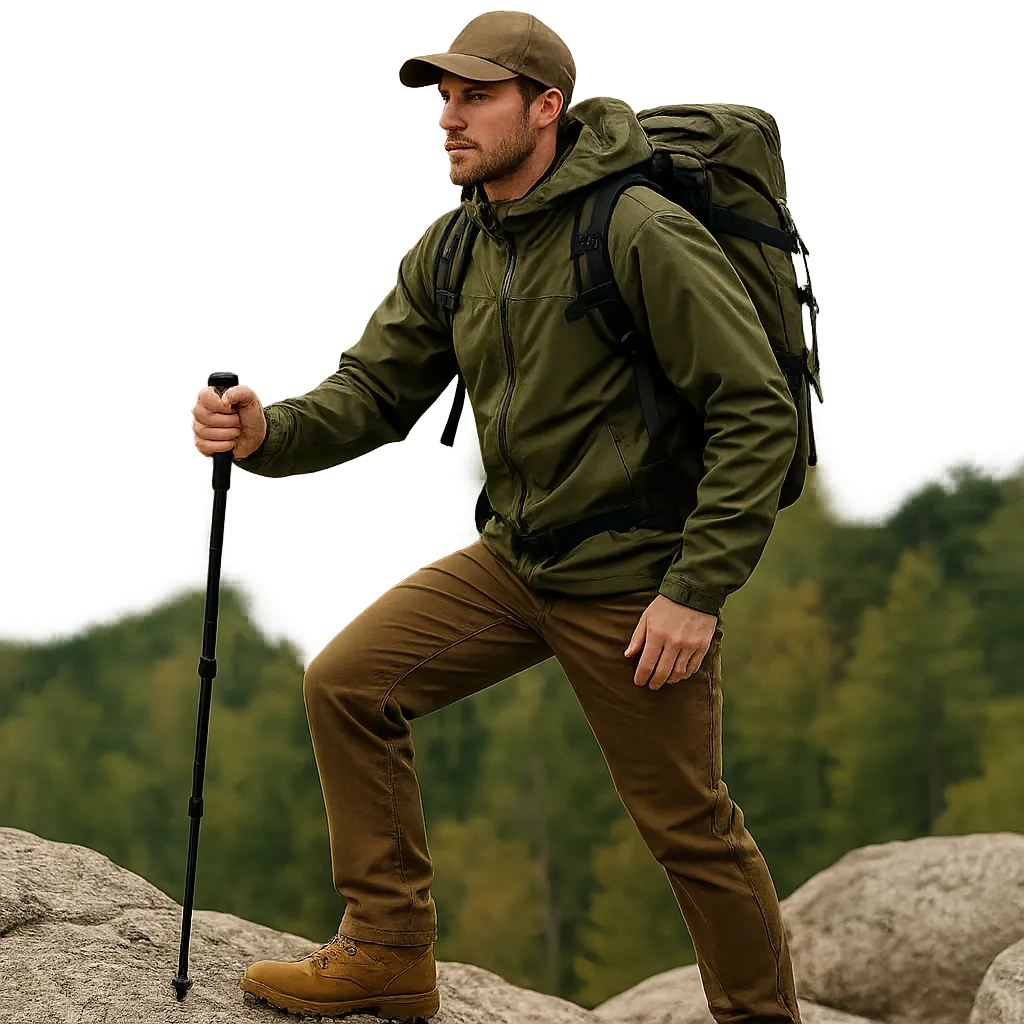
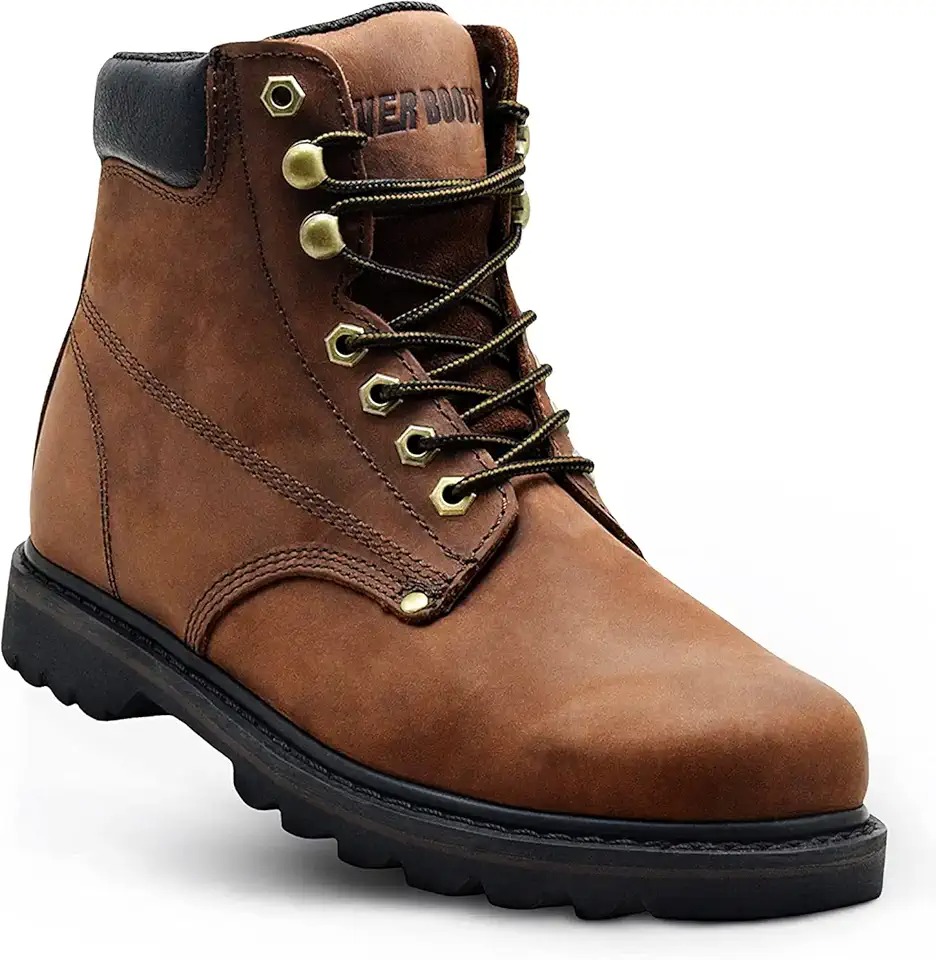
The catch is stability: tiny pot supports suit small pots, so keep the pot under 1 litre and set the canister on flat ground. Carry a lighter as backup, since piezo igniters on budget stoves are the first part to fail. Pair an ultralight stove with the light pack and boots in our hiking gear guide and it earns its place on a long trail.
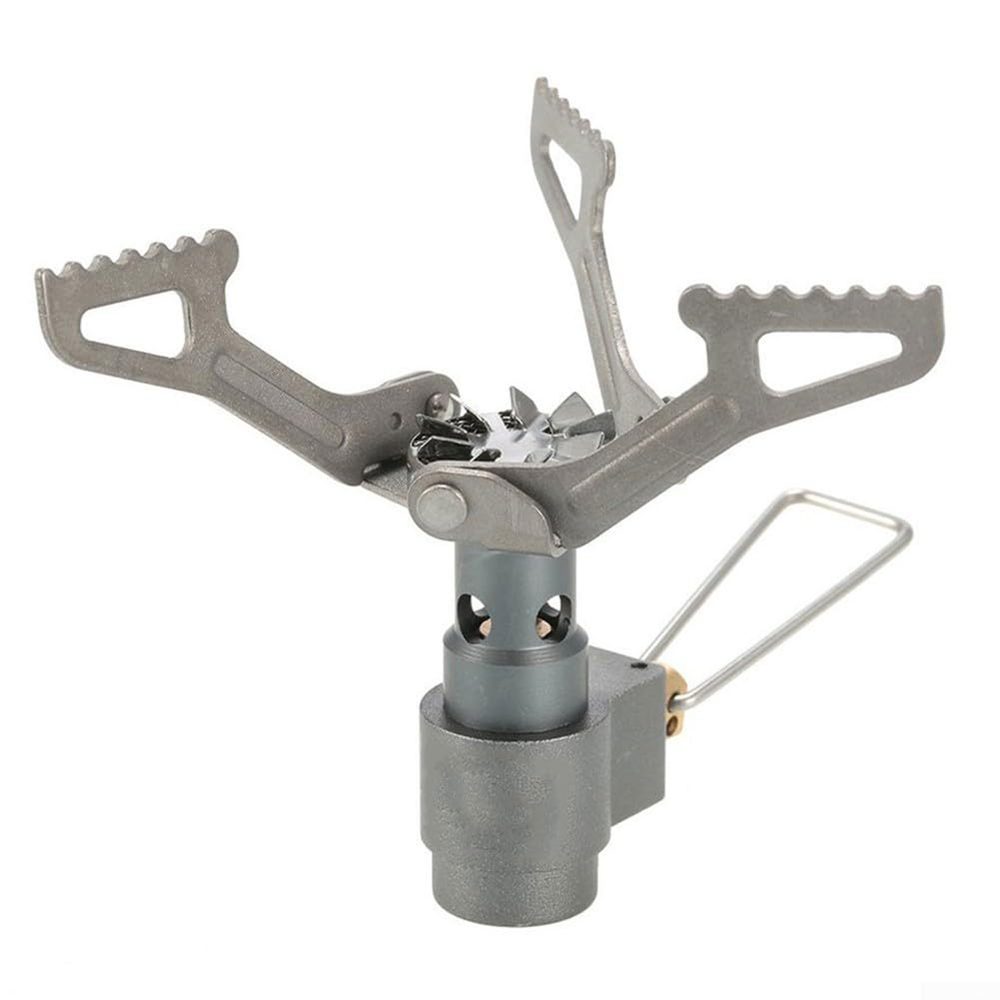
BRS Outdoor BRS-3000T Ultra-Light Titanium Alloy Camping Stove
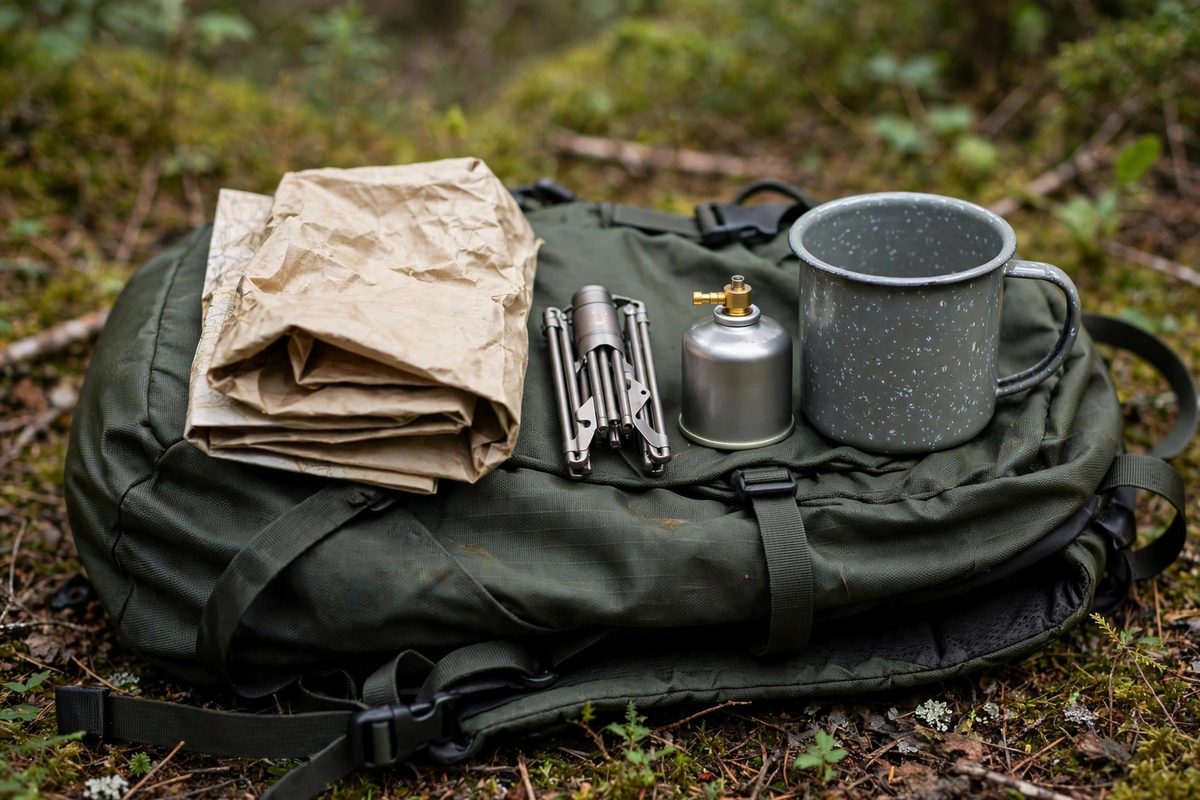
A 25-gram titanium canister stove that folds to the size of a matchbox. No igniter and no wind protection, but it boils water fast and costs about the price of a pizza. A favourite spare stove for ultralight hikers. Check price on Amazon.
Check price on Amazon ↗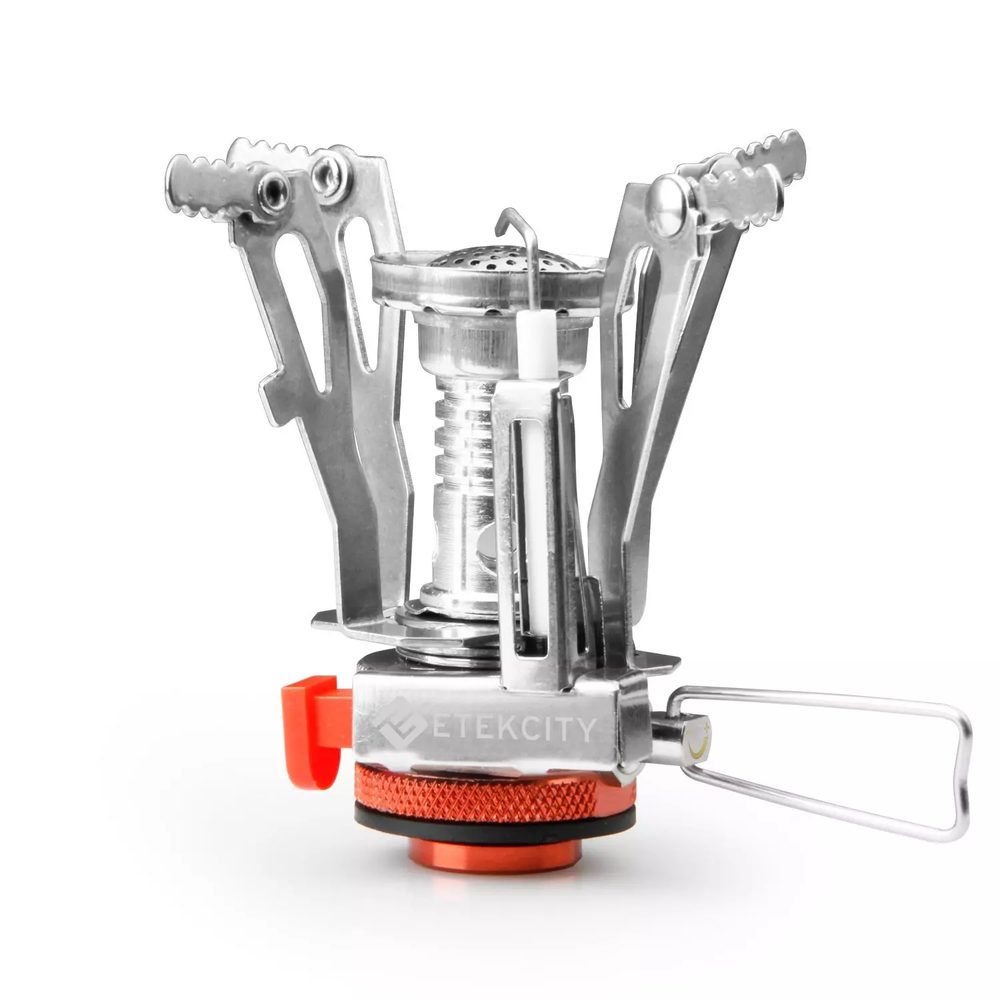
Etekcity Ultralight Portable Outdoor Backpacking Camping Stove with Piezo Ignition
A 3.4 oz canister stove with a piezo igniter and a hard carry case, often sold in a 2-pack. Slower to boil than the premium picks and the igniter is a known weak point, but it is a capable, genuinely cheap burner. Check price on Amazon.
Check price on Amazon ↗Best All-in-One Camping Stove Cooking Systems
An integrated cooking system pairs the burner with a pot that locks on, so heat goes into the water instead of the wind. The pot, burner and fuel canister nest into one package, which is why these systems are popular with solo backpackers and anyone who mostly boils water. Both picks here include the pot and the burner, so there is nothing else to buy except fuel.
The trade-off is cooking flexibility: a tall, narrow pot is made for boiling, not frying, and the burner is happiest with its own pot. If your camp meals are mostly dehydrated food, coffee and noodles, a system is the fastest option. If you fry eggs and simmer sauces, a separate burner with a wide pot from the first section will serve you better.
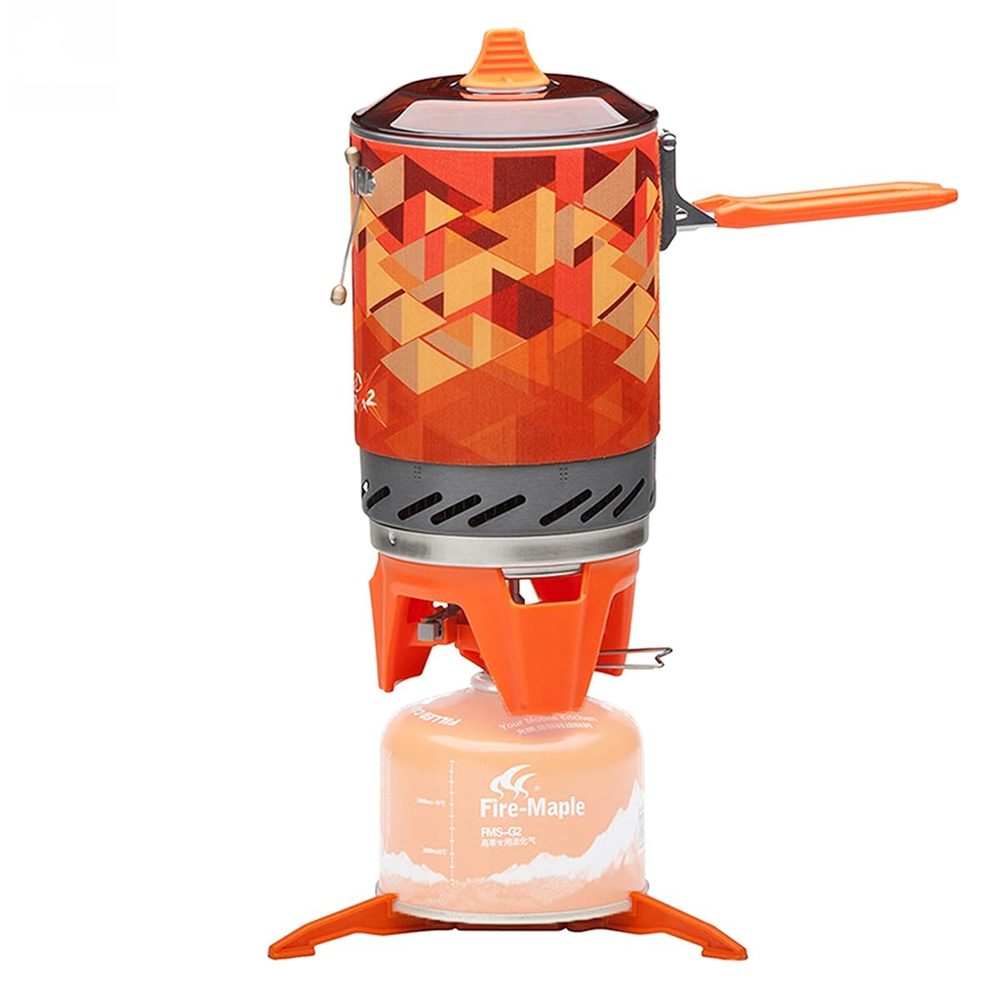
Fire-Maple Fixed Star X2 Backpacking and Camping Stove System
A complete 1-litre integrated cooking system: 2.2 kW jet burner, heat-exchanger pot, piezo ignition, pot support and canister stand in a 22 oz nesting kit. The heat exchanger speeds boils and the windscreen helps in a breeze. Fuel canister sold separately. Check price on Amazon.
Check price on Amazon ↗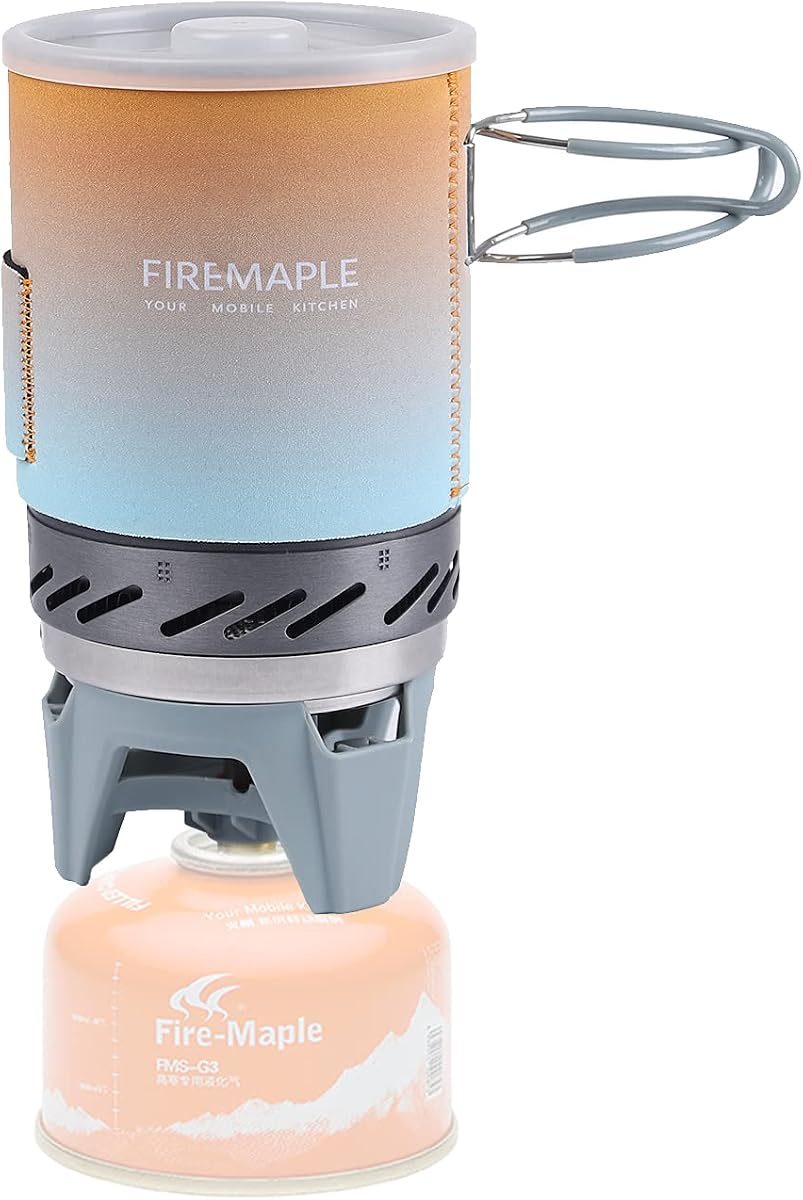
Fire-Maple Fixed Star 1 Personal Cooking System
A 1-litre pot, heat-exchanger base, jet burner and piezo ignition in one nesting kit at about 18 oz. The heat exchanger speeds boils and improves wind performance over a bare burner. A strong value alternative to the big-name systems. Check price on Amazon.
Check price on Amazon ↗Best 2-Burner Car-Camping Stoves Under $100
At a drive-up campsite, weight stops mattering and cooking space takes over. A 2-burner propane stove lets you boil water on one burner while frying on the other, and both picks here fit two pans at once. They run on standard 16 oz propane cylinders, which are sold at most camp stores, and each burner adjusts independently so you can simmer a sauce while the kettle boils.
Check the stove's footprint before you buy: a 2-burner stove needs a stable table, and wind guards help a lot on open sites. Bring a spare propane cylinder — a single 16 oz cylinder lasts roughly an hour on high across both burners. For the rest of the car-camping setup, see our camping gear guide.
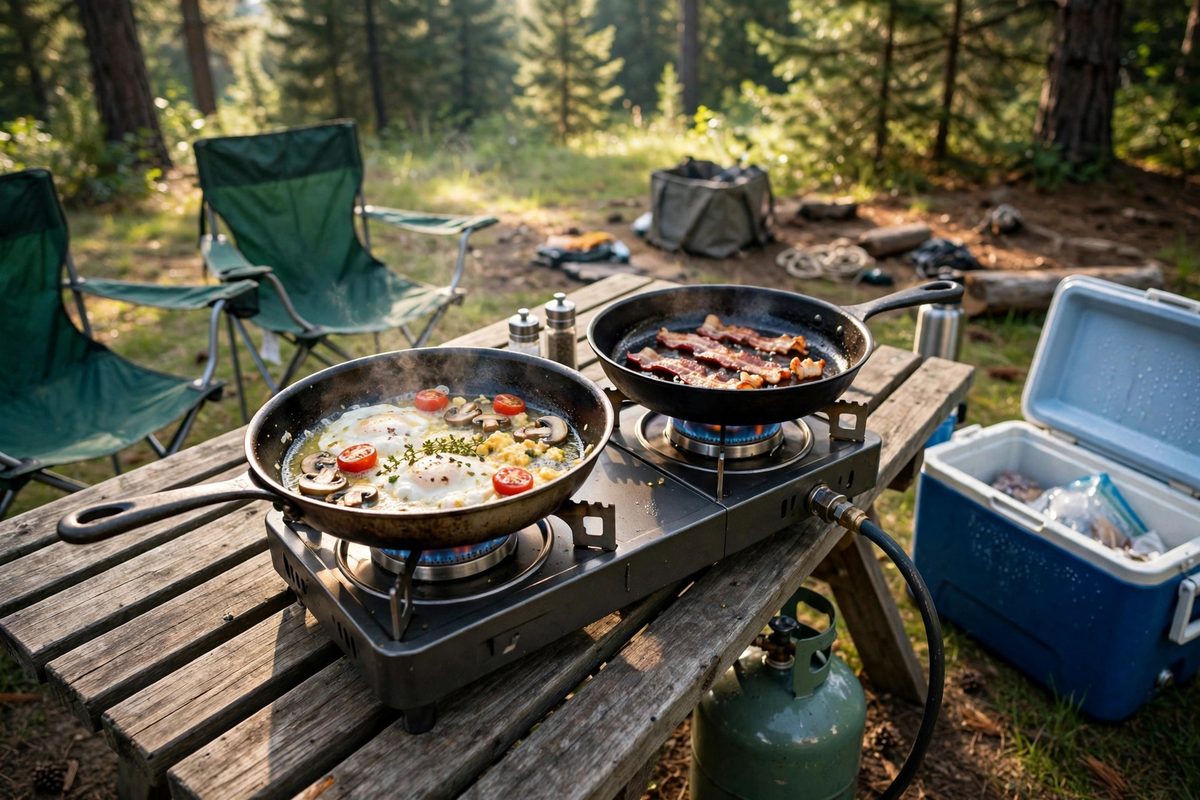
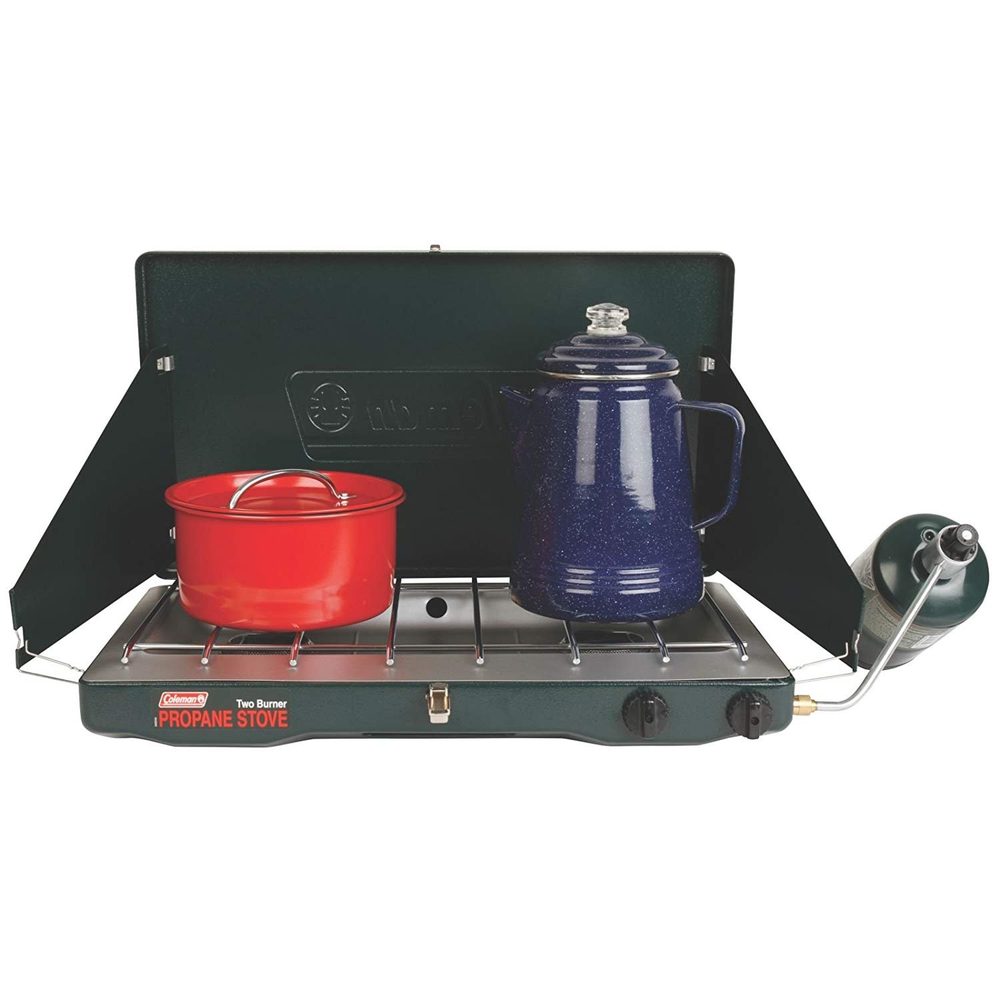
Coleman Gas Camping Stove | Classic Propane Stove, 2 Burner
The classic green 2-burner propane stove: 20,000 BTUs across two independently adjustable burners, wind guards, and room for two pans at once. Runs on a 16 oz propane cylinder. A car-camping standard for decades. Check price on Amazon.
Check price on Amazon ↗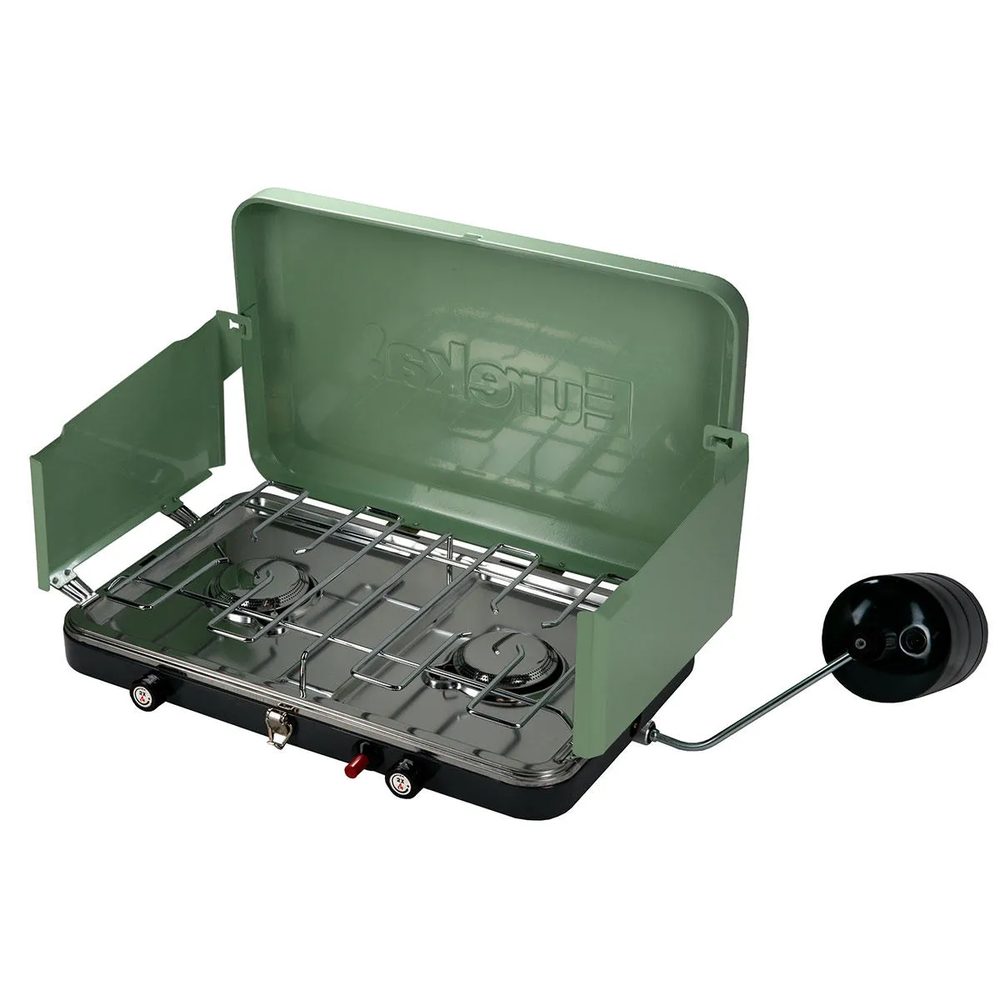
Eureka! Ignite Portable 2 Burner Propane Camping Stove
A 2-burner propane stove with push-button ignition, two 10-inch burners, and simmer control, built from thick-gauge steel. Compact for a 2-burner and fits two 10-inch pans for family camp meals. Check price on Amazon.
Check price on Amazon ↗Best Single-Burner Tabletop Camping Stoves
A single-burner tabletop stove is the middle ground between a backpacking burner and a 2-burner camp kitchen. It is stable, easy to light, and strong enough for a kettle or a frying pan, and it packs into a car boot without a second thought. The Coleman BottleTop is the simplest version — burner on cylinder, nothing else — while the Gas One GS-3400P adds dual-fuel flexibility and a carry case.
Dual fuel is genuinely useful: butane cartridges are cheap and widely sold, while propane cylinders work better in the cold. Whichever you choose, cook outdoors or in a well-ventilated shelter, never inside a tent. A tabletop stove also makes a practical backup cooker at home during a power cut.
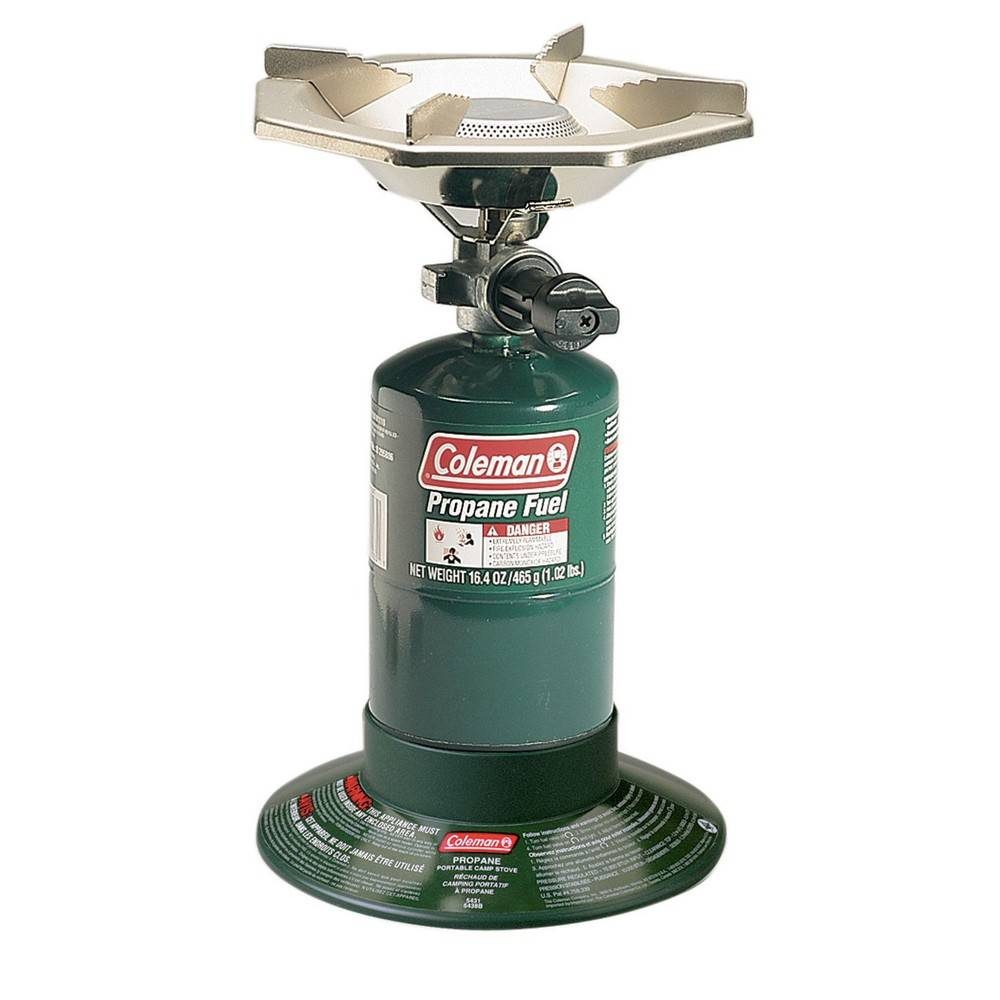
Coleman BottleTop Propane Stove with Adjustable Burner
A single-burner propane stove that screws directly onto a 16 oz propane cylinder, with 7,650 BTUs and an adjustable burner. No hose, no setup — it is the simplest way to boil a kettle at a picnic table or tailgate. Check price on Amazon.
Check price on Amazon ↗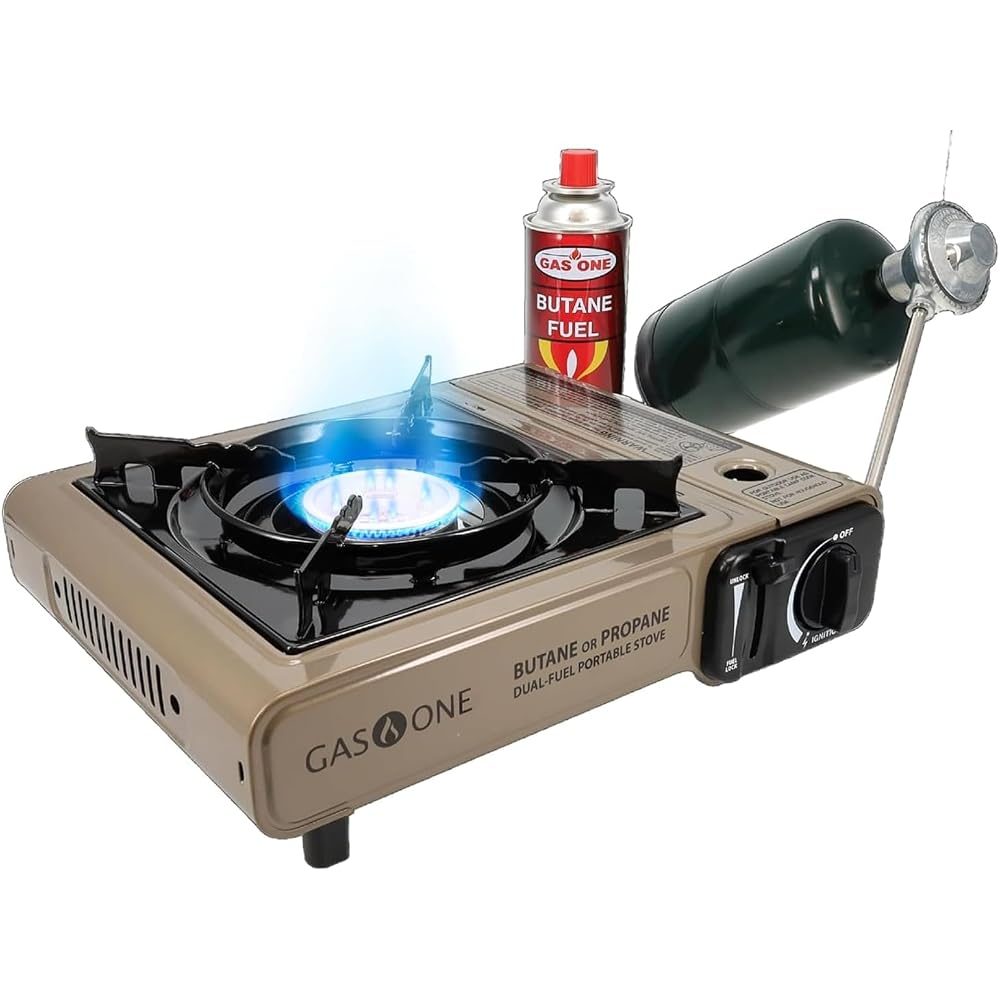
Gas One Propane or Butane Stove GS-3400P Dual Fuel Portable Camping Stove
A dual-fuel tabletop stove that runs on butane cartridges or a propane cylinder, with piezo ignition, a carry case and an automatic safety shut-off. A bestseller for camp cooking and emergency kits alike. Check price on Amazon.
Check price on Amazon ↗Best High-Output Camping Stoves for Group Cooking
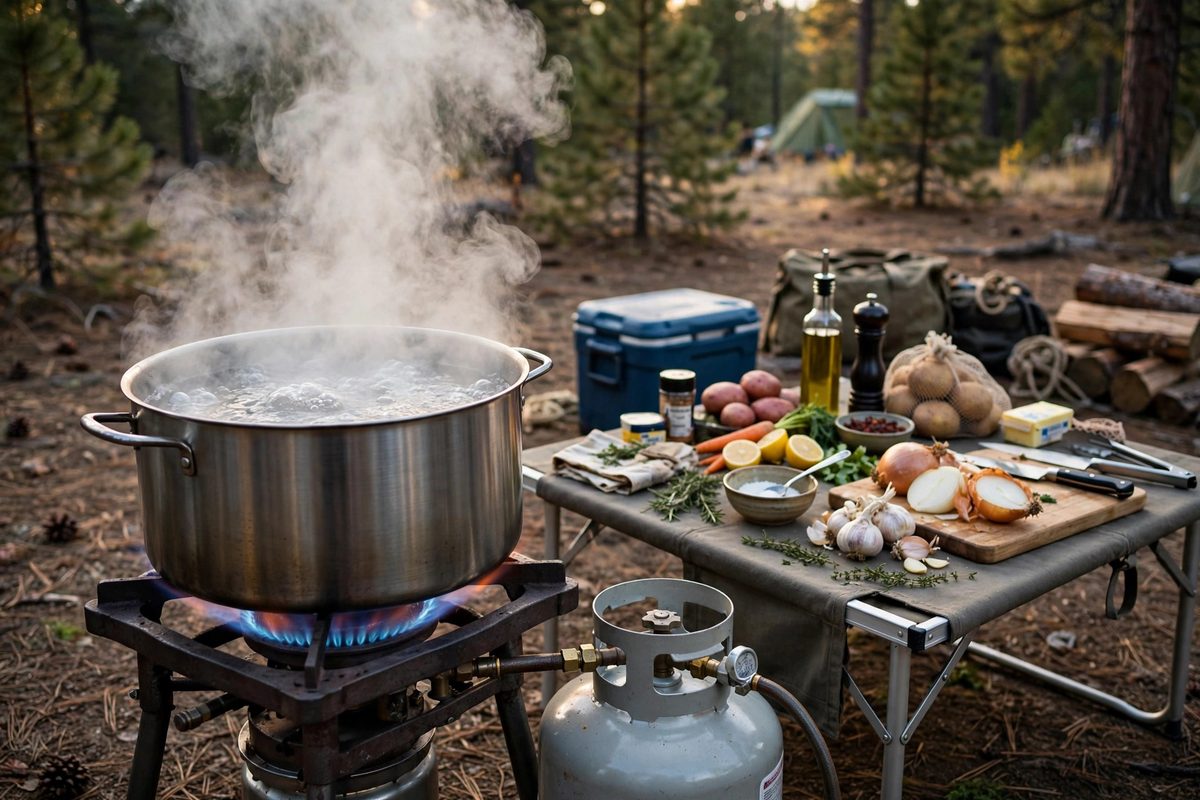
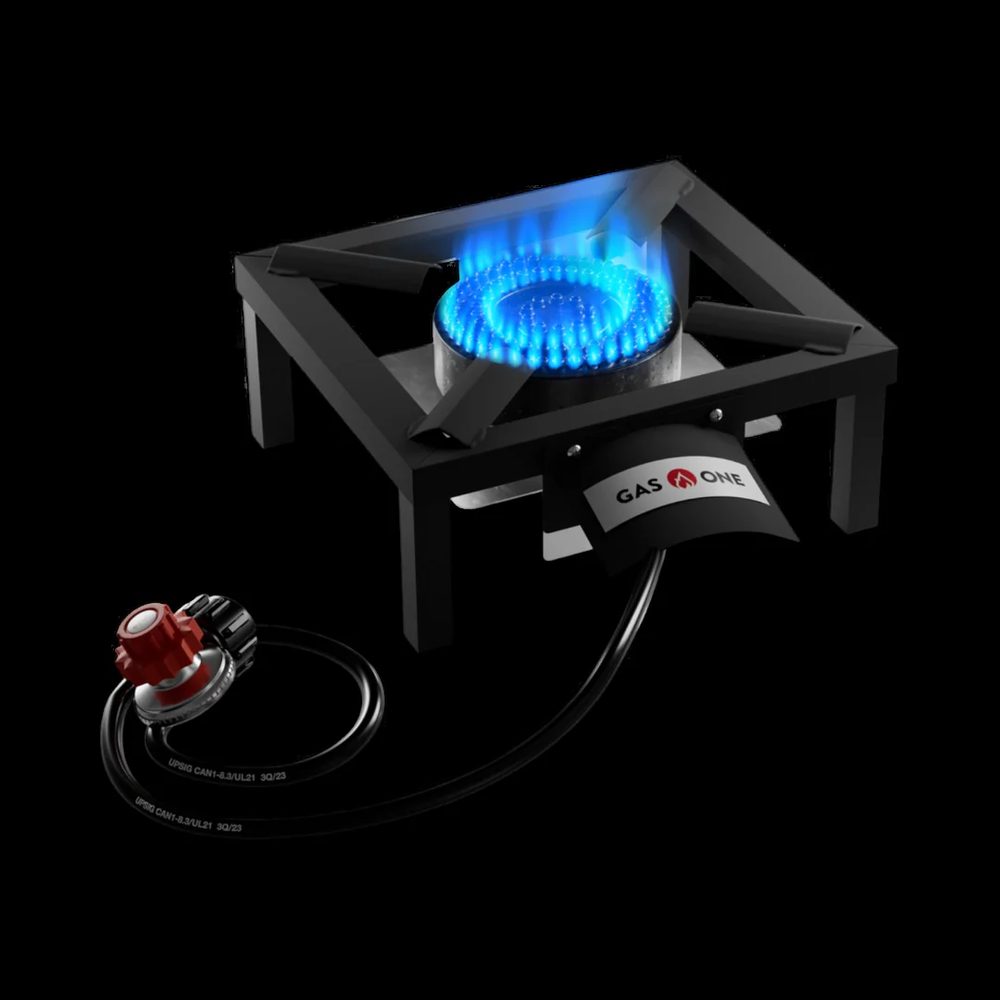
Cooking for a group means boiling litres, not cups, and a backpacking burner will take all evening. A high-pressure burner such as the Gas One B-5120 puts out far more heat and holds a stock pot steady, which suits seafood boils, big pasta pots and group breakfasts. The Fire-Maple Polaris takes the other route: a regulated burner with a heat-exchanger pot that squeezes more heat from less fuel.
High-pressure burners need respect: use them outdoors on stable ground, keep the hose clear of the flame, and never leave a big pot unattended. For most family camping, a 2-burner stove from the earlier section is the more practical pick; reach for a high-pressure burner when the menu is built around one big pot.
Gas One High Pressure Single Propane Burner (B-5120)
A high-pressure single propane burner with a heat shield, guard and braided hose, built for big pots, seafood boils and group cooking. Far more powerful than a tabletop stove, at a similar price. Check price on Amazon.
Check price on Amazon ↗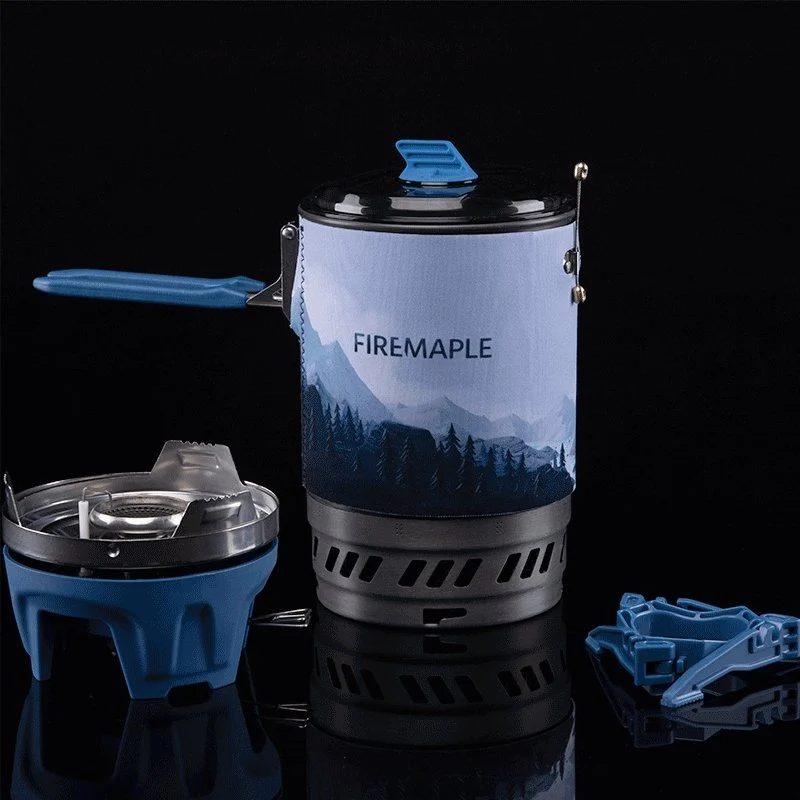
Fire-Maple Polaris Pressure Regulator Cooking System
A pressure-regulated cooking system with a heat-exchanger pot, piezo ignition and a micro-regulator valve for steady output in cold weather. The pot and burner nest together for packing. Check price on Amazon.
Check price on Amazon ↗Best Wood-Burning and Fuel-Free Camping Stoves
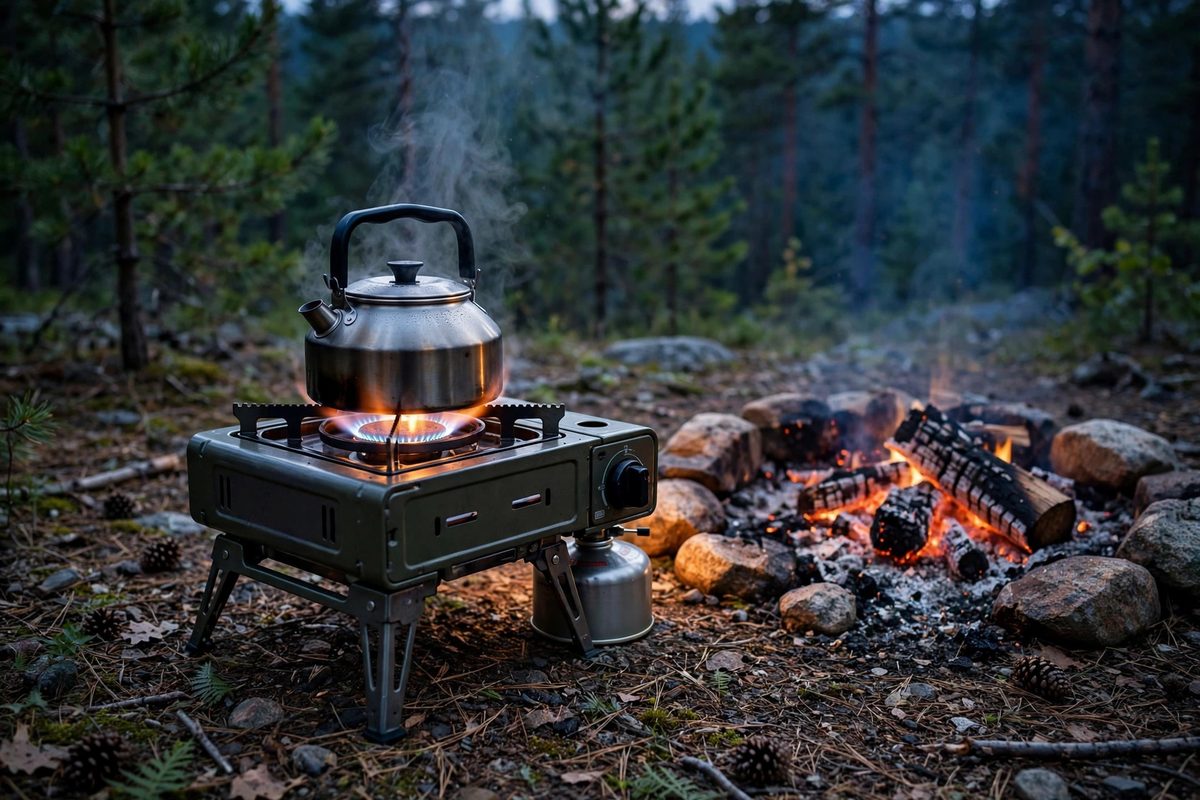
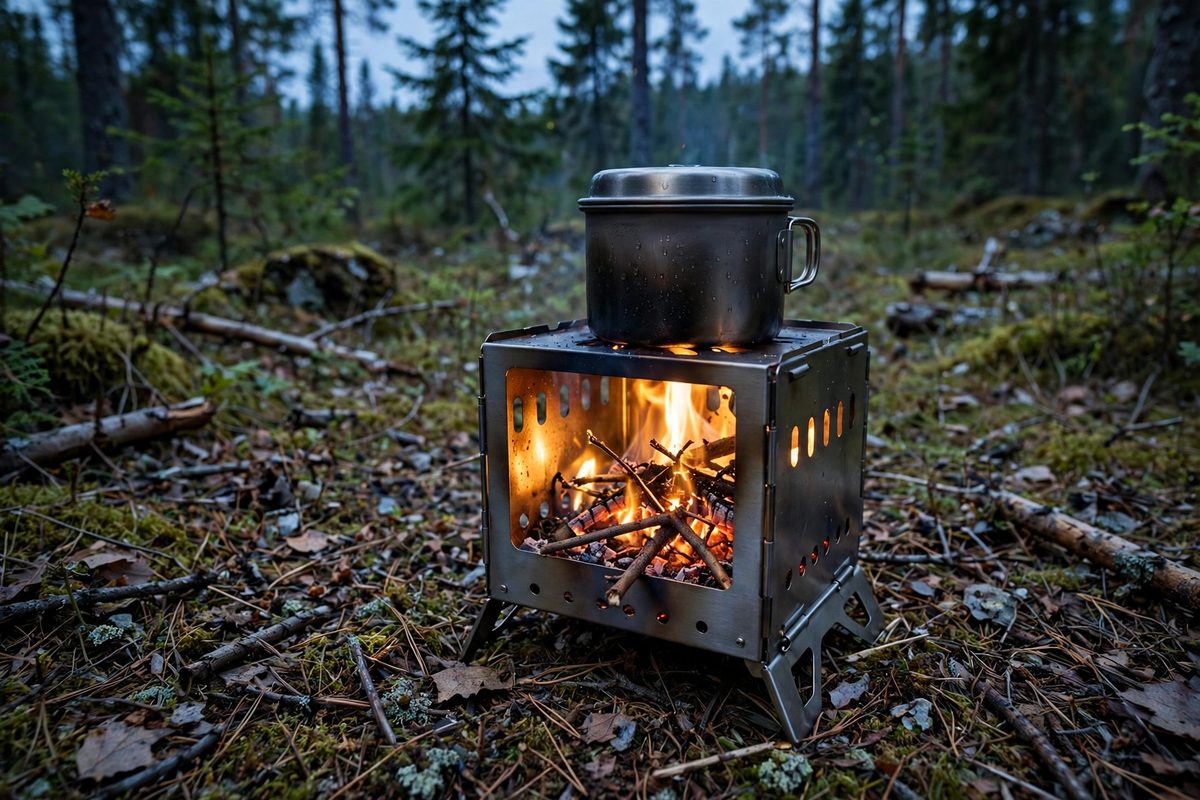
A wood-burning stove trades convenience for independence: there is no canister to buy, carry or run out of, because the fuel is twigs. The Solo Stove Lite burns them efficiently with a double-wall design that keeps smoke low, and the Esbit pocket stove folds flat and burns solid fuel tablets or small sticks as a backup. Both are popular as emergency and ultralight stoves.
The limits are real: wet wood, fire bans and treeless ground all stop a wood stove working, and boiling takes longer than gas. Treat a wood or solid-fuel stove as a second stove or a backup, not your only cooker, and always check local fire rules before lighting one. For a dependable main stove, the canister burners in the first sections are the safer choice.
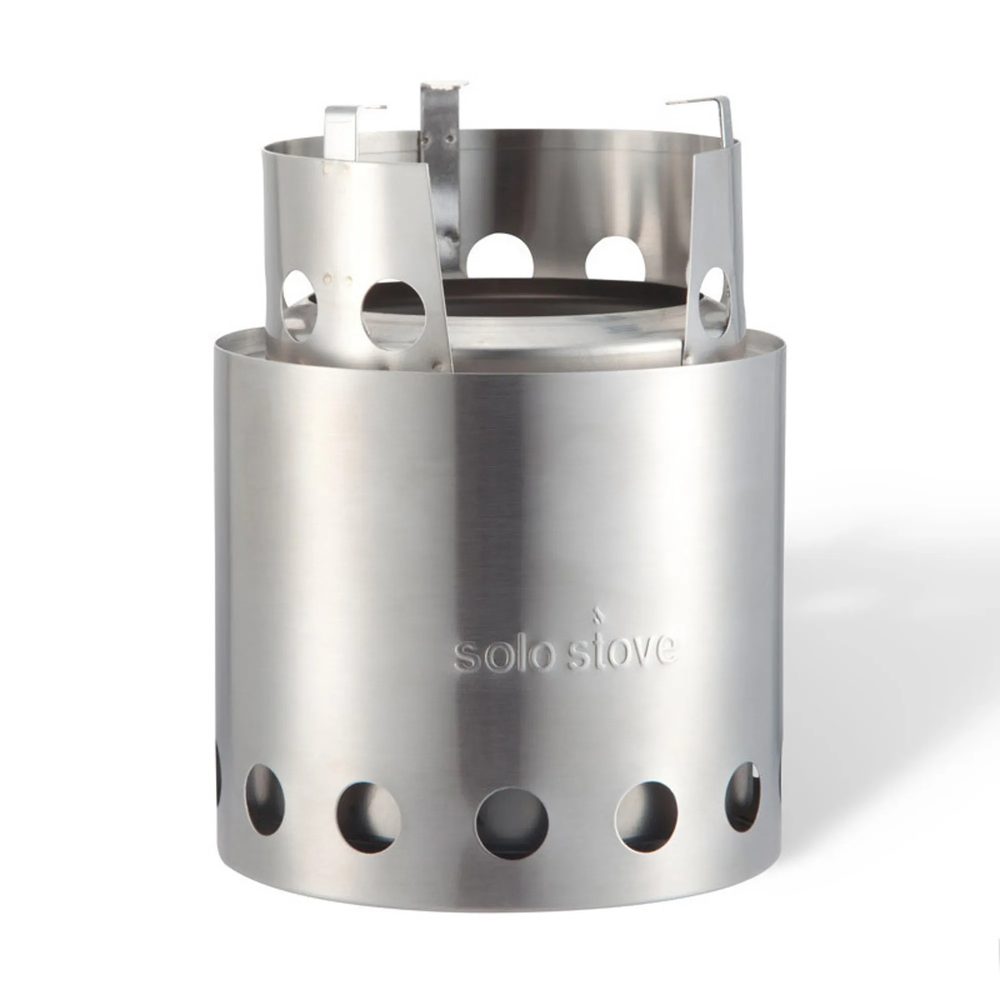
Solo Stove Lite Portable Wood Burning Backpacking Stove
A 9 oz stainless steel wood-burning stove with a double-wall gasifier design that burns twigs with little smoke. No fuel to carry and no canister to buy — feed it dry sticks and it boils a litre in about 8 to 10 minutes. Check price on Amazon.
Check price on Amazon ↗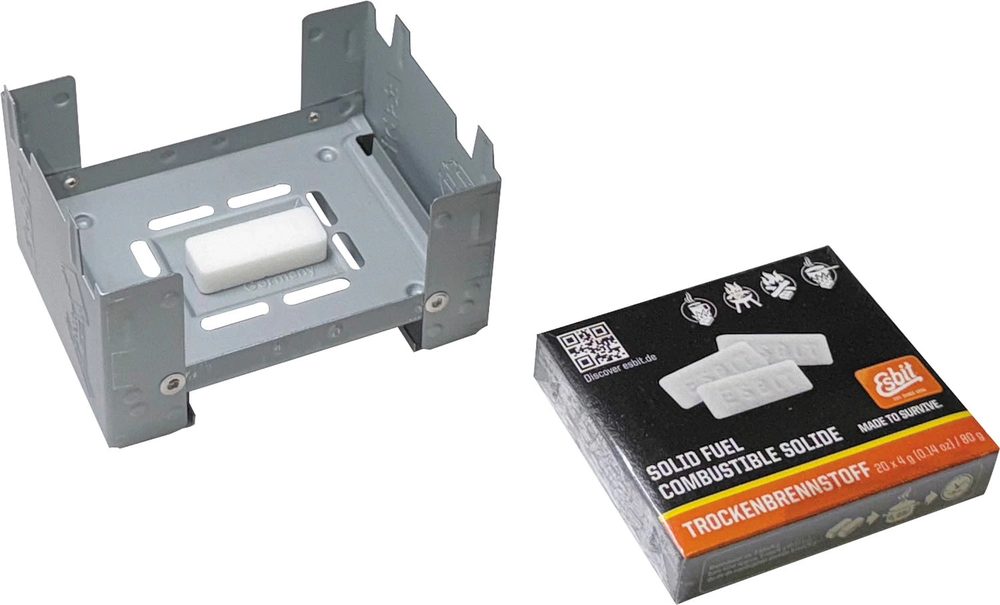
Esbit Ultralight Folding Pocket Stove with Six 14g Solid Fuel Tablets
A folding steel pocket stove that burns solid fuel tablets, twigs or wood, and packs flat to pocket size. Six 14g fuel tablets are included. The simplest, lightest emergency stove in this guide. Check price on Amazon.
Check price on Amazon ↗Best Alcohol Stoves for Minimalist Backpacking
An alcohol stove is the simplest cooker in this guide: a small metal burner, a splash of denatured alcohol, and a match. There is no valve, no pump and no canister, so there is almost nothing to fail, and the whole setup weighs a few ounces. Both picks here are titanium, pack inside a mug, and cost very little to run.
The trade-offs are speed and visibility: alcohol boils slower than gas, and the flame is nearly invisible in bright daylight, so check it is out before packing up. Alcohol stoves also need a windscreen and a stable, flat surface. They shine as a backup stove or as the main stove on short, fair-weather trips where every gram counts.
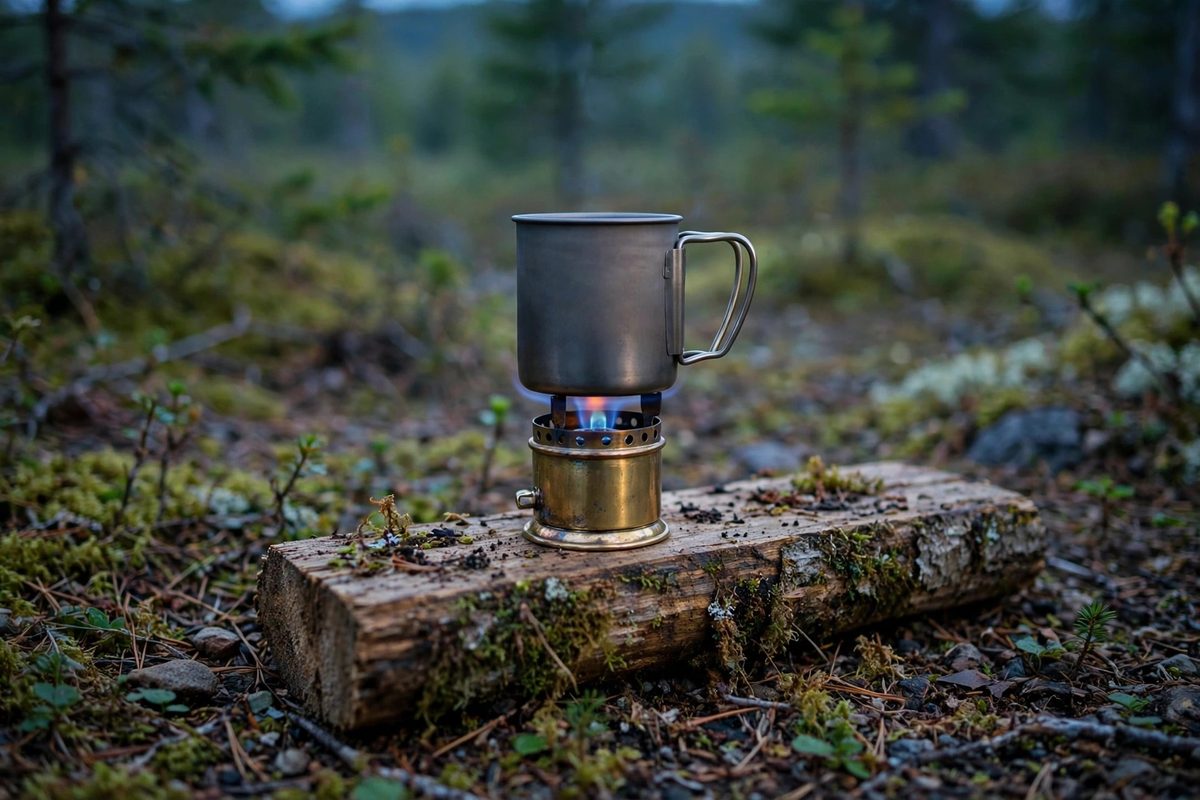
Fire-Maple Lotus Titanium Solid Alcohol Stove
A titanium alcohol stove with a wind-resistant design and a simmer ring, weighing just a few ounces. Burns denatured alcohol with no moving parts to fail. A quiet, simple backup stove for ultralight trips. Check price on Amazon.
Check price on Amazon ↗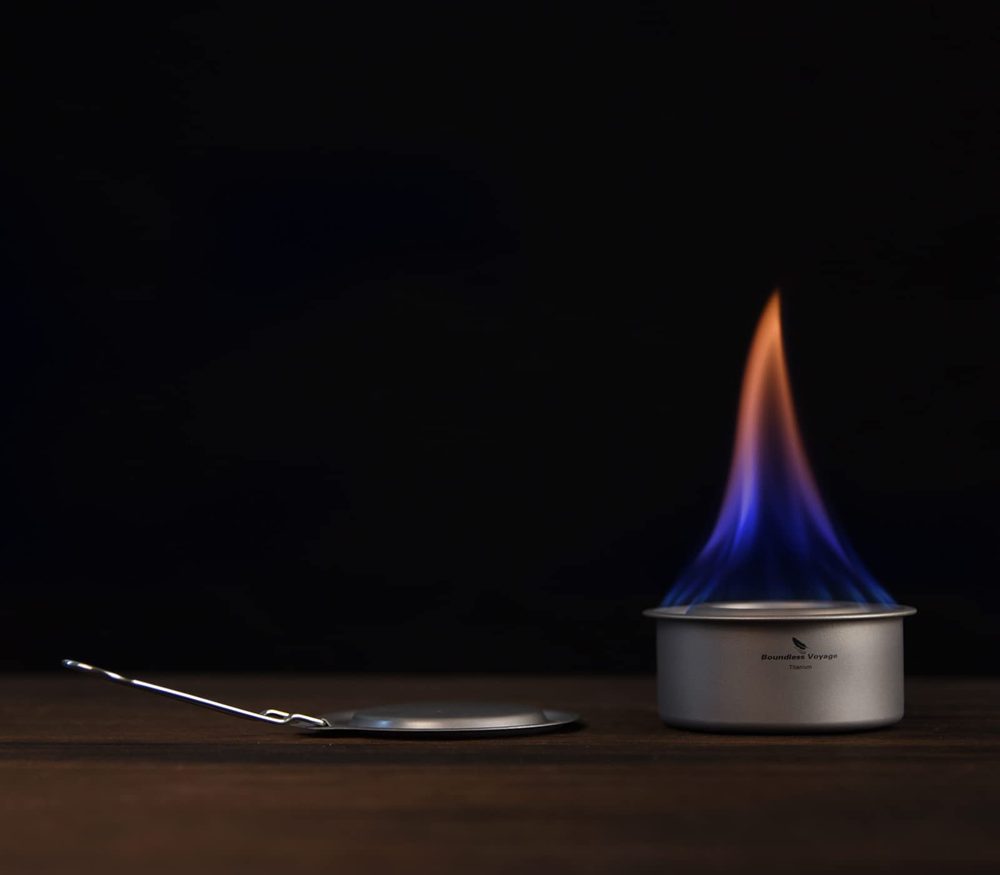
Boundless Voyage Titanium Spirit Burner Mini Alcohol Stove
A titanium spirit burner with a support bracket that holds a mug directly over the flame. Light, packable and cheap to run on denatured alcohol, with no pump, valve or igniter to break. Check price on Amazon.
Check price on Amazon ↗Best First Camping Stove for New Campers
A first stove should be simple to light, hard to break, and cheap enough that a mistake does not sting. The Primus Classic Trail has been that stove for years: a fixed, non-folding design with a wide burner that simmers well and holds bigger pots. The AOTU is the cheapest usable canister stove in this guide, with push-button ignition and a stable base, and it makes a good spare even after you upgrade.
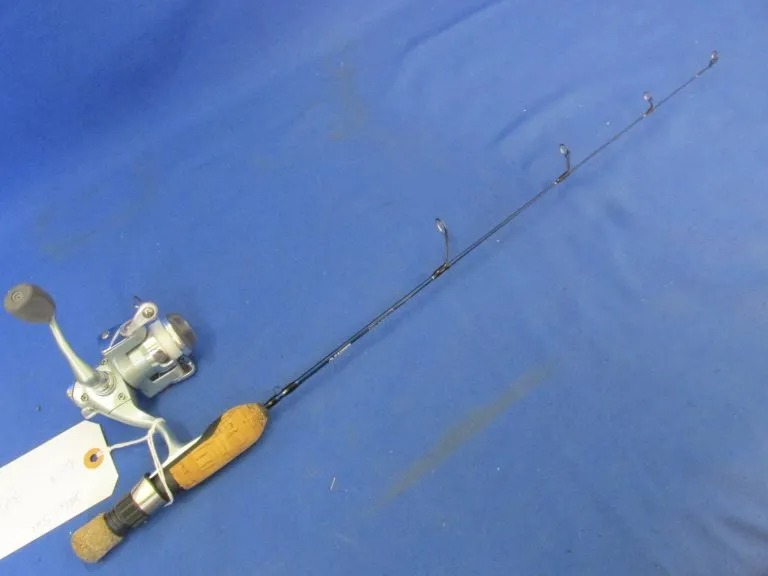
Start with one canister stove, one pot and a lighter, and cook a few meals in the garden before your first trip. Learn how long your canister lasts, how the valve feels, and how wind changes boil time. Our budget fishing combos guide follows the same buy-cheap-and-learn approach, and our affiliate disclosure explains how these guides are funded.
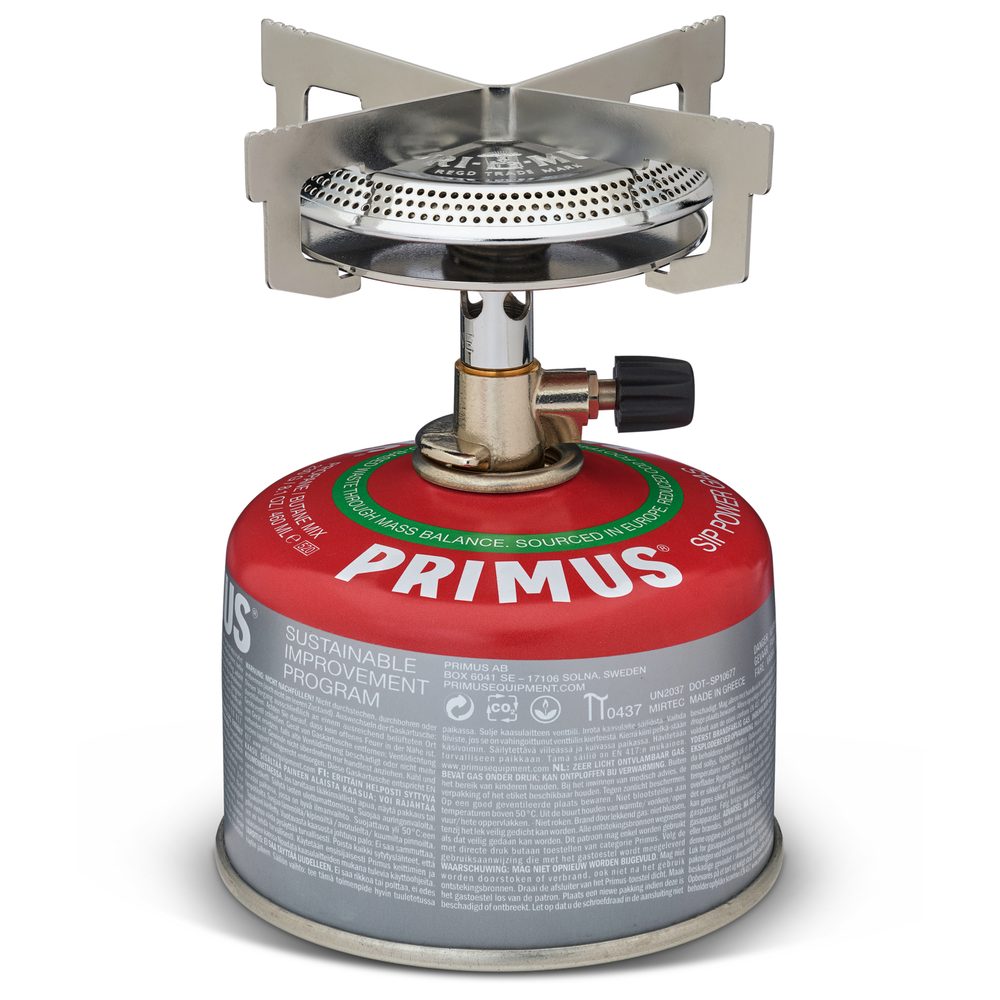
Primus Classic Trail Backpacking Stove
A sturdy, non-folding canister stove with a wide burner head and crosswise pot supports that double as a windscreen. Boils a litre in about 3 minutes, simmers well, and costs around $20 to $30. A long-running budget favourite. Check price on Amazon.
Check price on Amazon ↗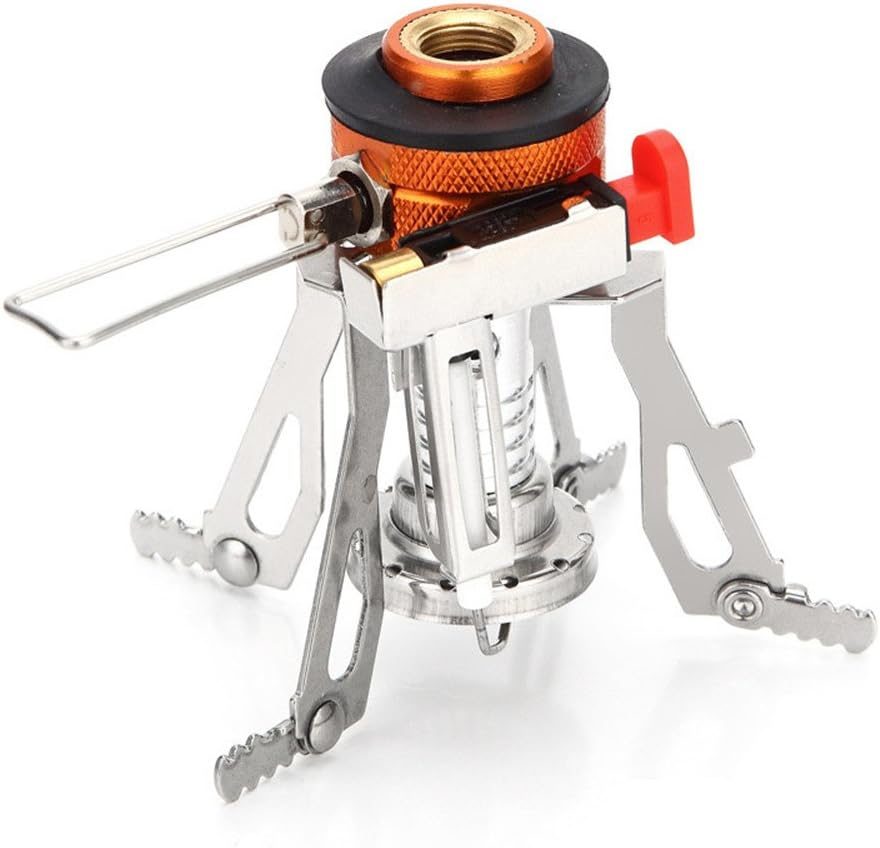
AOTU Portable Camping Stove with Piezo Ignition
A 3.8 oz canister stove with piezo ignition, a wide support base and a wind-resistant burner, for about $10 to $15. Three folding arms, a carry case, and enough power for a litre pot. The cheapest usable stove in this guide. Check price on Amazon.
Check price on Amazon ↗Frequently asked questions
What type of camping stove should I buy first?
For most campers, a canister stove is the easiest start: it screws onto a threaded isobutane-propane canister, lights in seconds, and boils water in about 3 to 4 minutes. A 2-burner propane stove suits car camping and cooking for a group, while a wood-burning or alcohol stove suits ultralight trips where carrying fuel is the problem. Match the stove to how you camp, not to the biggest BTU number.
How fast should a budget camping stove boil water?
A small canister stove boils a litre of water in roughly 3 to 4 minutes in calm conditions, and an integrated system such as the Fire-Maple Fixed Star X2 is faster still. Wind is the biggest variable: an exposed burner can take twice as long in a breeze, which is why a windscreen or a wind-resistant burner head matters more than raw output. Cold weather also slows unregulated stoves as the canister chills.
Are cheap camping stoves safe and reliable?
Yes, for most three-season camping. Budget canister stoves from established brands use the same standard threaded canister fitting as premium models, and many cost under $30. The trade-offs are usually a narrower pot support, a less reliable piezo igniter, and weaker wind performance — not safety. Avoid unbranded stoves with no stated output or certification, and always check the listing's recent reviews before buying.
What size stove do I need for one person, two people, or a family?
A solo backpacker can get by with a 25 to 100 gram canister stove and a small pot. A couple sharing meals will want a stove with wider pot supports and a 1-litre pot. For a family or group at a drive-up campsite, a 2-burner propane stove with two pans is far more practical than a backpacking burner. Weight matters on the trail and barely matters at the car, so choose accordingly.
Canister fuel, butane, propane, wood or alcohol — which fuel is best?
Isobutane-propane canisters are the most convenient fuel for backpacking: clean, easy to light, and sold at most outdoor shops. Butane cartridges are cheaper and suit tabletop stoves such as the Gas One GS-3400P. Propane cylinders power 2-burner car-camping stoves. Wood and alcohol cost nothing to carry as fuel but need dry twigs or denatured alcohol and take longer to cook with. Never use a canister stove inside a tent or vehicle.
How do I keep a camping stove working in wind?
Wind steals heat before it reaches the pot. Cook in a sheltered spot, keep the stove low, and use a windscreen that leaves a gap around the canister — never fully enclose a fuel canister, as trapped heat is a safety risk. Stoves with a recessed or concave burner head, such as the SOTO WindMaster, hold up better in gusts, and a regulated stove keeps its output steadier as the canister cools.
How do I clean and store a camping stove?
Let the stove cool completely, then wipe the burner head clean and check the valve and pot supports for damage. Store canister stoves detached from their fuel canister, with the valve closed. Keep piezo igniters dry. For 2-burner propane stoves, check the hose and regulator for cracks each season and store the stove dry so the burner ports do not rust. Empty fuel canisters should be punctured only with a proper recycling tool where facilities accept them.
Can I rely on a wood-burning or alcohol stove as my only stove?
No. A wood-burning stove needs dry twigs, which are scarce above treeline, in deserts, or after rain, and many parks ban open flames during fire season. An alcohol stove is a useful backup because the fuel is light and the stove has no moving parts, but it boils slowly and the flame is nearly invisible in daylight. For dependable cooking in any weather, a canister stove with a spare fuel canister is the safer main stove.
That covers the essentials. Browse our camping gear for the gear we cover, and see the blog for more buying guides as we add them.