By the Gandermountains.us team ·
As an Amazon Associate, we earn from qualifying purchases. See our Affiliate Disclosure for how links on this site work.
Gandermountains.us is an independent gear guide. We are not affiliated with Gander Mountain, Gander Outdoors, or Camping World, and Gander Mountain is a trademark of its owner. Nothing on this page is sold by or endorsed by the brand. When we name a product below, it is a current alternative from a real manufacturer — not Gander Mountain gear, and we will not pretend otherwise.
Buying your first tent can feel overwhelming. Dome, tunnel, cabin, backpacking, three-season, four-season, hydrostatic head, peak height, packed weight — the jargon piles up fast, and every manufacturer seems to describe its tent as the perfect one. The good news is that choosing a tent is simpler than the spec sheets make it look: once you know how you will actually camp, most of the options fall away on their own.
This guide explains how to choose a tent step by step, in plain language. You will learn the main tent types, how seasonality really works, why capacity ratings are optimistic, how to read waterproof ratings, and what to look for in poles, vestibules, ventilation and setup. By the end you will know exactly which features are worth paying for — and which ones you can safely ignore on your first purchase.
At a glance: choosing your first tent
| Decision | Best for beginners | Watch out for |
|---|---|---|
| Tent type | Dome tent — stable, easy to pitch, good value | Cabin tents are roomy but heavy and wind-prone |
| Season rating | 3-season tent for spring, summer and autumn | 4-season tents are heavier, pricier and hotter in summer |
| Capacity | Buy one person larger than your group size | Ratings assume shoulder-to-shoulder sleeping |
| Weight | Under 3 kg for two people if you carry it | Car-camping tents can weigh far more |
| Waterproofing | Rain fly rated 1,500 mm or higher, bathtub floor | Cheap tents often leak at seams and zips |
| Setup | Freestanding design with colour-coded poles | Non-freestanding tents need perfect staking |
| Budget | A solid first tent is a mid-range buy | The cheapest tents rarely survive a storm |
How to Choose a Tent: Start With the Main Tent Types
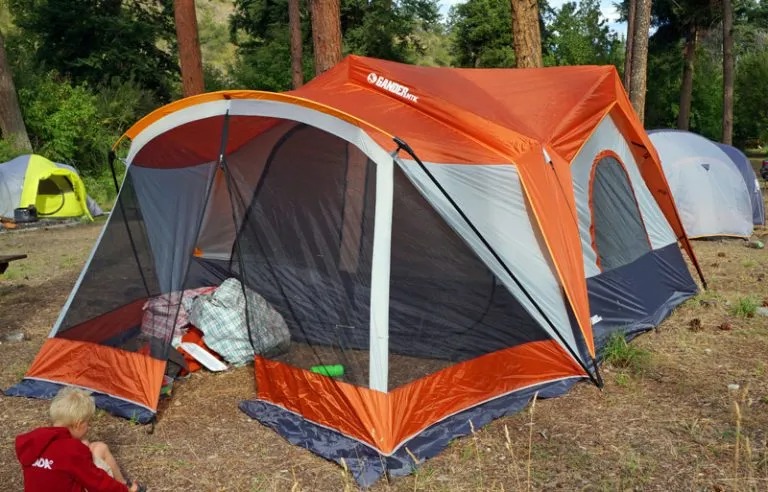
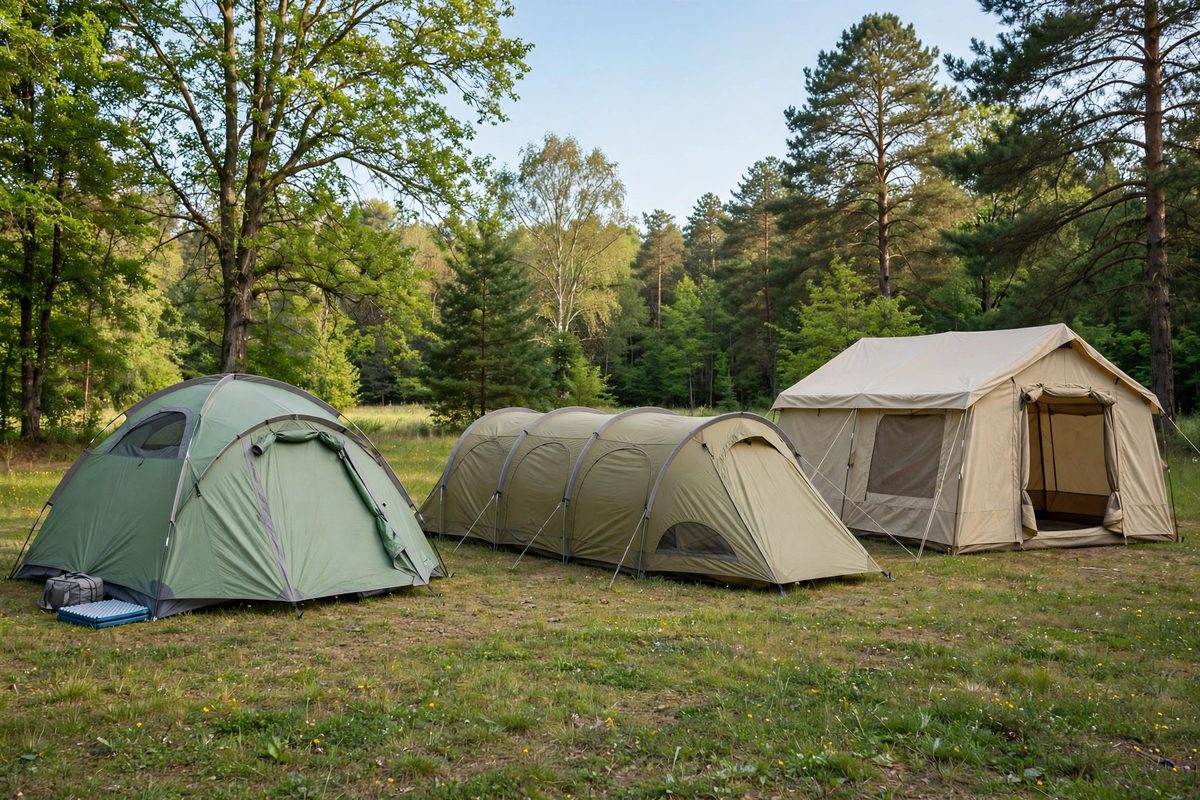
The first decision when learning how to choose a tent is the shape. Dome tents are the classic beginner choice: two poles cross over the top, the design sheds wind well, and most dome tents are freestanding, so you can pitch them on hard or sandy ground and move them before staking. They offer a good balance of headroom, weight and price, which is why they dominate the beginner market.
Tunnel tents give you more living space for the same footprint, because their hoops create tall, straight walls — great for family camping where you spend rainy afternoons inside. The trade-off is that they must be staked out properly to stand up, and they catch more wind. Cabin tents go further still, with near-vertical walls and room to stand, but they are heavy, bulky and best left to car camping on calm sites. Backpacking tents sit at the other end of the scale: low, light and compact, built to be carried for miles rather than lived in for a week.
For most first-time buyers, a dome tent is the safest starting point. If you mostly camp by car with family, a tunnel or cabin tent may suit you better, and if you plan to hike in with everything on your back, look at dedicated backpacking models. Our camping gear guides explain how tents fit into a complete camp setup, from sleeping gear to cooking kit.
3-Season vs 4-Season: Picking the Right Seasonality
Tent seasonality is one of the most misunderstood specs. A 3-season tent is designed for spring, summer and autumn: it prioritises ventilation and light weight, with mesh panels that keep air moving and a rain fly that handles rain but not heavy snow. For the vast majority of campers, a 3-season tent is the right call — it covers every trip you are realistically likely to take in your first year.
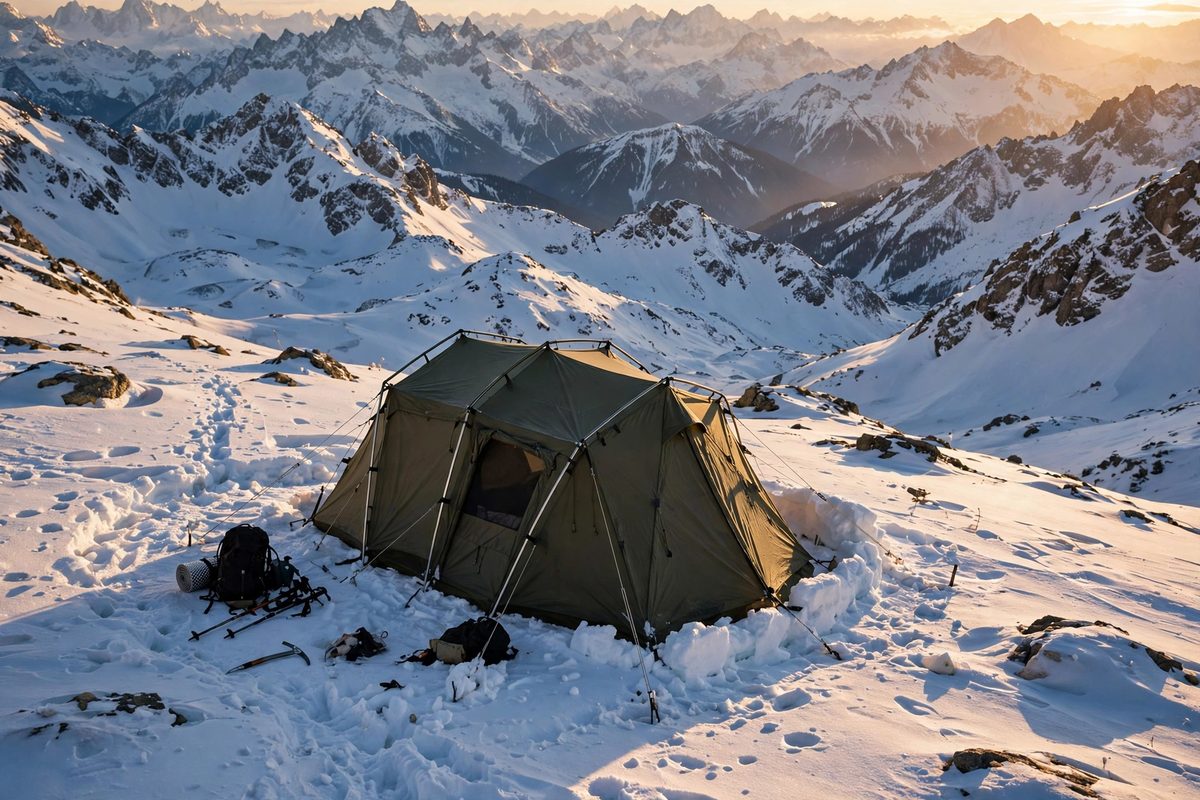
A 4-season tent, sometimes called a mountaineering tent, is built to survive snow loading and high winds: stronger poles, less mesh, a fly that reaches the ground, and a much higher price. It is heavier and noticeably hotter in summer, so buying one for fair-weather camping means paying more for a worse experience most of the year. Unless you plan winter trips in the mountains, you do not need one.
If you camp in a region with cold shoulder seasons, look for a 3-season tent with a full-coverage rain fly and good guy-out points rather than jumping to a 4-season model. That combination handles wind and heavy rain well while keeping the tent usable in summer. Seasonality is about matching the tent to your real calendar, not buying for the harshest trip you can imagine.
Tent Capacity Ratings vs Real Space: Size Up Honestly
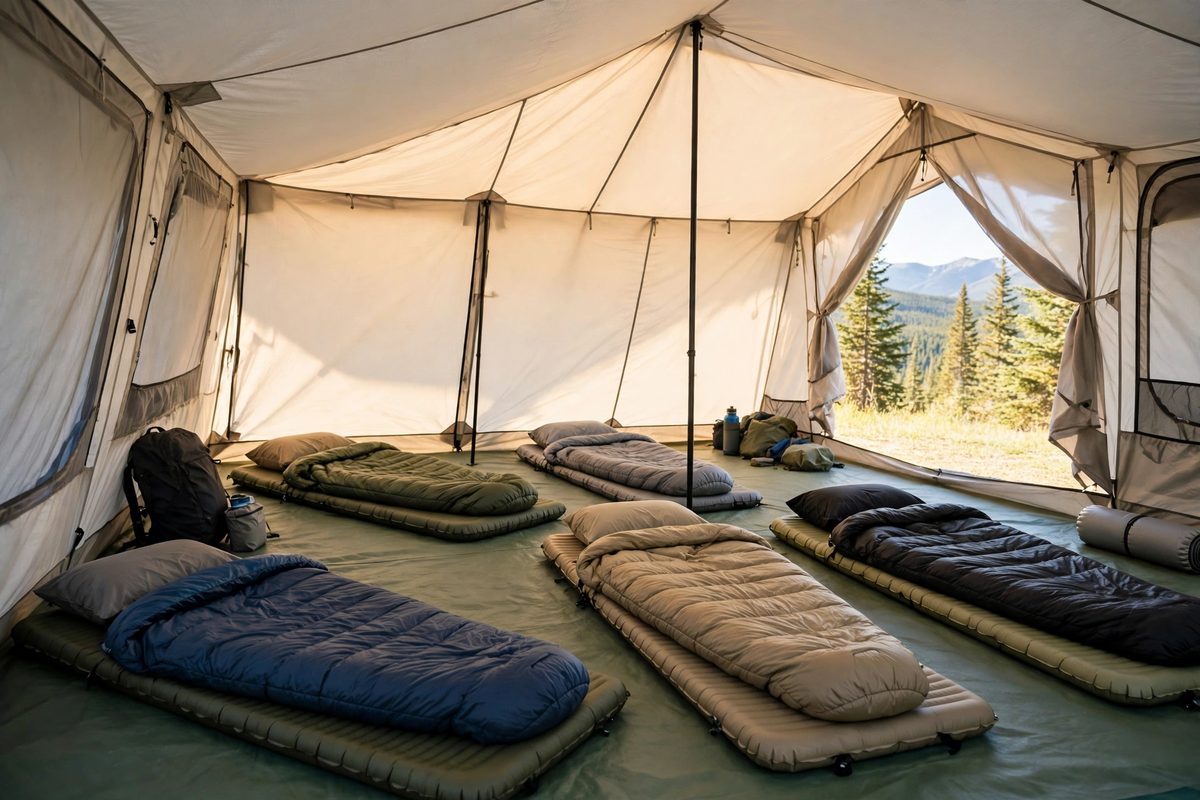
Tent capacity ratings are the single most misleading number on the box. A tent rated for four people is sized for four people sleeping shoulder to shoulder, with no room for bags, no elbow space and no comfort margin. Manufacturers measure floor area, not liveability, and they assume you are all the same size and perfectly still.
The standard advice among experienced campers is to size up: buy a tent rated for one more person than your usual group. A two-person tent for solo camping gives you room for your pack inside; a four-person tent is the realistic choice for a family of three. If two adults and a dog are coming, look at the floor dimensions, not just the headline number — a tent that is 10 cm wider can feel dramatically roomier.
Peak height matters too. A tent you can sit up in comfortably changes rainy mornings completely, and if you are tall, check the floor length before you buy: many two-person tents are only around 210 cm long, which leaves little spare room for taller sleepers. Read our camping gear guide for more on building a comfortable camp setup around the tent you choose.
How to Choose a Tent That Balances Weight and Comfort
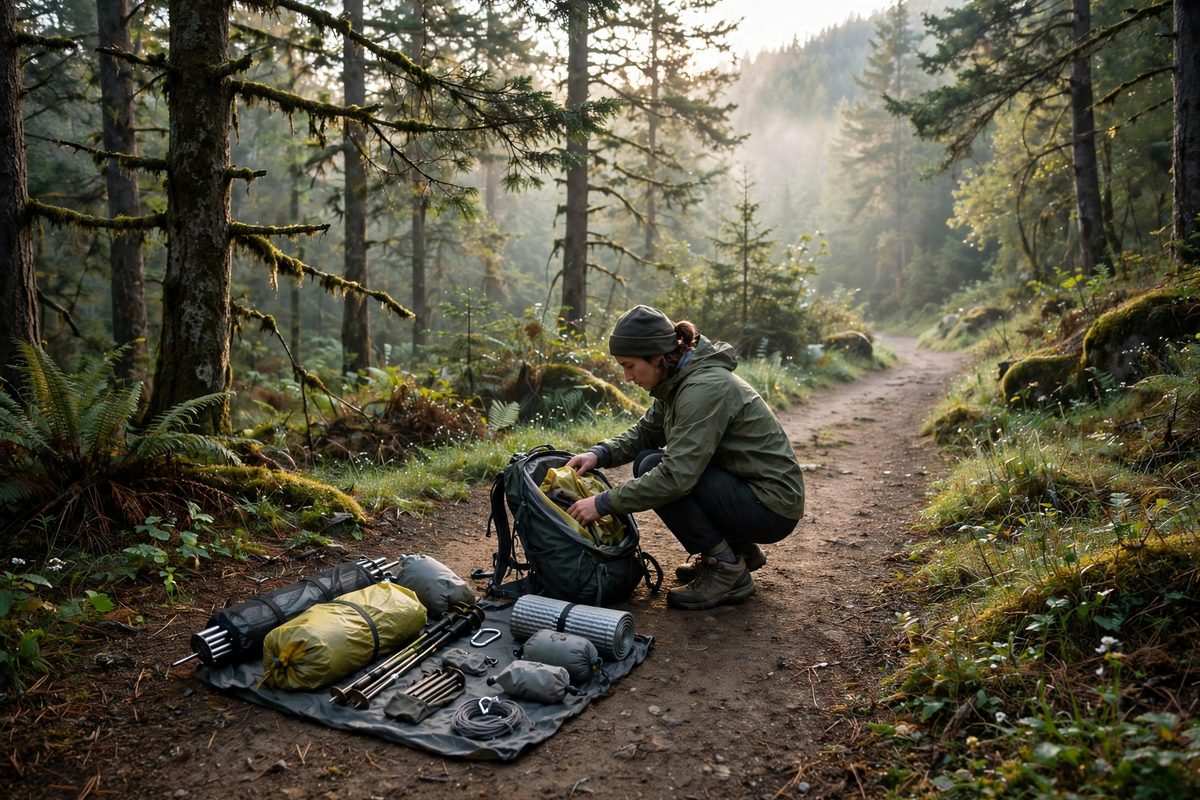
Weight is where the trade-offs get real. A car-camping tent can weigh 6 kg or more and nobody minds, because it travels in the boot. A backpacking tent has to be carried, so every gram counts — but shaving weight usually costs money, space and durability. Knowing how to choose a tent for your style of travel means deciding which side of that trade you are on before you shop.
As a rough guide, a two-person backpacking tent under 3 kg is a reasonable target, and under 2.5 kg is genuinely light. A solo tent under 1.5 kg is light; under 1 kg is ultralight and usually expensive. For car camping, ignore packed weight almost entirely and spend the budget on space, headroom and weather protection instead — weight only matters once you carry the tent on your back.
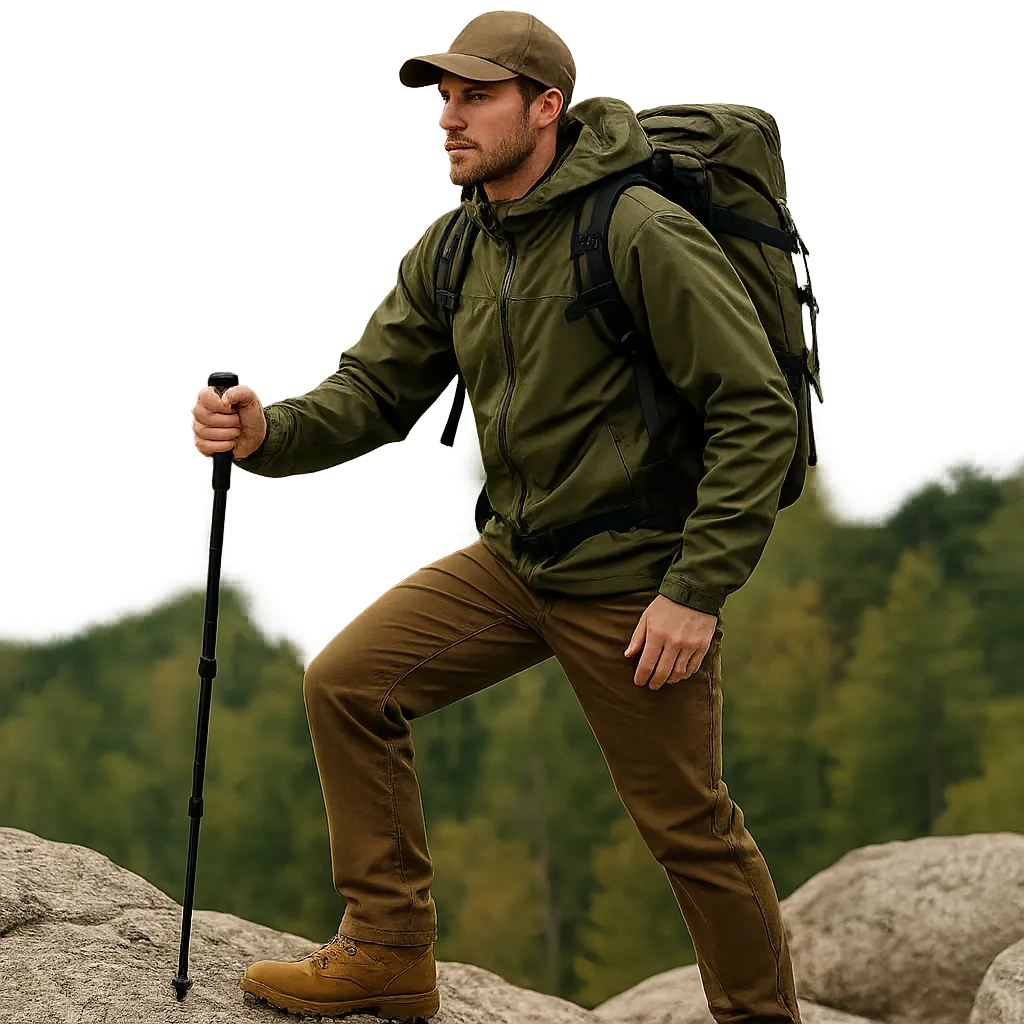
Packed size matters as much as weight for hikers: a tent that packs short fits inside a pack rather than strapped outside, where it snags branches and unbalances your load. Check the packed dimensions as well as the weight, and remember that poles are usually the longest item. If you hike as well as camp, our hiking gear guides cover packs and footwear that pair with a lightweight shelter.
Lightweight Backpacking Tent (2-Person)
A compact two-person backpacking tent that balances low weight with real weather protection — a good starting point for first-time hikers.
Check price on Amazon ↗Waterproof Ratings Explained: Rain Fly, Floor and Seams
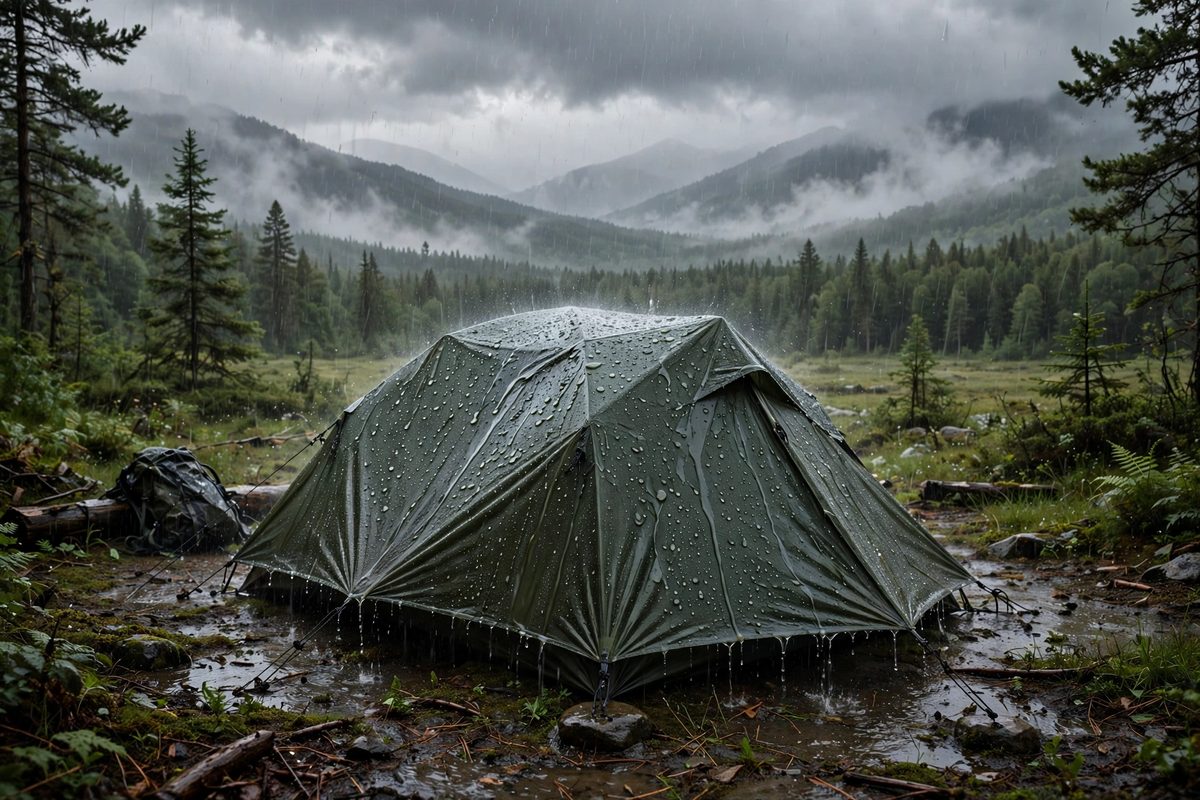
Waterproof ratings are measured in millimetres of hydrostatic head — the height of a water column the fabric can resist before leaking. A rain fly rated at 1,500 mm will handle ordinary rain; 3,000 mm or more handles heavy, prolonged downpours. For the floor, look for a higher number still, since your body weight presses the floor fabric against wet ground.
But the headline number is only part of the story. Most leaks happen at seams, zips and ground-level edges, not through the middle of the fly. A tent with taped or welded seams, a full-coverage fly that reaches close to the ground, and a bathtub floor — where the waterproof floor curves up the sides — will keep you drier than a tent with a bigger number and poor detailing. Check whether the fly covers the doors and vents fully when it is pitched.
Silicone-treated nylon (silnylon) and polyester are the common fly fabrics; polyester sags less when wet and resists UV better, while nylon is lighter and stronger for its weight. Either works well in a decent tent. What matters most is the whole system: fly coverage, seam sealing, floor design and ventilation working together, not one impressive number on a label.
Waterproof 4-Person Camping Tent with Rainfly
A family-size dome tent with a full-coverage rain fly and taped seams — the kind of weather protection to look for in a first tent.
Check price on Amazon ↗Tent Poles, Freestanding Design and Durability
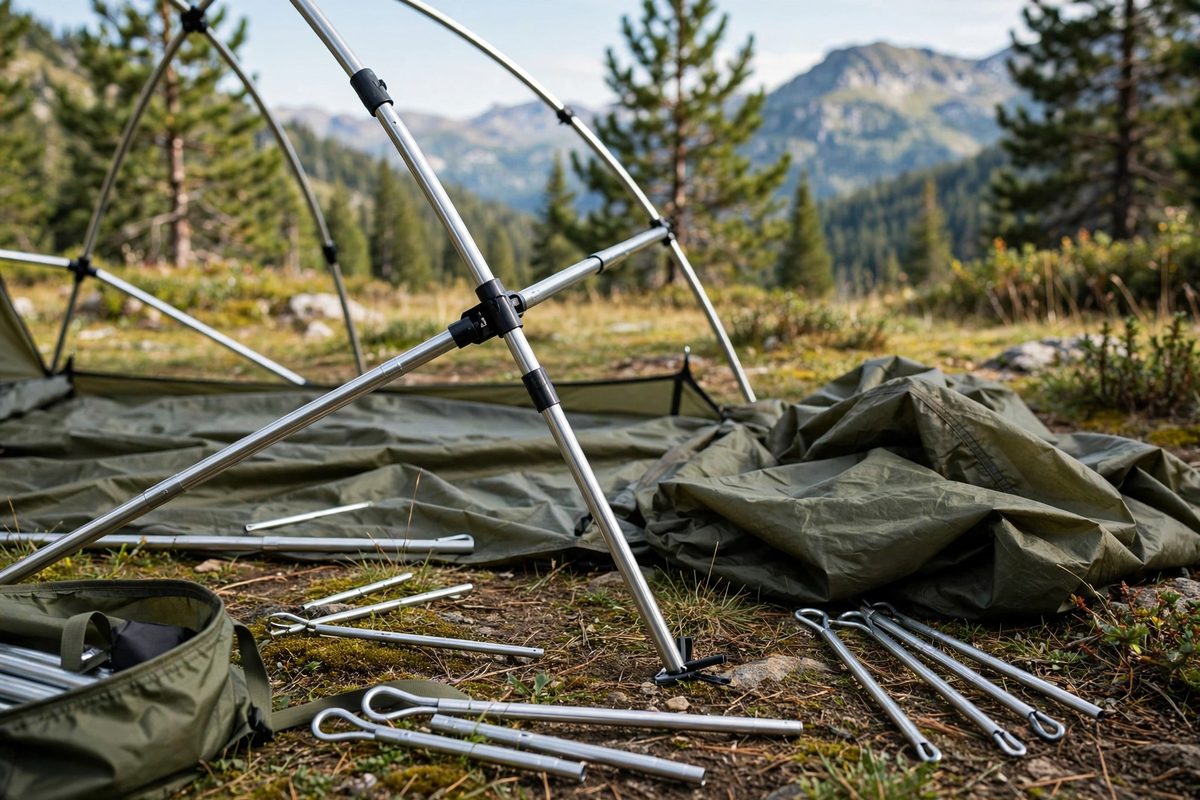
Poles are the skeleton of your tent, and they are where cheap tents most often fail. Aluminium poles are lighter, stronger and more durable than fibreglass, and they bend rather than snapping in high wind — a fibreglass pole that snaps can tear the fly and end a trip. If your budget allows one upgrade over the cheapest tents, aluminium poles are a good place to spend it.
Freestanding design is the other feature worth prioritising. A freestanding tent holds its shape without stakes, so you can pitch it on rock, sand or wooden platforms and reposition it before pegging down. Non-freestanding tents can be lighter, but they demand good ground for every stake and are harder to pitch well — not ideal when you are learning.
Look for colour-coded poles and clips, which make setup far quicker, and check how the poles connect: hubbed pole systems pitch faster and pack shorter than long single poles. Also consider the tent's denier rating for the floor fabric — a higher denier generally means better resistance to abrasion from rough ground, though a groundsheet underneath helps any tent last longer.
Vestibules and Storage: Where Your Gear Lives
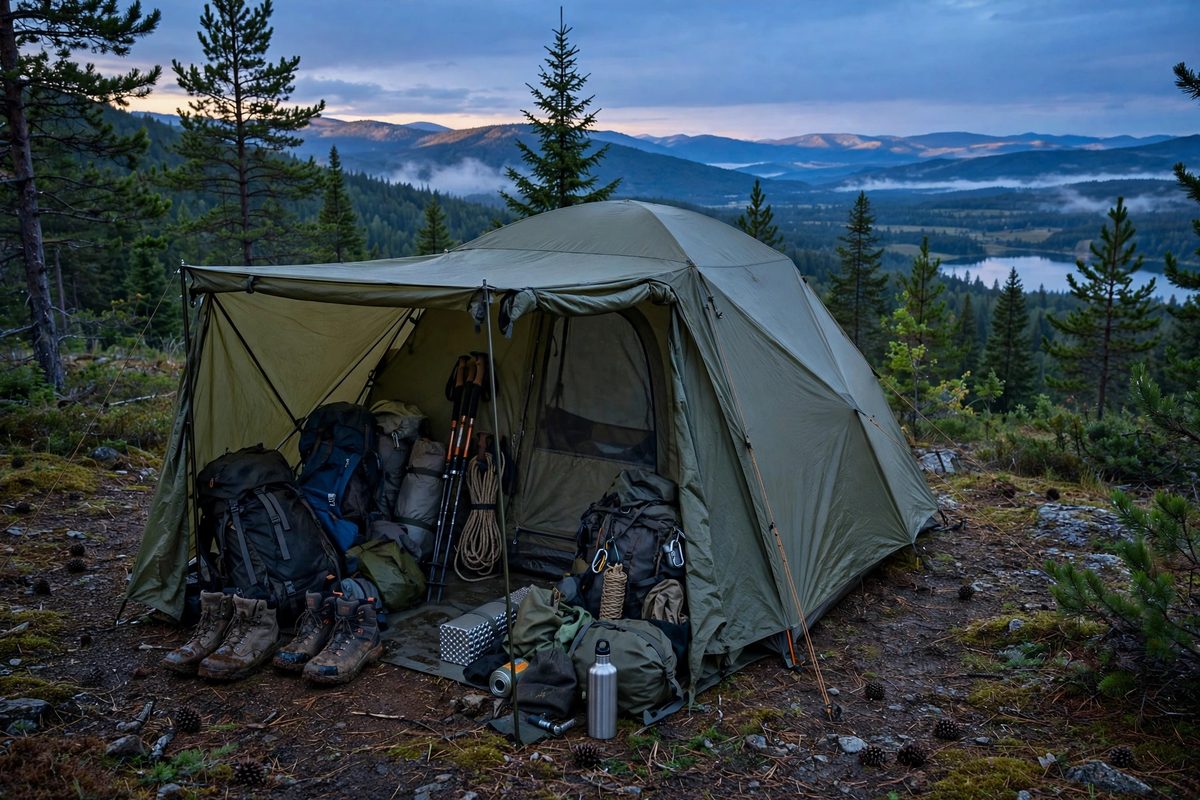
A vestibule is the covered porch area outside the tent door, created by the rain fly extending beyond the inner tent. It is where muddy boots, packs and cooking gear live overnight — out of the rain but out of your sleeping space. For two people sharing a small tent, a good vestibule is the difference between a comfortable night and a cluttered one.
Check how many vestibules a tent has and how large they are. Two doors with two vestibules are far more practical than one, because nobody has to climb over their tent-mate for a midnight trip outside, and each person gets their own gear space. A single-door tent is lighter and cheaper, but it gets old fast on multi-night trips.
Inside the tent, look for mesh pockets and a gear loft — small details that keep headlamps, phones and glasses off the floor. They weigh almost nothing and make a surprising difference to daily life in camp. If your trips involve muddy boots and wet gear, also think about where you will dry things: a tent with a large vestibule and a hiking setup that keeps wet kit outside the sleeping area will keep condensation and damp down overnight.
How to Choose a Tent You Can Actually Set Up
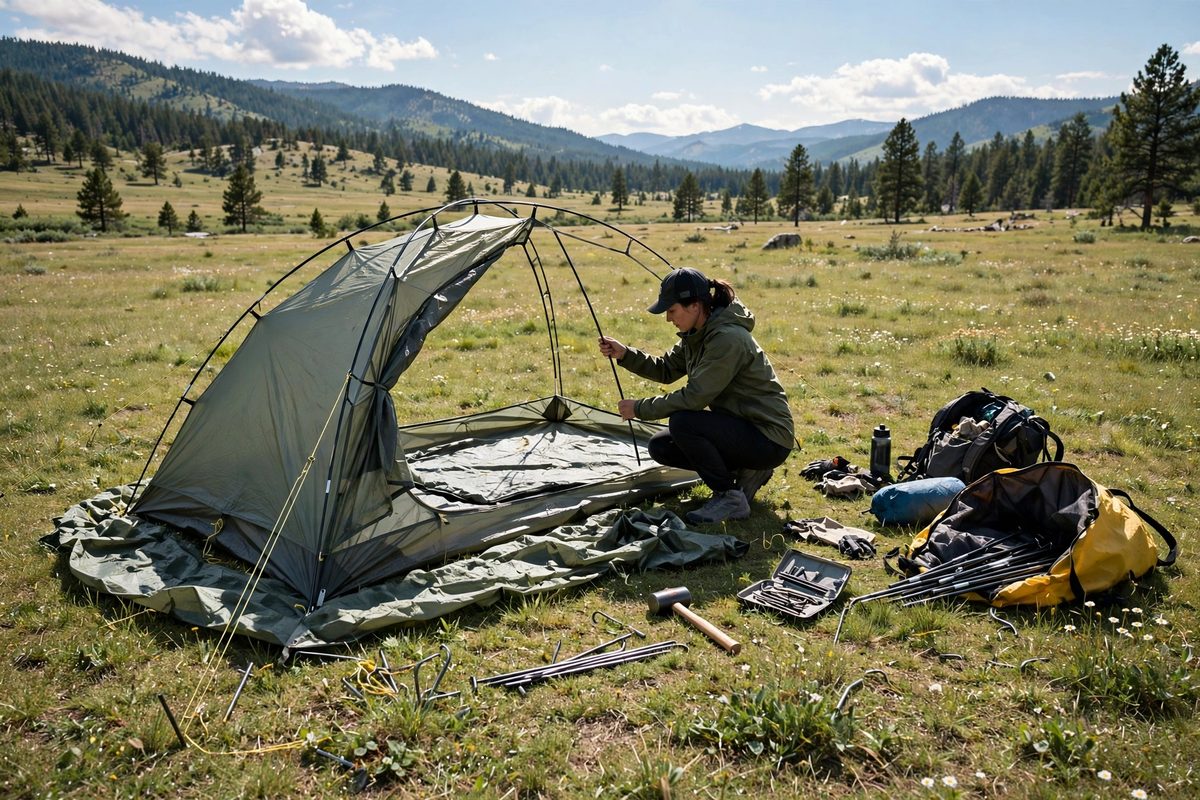
A tent you cannot pitch confidently in the dark, in wind, or in rain is a tent you will regret. Before you buy, look for signs of easy setup: colour-coded poles and clips, a simple two-pole or hubbed design, and a fly that attaches with clips or buckles rather than fiddly threading. Fewer parts and obvious connections beat clever complexity every time.
Practice at home before your first trip. Pitch the tent in your garden or a local park, time yourself, and learn how the fly, guy lines and stakes work together when you are dry, calm and unhurried. That one rehearsal turns a stressful first night into a five-minute job — and it is also when you will discover any missing pegs or damaged parts while you can still fix them.
Guy lines deserve more attention than they get. Properly staked guy lines stabilise the tent in wind and pull the fly away from the inner tent, which keeps condensation down and stops the fly flapping all night. Learn the basic knots or use adjustable tensioners, and always carry a few spare stakes — bent or lost pegs are one of the most common campsite problems, and spares weigh almost nothing.
Ventilation and Condensation: Staying Dry Inside
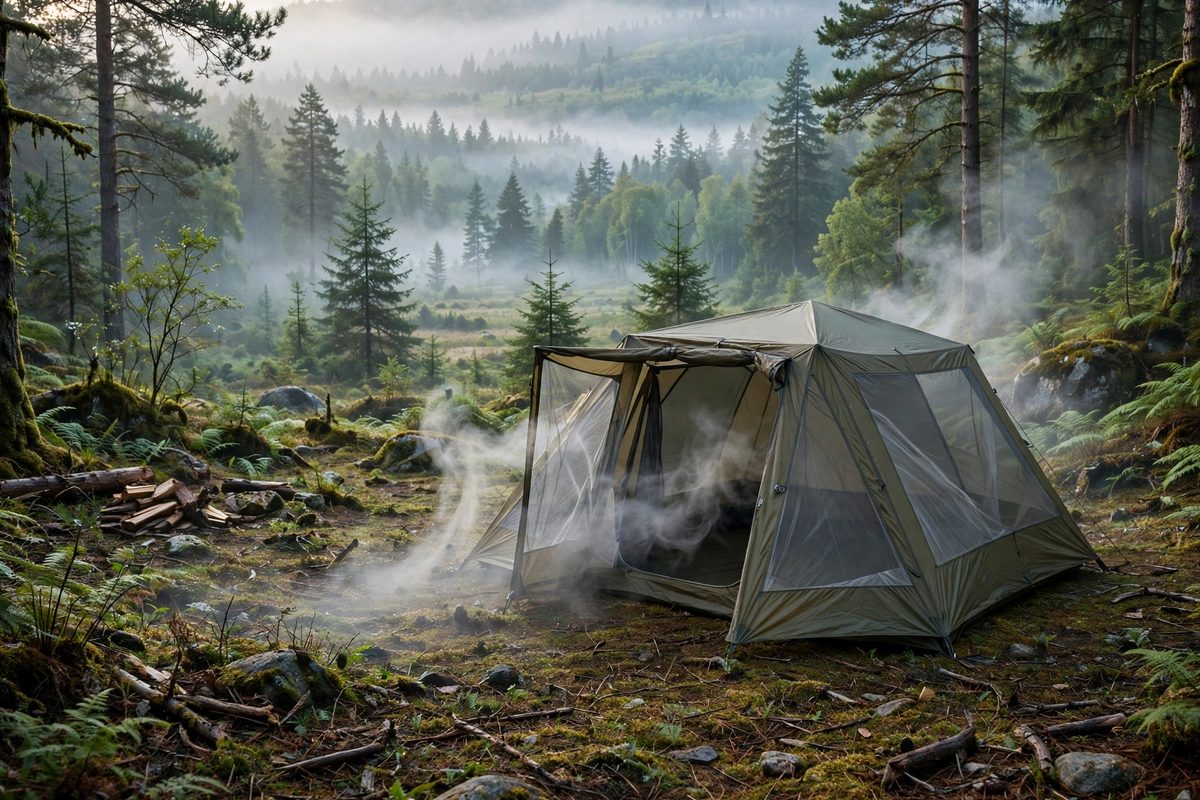
Many first-time campers blame rain for a wet sleeping bag when the real culprit is condensation. Each person breathes out a surprising amount of moisture overnight, and in a sealed tent that moisture condenses on the cool inner fly and drips back down. Good ventilation is what prevents it, which is why mesh inner tents and adjustable vents matter so much.
When you are learning how to choose a tent, look for large mesh panels in the inner tent, vents at the top of the fly that can be opened from inside, and a fly that can be pitched with a gap at the bottom for airflow. In warm weather, pitch with the doors open and the mesh doing the work; in cold weather, keep a small vent open even if it feels counterintuitive — the slight chill is worth staying dry.
Site selection helps too. Pitch on slightly raised, well-drained ground rather than in a hollow where cold air and moisture collect, and avoid pitching directly under trees that drip long after rain stops. A tent with strong ventilation, pitched in a breezy spot, will stay far drier overnight than a sealed-up tent in a damp hollow, whatever the waterproof rating says.
Budget and Value: What to Spend on Your First Tent
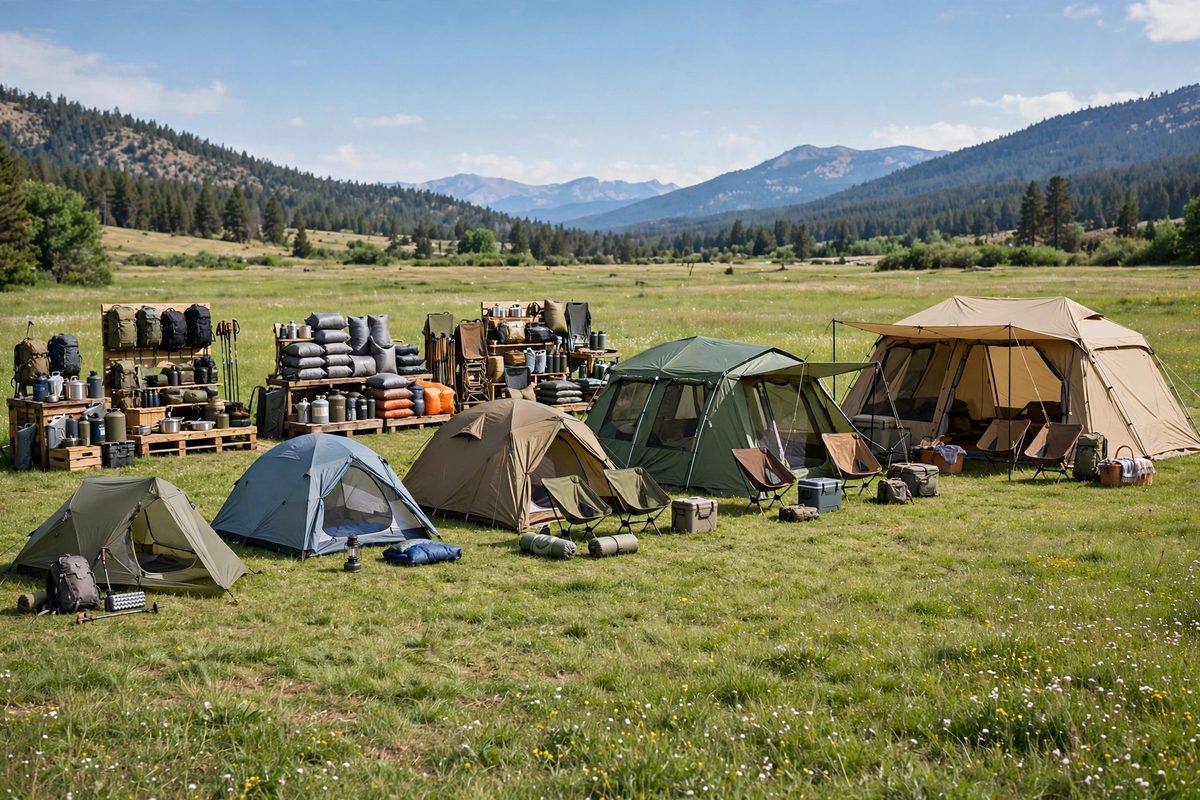
Tent prices vary enormously, and the cheapest options are often a false economy: thin fly fabric, fibreglass poles, untaped seams and zips that fail after a season. That does not mean you need the most expensive tent either. For most first-time buyers, a mid-range tent from an established outdoor brand — the likes of Coleman, REI, MSR or Kelty — offers the best balance: proven designs, aluminium poles, proper seam sealing and spare parts availability.
Think about cost per trip rather than the sticker price. A tent you use ten nights a year for five years costs very little per night, while a bargain tent that leaks on its second outing costs you a ruined trip and a replacement. Buy the best tent you can afford in the size and style you actually need, and be honest about how often you will use it — an occasional summer camper does not need the same tent as someone planning monthly mountain trips.
Finally, remember that the tent is one part of a system. A great tent with a poor sleeping pad or a cheap sleeping bag still makes for an uncomfortable night, so keep some budget for the rest of your kit. Browse our camping articles and about page to see how we approach gear honestly — as an independent guide, not a brand storefront — and read our affiliate disclosure to understand how product links on this site work.
Coleman Dome Tent for Family Camping
A classic family dome tent from a long-established outdoor brand — the straightforward, affordable starting point many first-time campers choose.
Check price on Amazon ↗Frequently asked questions
What size tent should a beginner buy?
Size up by one person: a two-person tent for solo camping, a three-person tent for two people, and a four-person tent for a family of three. Capacity ratings assume shoulder-to-shoulder sleeping with no room for bags, so the extra space makes a real difference to comfort, especially on multi-night trips or in bad weather.
Is a 3-season tent enough for a beginner?
Yes, for almost every beginner. A 3-season tent handles spring, summer and autumn, including heavy rain, and it is lighter, better ventilated and cheaper than a 4-season tent. Only consider a 4-season tent if you specifically plan winter or mountaineering trips with snow and high winds.
How waterproof should a tent be?
Look for a rain fly rated at 1,500 mm hydrostatic head or higher, with 3,000 mm or more preferred for heavy rain, plus taped seams and a bathtub floor. Just as important is fly coverage: the fly should reach close to the ground and fully cover the doors and vents, since most leaks happen at seams and edges rather than through the fabric.
Are expensive tents worth it for first-time campers?
A mid-range tent from an established brand is usually the best value: you get aluminium poles, properly sealed seams, durable zips and spare parts. The cheapest tents often fail at poles or seams within a season, while top-end tents add weight savings and storm resistance that most beginners will not use. Spend for quality, not for features you do not need.
How much should a backpacking tent weigh?
For two people, a tent under 3 kg is a reasonable target and under 2.5 kg is genuinely light. Solo tents under 1.5 kg are light, and under 1 kg is ultralight. If you camp by car, weight barely matters — spend the budget on space and weather protection instead.
How do I stop condensation inside my tent?
Keep air moving: use the tent's mesh panels and vents, leave a small vent open even in cold weather, and pitch in a breezy spot on raised, well-drained ground rather than in a damp hollow. Condensation comes from your own breath overnight, so ventilation — not a higher waterproof rating — is the fix.
Should I buy a tent with one door or two?
Two doors are much more practical for two or more people: nobody climbs over anyone else at night, and each person gets their own vestibule for gear. One-door tents are lighter and cheaper, which suits solo backpackers, but for couples and families the second door is worth the small weight and cost penalty.
What else do I need besides the tent?
At minimum, a sleeping pad and sleeping bag suited to the season, plus a groundsheet to protect the tent floor. Add a headlamp, stakes and guy lines if not included, and a repair kit with a spare pole section and seam sealant. Our camping gear guides cover each of these so you can build a complete kit around your new tent.
That covers the essentials. Browse our camping gear for the gear we cover, and see the blog for more buying guides as we add them.