By the Gandermountains.us team ·
Gandermountains.us is an independent gear guide. We are not affiliated with Gander Mountain, Gander Outdoors, or Camping World, and Gander Mountain is a trademark of its owner. Nothing on this page is sold by or endorsed by the brand. When we name a product below, it is a current alternative from a real manufacturer — not Gander Mountain gear, and we will not pretend otherwise.
Choosing the best hunting binoculars comes down to four numbers and one honest question: where do you hunt? The numbers are magnification, objective lens size, field of view and eye relief. The question is whether you spend your mornings glassing open basins at long range, or sitting in thick timber where a deer appears at 40 yards and vanishes in seconds. Get those two things right and the rest — glass quality, waterproofing, weight — falls into place.
This guide compares 20 real hunting binoculars from Vortex, Leupold, Nikon, ZEISS, Athlon, Celestron, Maven, Burris and Bushnell, from around $70 to around $550, with the specifications that matter for each one. It explains what 10x42 means, how much low-light performance actually costs, and which models suit open country, treestands and glasses wearers. For the rest of your kit, see our hunting gear guides and our Gander Mountain hunting gear overview.
Direct answer: The best hunting binoculars are 10x42 models with fully multi-coated, extra-low-dispersion glass, waterproof and fogproof sealing, and at least 15 mm of eye relief. The Vortex Diamondback HD 10x42 and Leupold BX-2 Alpine HD 10x42 lead for most hunters, while the Nikon Monarch M7 10x42 and ZEISS Terra ED 10x42 suit open country and low light.
At a glance: the best hunting binoculars for 2026
| Binocular | Best for | Key spec |
|---|---|---|
| Vortex Diamondback HD 10x42 | Most hunters | 330 ft FOV, 15 mm eye relief, 21.3 oz |
| Leupold BX-2 Alpine HD 10x42 | Timber and treestands | 342 ft FOV, 13.5 ft close focus |
| Nikon Monarch M7 10x42 | Open country glassing | 362 ft FOV, 16.5 mm eye relief |
| ZEISS Terra ED 10x42 | Low light at dawn and dusk | Twilight factor 20.5, 4.2 mm exit pupil |
| Athlon Talos G2 HD 10x42 | Budget wet-weather hunting | Waterproof, 341 ft FOV, ~$140–$150 |
| Celestron Outland X 10x42 | Cheapest usable 10x42 | 18.2 mm eye relief, ~$91 |
| Bushnell Trophy XLT 10x42 | Best value under $200 | 325 ft FOV, 15.2 mm eye relief, ~$46–$106 |
What magnification is best for hunting binoculars — 8x or 10x?
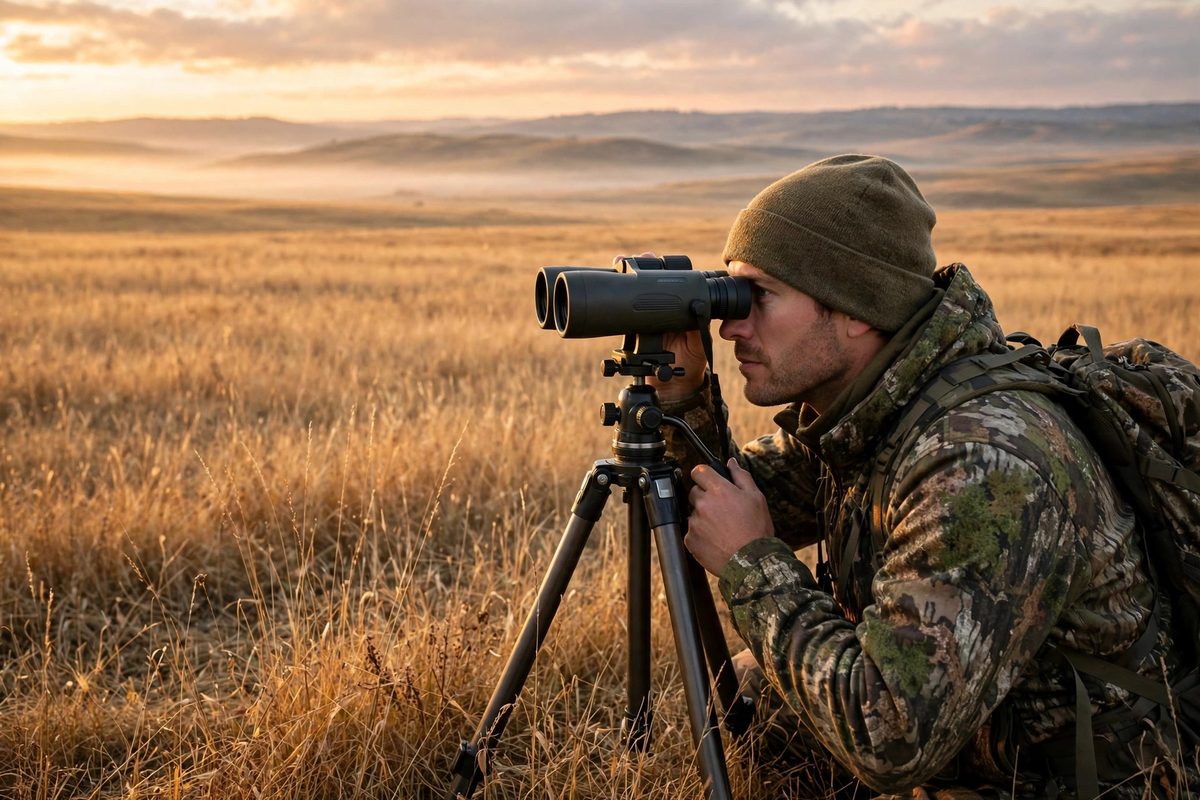
For most hunters, 10x is the best all-round magnification. It is strong enough to judge a buck's antlers or a bull's body at several hundred yards, yet it can still be held steady without a tripod for short glassing sessions. The 8x42 is the better choice in thick timber, in a treestand, or for anyone who struggles to hold a steady image — its wider field of view finds game faster and its image shakes less.
The practical difference is field of view. The Vortex Diamondback HD 10x42 covers 330 ft at 1,000 yards, while an 8x42 of the same line covers noticeably more ground in a single view. That matters when you are scanning a hillside for a bedded animal or tracking a moving deer through trees. Hunters who glass from a tripod in open country can use 10x or even 12x comfortably; hunters who glass freehand in the woods usually see more with 8x.
If you can only buy one pair, choose 10x42. It is the standard hunting configuration for a reason, and every brand in this guide makes a good one. If you already own a 10x42 and hunt a lot of thick cover, an 8x42 like the Diamondback HD 8x42 makes a strong second pair.
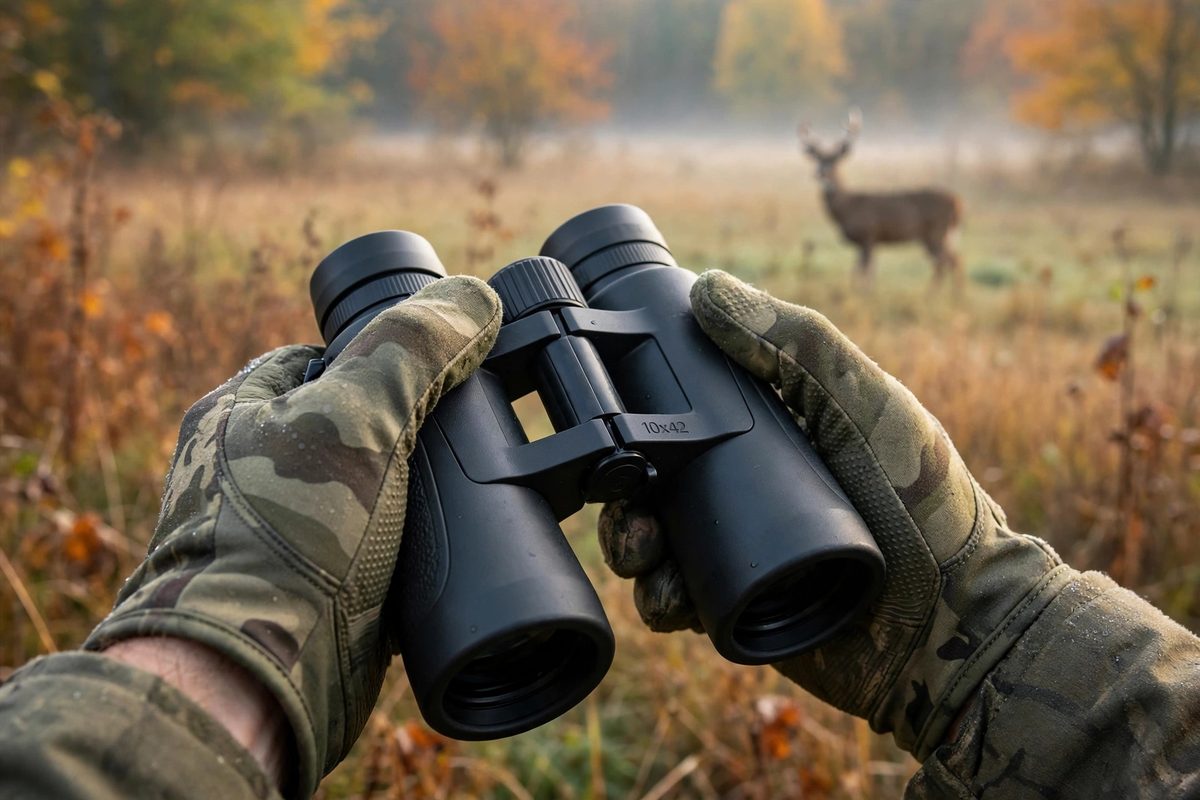
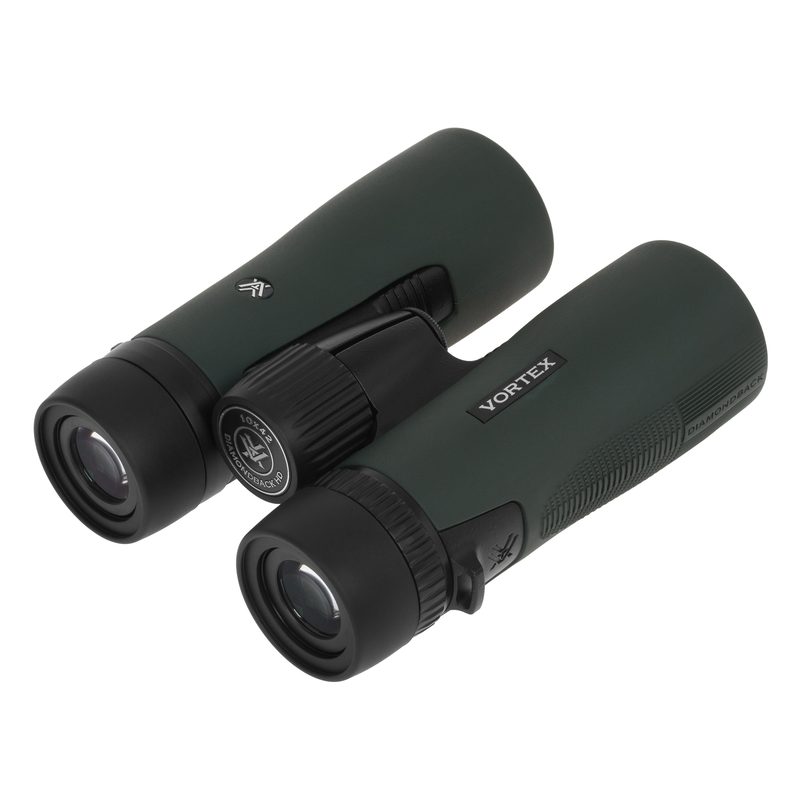
Vortex Diamondback HD 10x42 Binoculars
HD optical system with fully multi-coated lenses, a 330 ft field of view at 1,000 yards, 15 mm of eye relief and a 21.3 oz body — the most recommended mid-priced hunting binocular in this guide.
Check price on Amazon ↗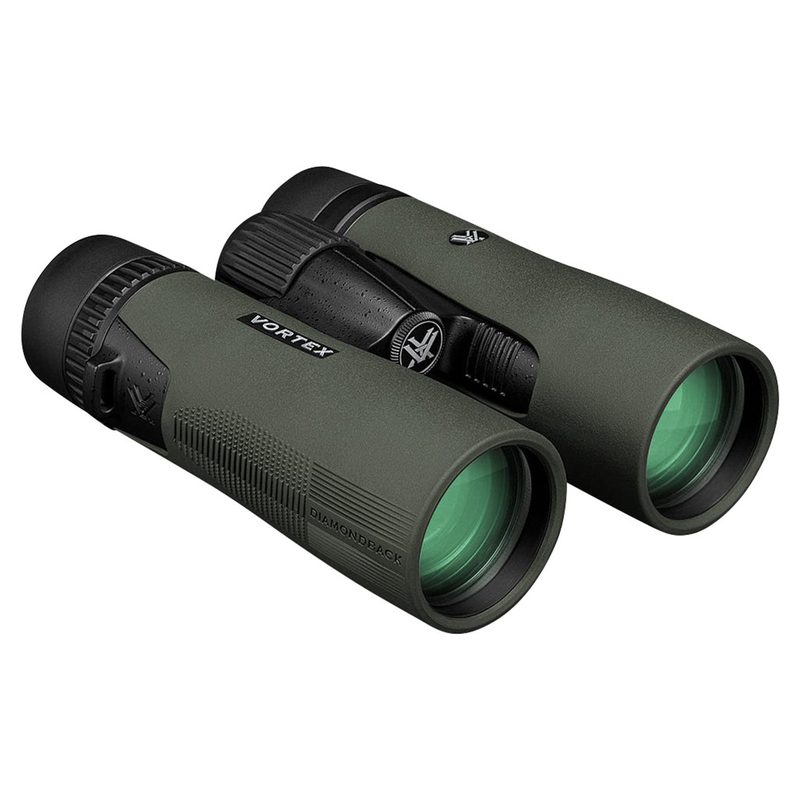
Vortex Diamondback HD 8x42 Binoculars
The 8x42 version of the Diamondback HD, around $239, with a wider field of view and a steadier image for thick cover and treestand hunting — the better choice when shots come close and fast.
Check price on Amazon ↗What does 10x42 mean, and why is it the hunting standard?
10x42 means the binocular magnifies ten times through a 42 mm objective lens. The first number is magnification — how much closer the image appears — and the second is the diameter of the front lens, which controls how much light the binocular gathers. Together they describe the balance every hunting binocular strikes between reach, brightness and weight.
The 42 mm objective is the sweet spot for hunting. A 32 mm lens is lighter but noticeably dimmer at dawn and dusk, when deer and elk are most active; a 50 mm lens is brighter still, but it adds weight and bulk that most hunters feel by midday. A 10x42 gathers enough light for the first and last half-hour of shooting light while staying light enough to carry on a chest harness all day. That is why 10x42 dominates the hunting market, from the Vortex Crossfire HD 10x42 at around $149 to premium models near $550.
Magnification and objective size also set the exit pupil — the objective diameter divided by magnification. A 10x42 has a 4.2 mm exit pupil, which matches the human pupil in daylight and is adequate in low light; an 8x42 has a 5.25 mm exit pupil and looks brighter at dusk. That is one reason 8x42 models stay popular for timber hunting, even though 10x42 is the default for open country.
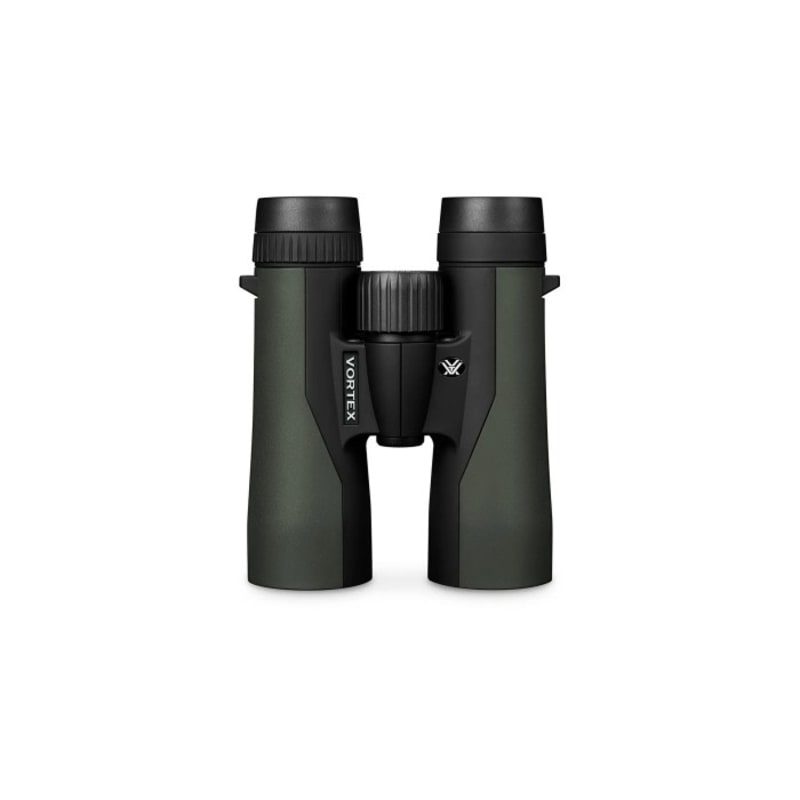
Vortex Crossfire HD 10x42 Binoculars
Fully multi-coated HD optics in a waterproof, fogproof body for around $149 — the least expensive way into a serious 10x42 hunting binocular from a major brand.
Check price on Amazon ↗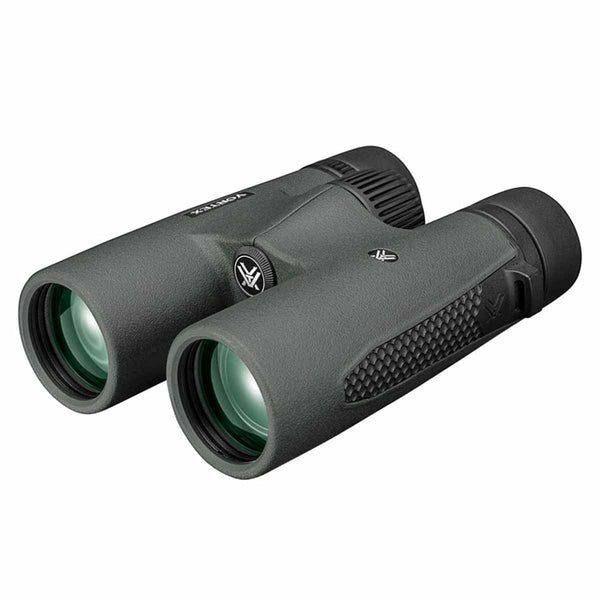
Vortex Triumph HD 10x42 Binoculars
Vortex's entry-level HD 10x42, model TRI-1042, with fully multi-coated lenses and a rugged rubber-armoured body — a straightforward, affordable 10x42 for new hunters.
Check price on Amazon ↗How much should you spend on the best hunting binoculars?
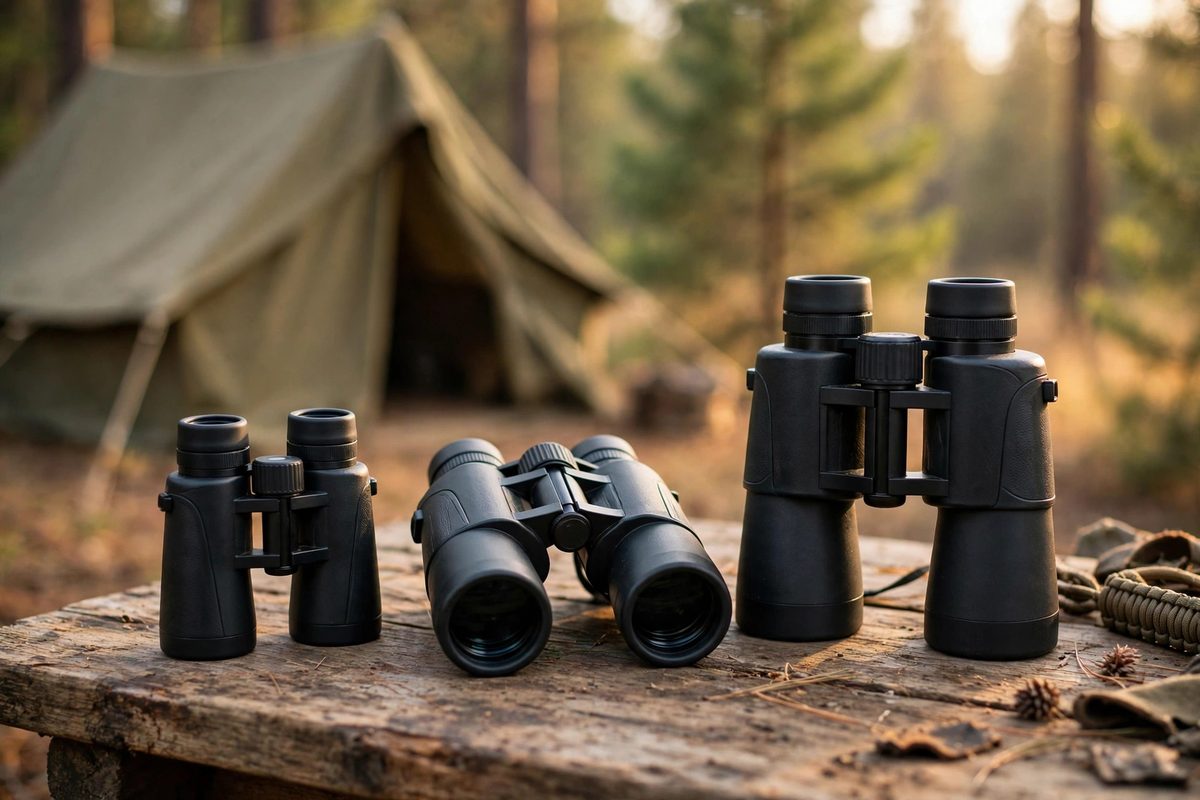
A usable hunting binocular starts around $100. At that price, models like the Celestron Outland X 10x42, around $91, and the Bushnell H2O 10x42, around $70 to $120, offer fully coated optics, waterproof sealing and a usable image in daylight. They will find game and judge it at moderate range — but they will show their limits in the first and last minutes of legal light, when the image goes dark and soft at the edges.
The biggest value jump happens between $150 and $350. In that range, the Vortex Diamondback HD 10x42, around $190 to $240, the Leupold BX-2 Alpine HD 10x42, around $250, and the Athlon Argos G2 HD 10x42, at $229.99, add extra-low-dispersion glass, better coatings and brighter, sharper images at dawn and dusk. That is where most hunters should aim if the budget allows, because low-light performance is when binoculars actually earn their keep.
Above $500, the gains get smaller and more specific: the Nikon Monarch M7 10x42, listed at $549.95, and the Leupold BX-4 Pro Guide HD 10x42, averaging around $538, add wider fields of view, longer eye relief and finer edge sharpness. Worth it for hunters who glass for hours in open country; overkill for a treestand hunter who rarely looks past 100 yards. Spend for the hunting you actually do, not the hunting you imagine.
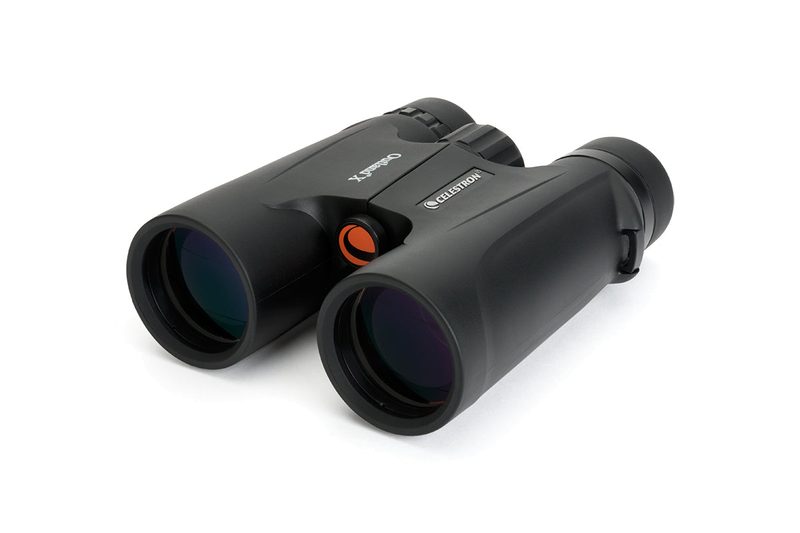
Celestron Outland X 10x42 Binoculars
A 10x42 roof-prism binocular with a 5.5-degree field of view, 18.2 mm of eye relief and a 23.6 oz body, for around $91 — the cheapest full-size hunting binocular in this guide that still offers waterproof construction.
Check price on Amazon ↗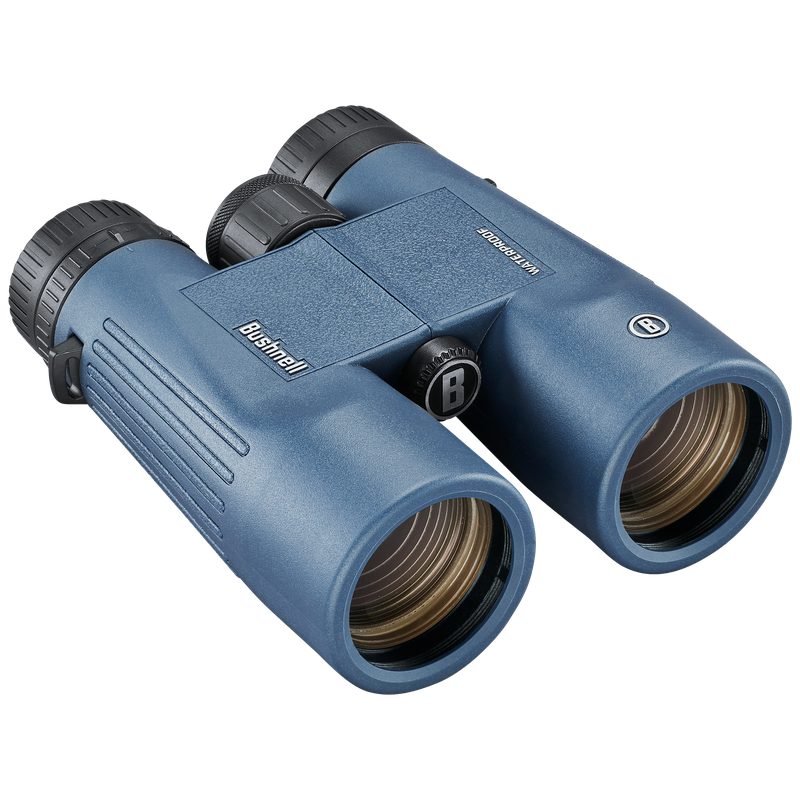
Bushnell H2O 10x42 Binoculars
A waterproof and fogproof 10x42 in a rugged blue body, around $70 to $120, built for wet weather and rough handling — a practical budget pick for hunters who are hard on gear.
Check price on Amazon ↗What makes a binocular good in low light at dawn and dusk?
Low-light performance comes from glass quality and coatings, not from magnification. Extra-low-dispersion (ED) glass and fully multi-coated lenses transmit more light and keep contrast high when the sun is below the horizon, which is exactly when deer and elk move. The ZEISS Terra ED 10x42, with a twilight factor of 20.5, and the Vortex Viper HD 10x42 are built around that principle — their images stay usable several minutes longer than budget glass at the same magnification.
Objective size matters too, but only up to a point. A 42 mm lens gathers about 70 percent more light than a 32 mm lens, which is why 10x42 beats 10x32 at dawn. Going up to 50 mm gathers more still, but the extra weight and size rarely repay the gain for a hunter who carries the binocular all day. For most hunters, 10x42 with good ED glass is the practical low-light sweet spot.
There is one more low-light factor that costs nothing: clean lenses. A smudged objective can cut more light than the difference between two price tiers, so carry a lens cloth and use it. And if you hunt the dark edges of the day often, pair your binocular with a good headlamp for the walk in and out — see our budget headlamp guide for options under $50.
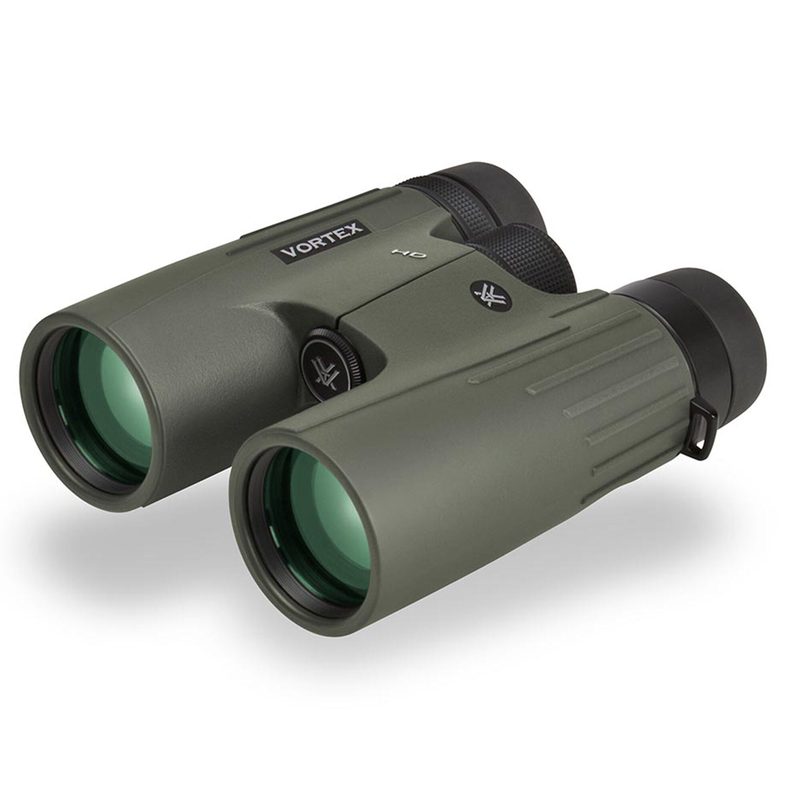
Vortex Viper HD 10x42 Binoculars
A 10x42 with HD glass and a $489.99 list price, built for sharp, bright images at dawn and dusk — the premium Vortex option in this guide for low-light hunters.
Check price on Amazon ↗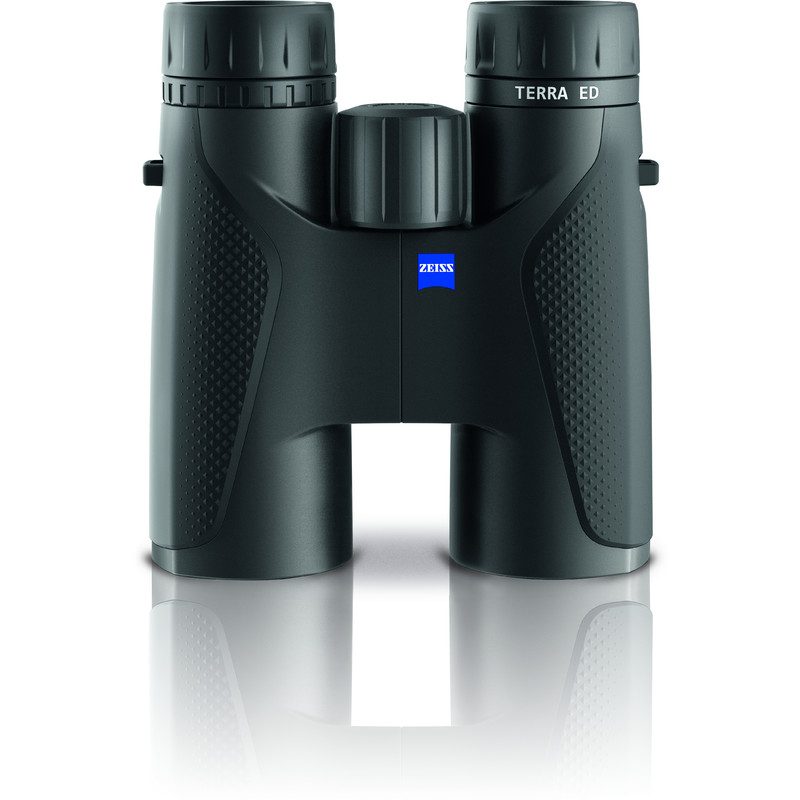
ZEISS Terra ED 10x42 Binoculars, Black
ZEISS glass with a 20.5 twilight factor and a 4.2 mm exit pupil, around $375 to $500 — German optics that stay bright and contrasty as the light fades.
Check price on Amazon ↗How important are waterproof and fogproof ratings for hunting binoculars?
Waterproof and fogproof ratings are essential for a hunting binocular. Hunting happens in rain, snow and creek crossings, and a binocular that is not sealed will fog inside the barrels on a cold morning — usually at first light, when you need it most. Look for models that are O-ring sealed and nitrogen- or argon-purged, which stops internal fogging when the temperature changes fast.
Every binocular in this guide is waterproof and fogproof, including the budget models. The Athlon Talos G2 HD 10x42, around $140 to $150, and the Athlon Argos G2 HD 10x42, at $229.99, both carry full waterproof and fogproof protection, so the feature itself costs nothing extra — the difference between price tiers is glass quality, not sealing. If a binocular does not list waterproof and fogproof in its specifications, do not take it hunting.
Sealing also protects against dust and the slow damage of repeated wetting and drying. After a wet hunt, wipe the binocular down, leave the lens caps off in a dry place so any surface moisture evaporates, and store it in its case rather than in a damp pack. A sealed binocular that is looked after will last for decades of hunting seasons.
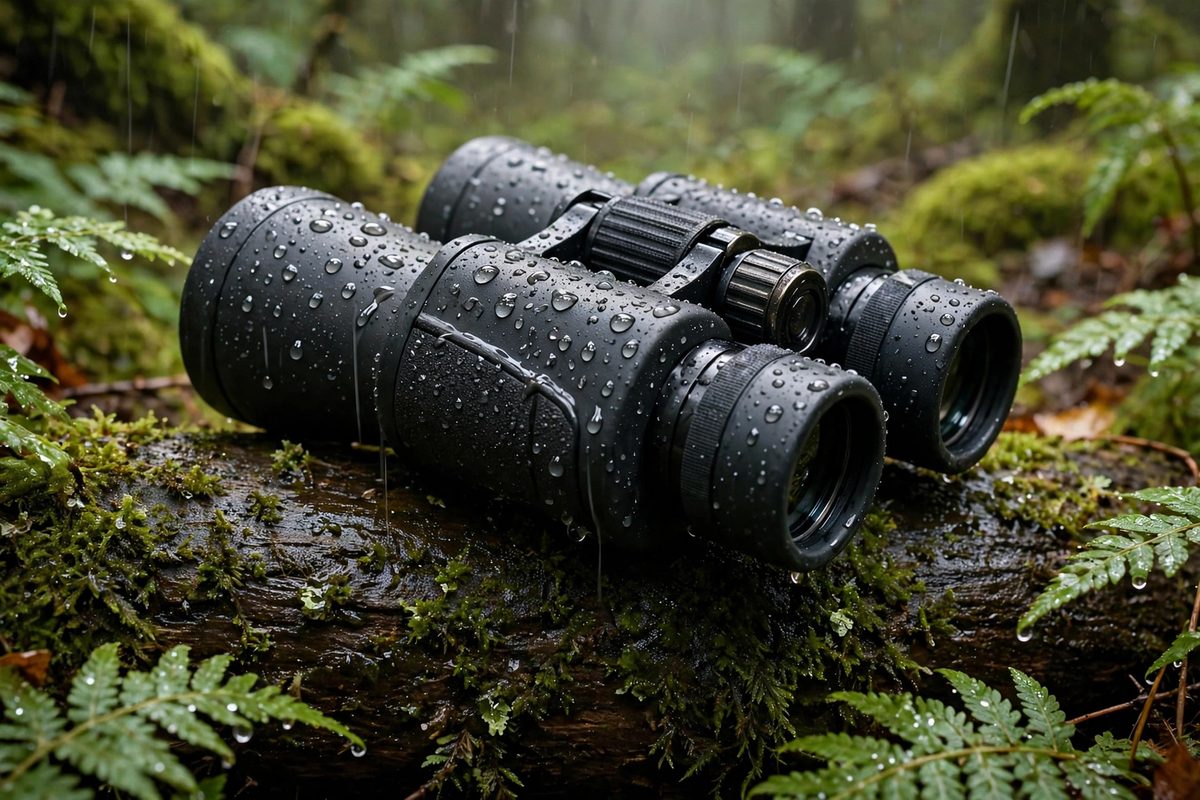
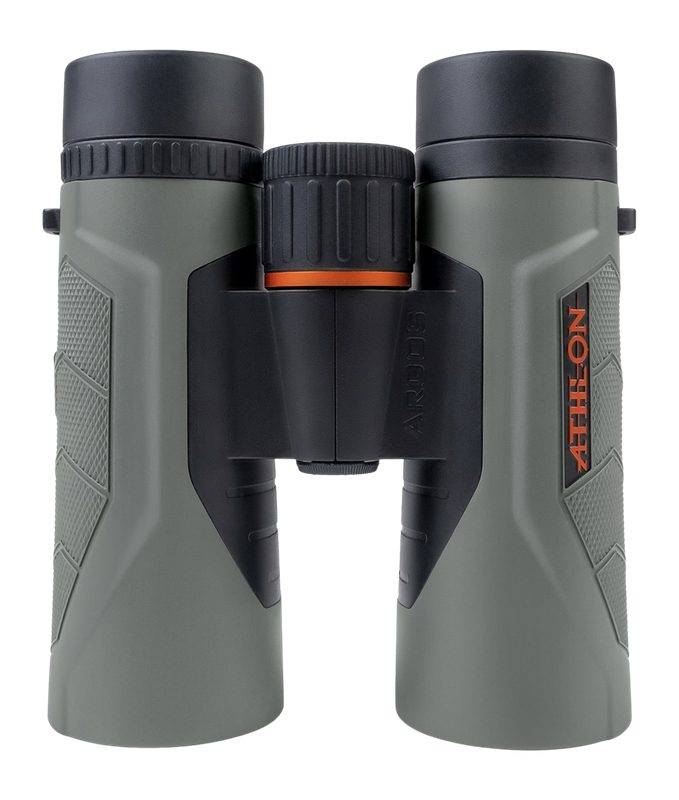
Athlon Argos G2 HD 10x42 Binoculars
HD glass with a 319 ft field of view at 1,000 yards, 16.1 mm of eye relief and a 26 oz body for $229.99 — fully waterproof and fogproof with an argon fill.
Check price on Amazon ↗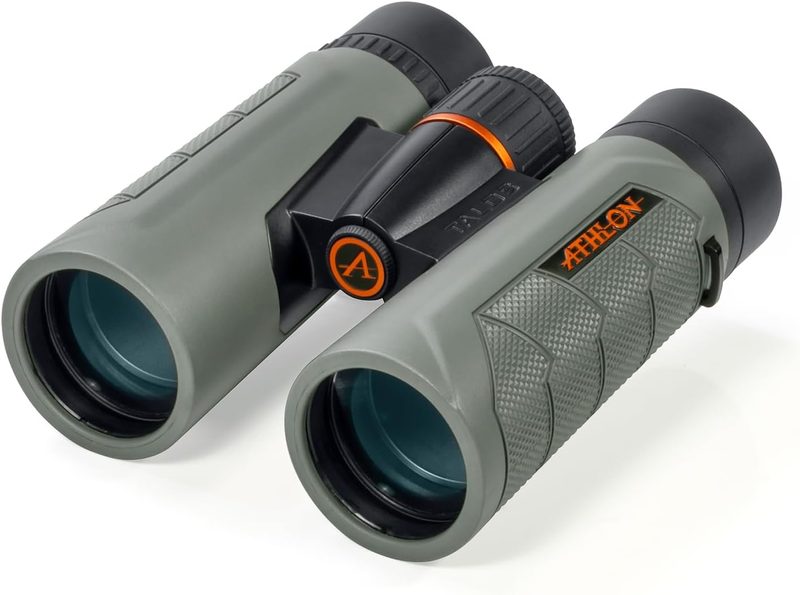
Athlon Talos G2 HD 10x42 Binoculars
HD glass with a 341 ft field of view, 15.2 mm of eye relief, an 8.2 ft close focus and a 25.5 oz body, around $140 to $150 — waterproof, fogproof and a strong budget pick for wet weather.
Check price on Amazon ↗What is eye relief, and do glasses wearers need long eye relief?
Eye relief is the distance from the eyepiece lens at which your eye can still see the full field of view. If the eye relief is too short, you have to press the binocular hard against your eye — or your glasses — and the edges of the image disappear. For hunters who wear glasses, at least 15 mm of eye relief is the minimum, and 16 mm or more is noticeably more comfortable.
The numbers in this guide show the range: the Vortex Diamondback HD 10x42 offers 15 mm, the Athlon Argos G2 HD 10x42 offers 16.1 mm, the Nikon Monarch M7 10x42 offers 16.5 mm, and the Celestron Outland X 10x42 offers 18.2 mm. Twist-up eyecups let you set the relief to your eye — fully extended for bare eyes, partly retracted for glasses — so check that the eyecups move smoothly and hold their position.
Short eye relief is the most common reason a binocular feels wrong in the shop, and it is easy to miss if you try it without your glasses on. Always test a binocular wearing the glasses you hunt in, and look at the edges of the image, not just the centre. If the field of view feels tunnelled or cropped, the eye relief is too short for you, whatever the price tag says.
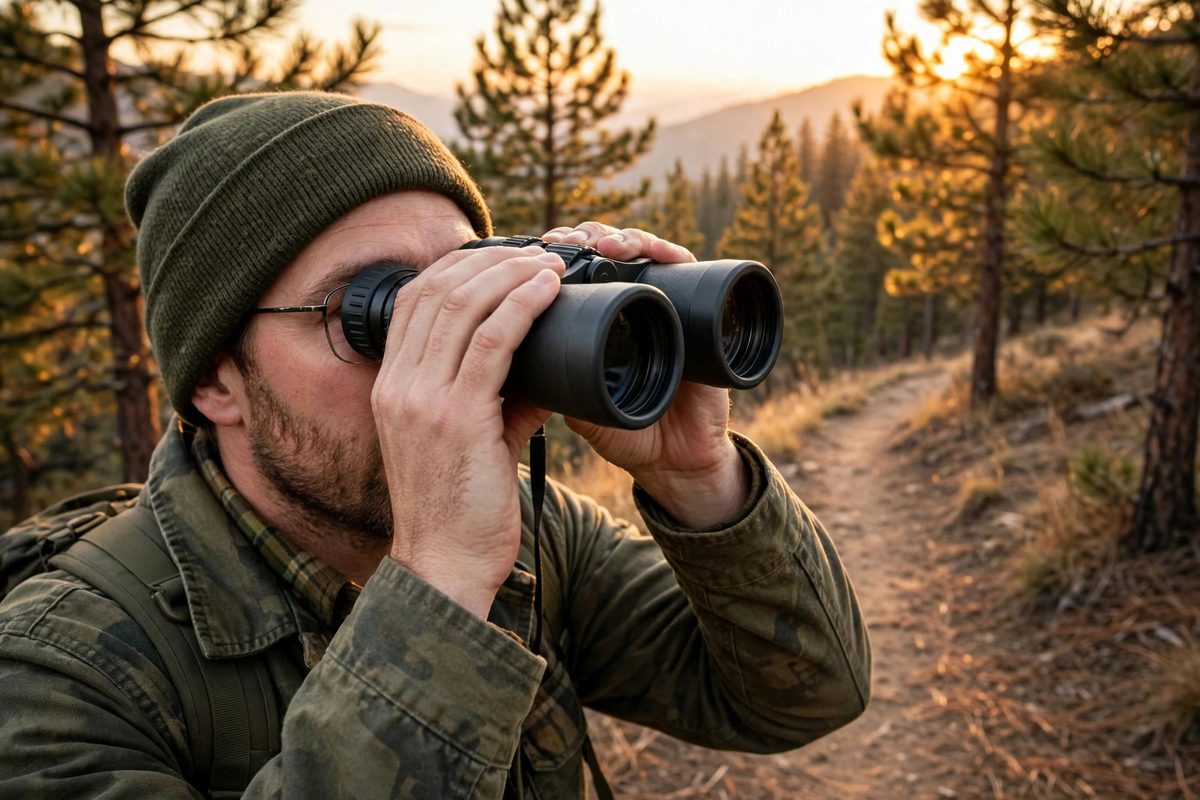
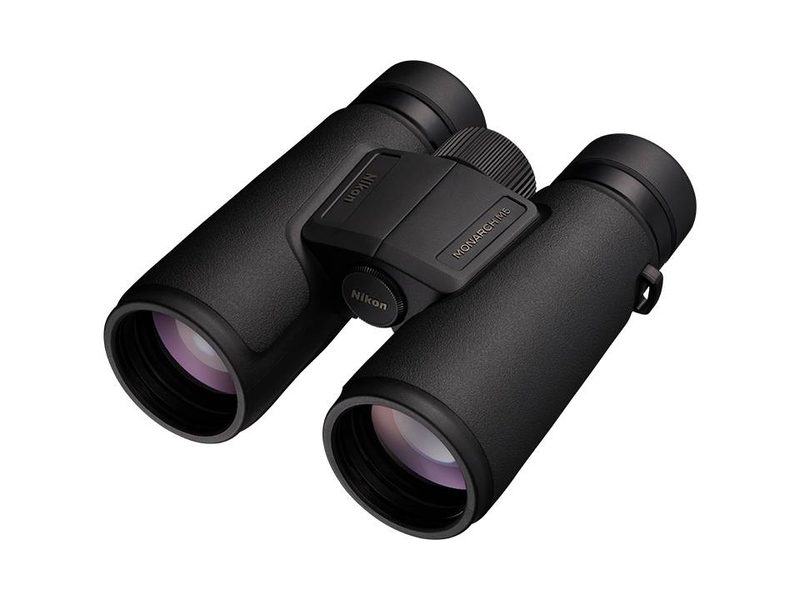
Nikon Monarch M5 10x42 Binoculars
ED glass in a 10x42 body with a wide field of view and long eye relief — a strong all-rounder for hunters who wear glasses and glass for long sessions.
Check price on Amazon ↗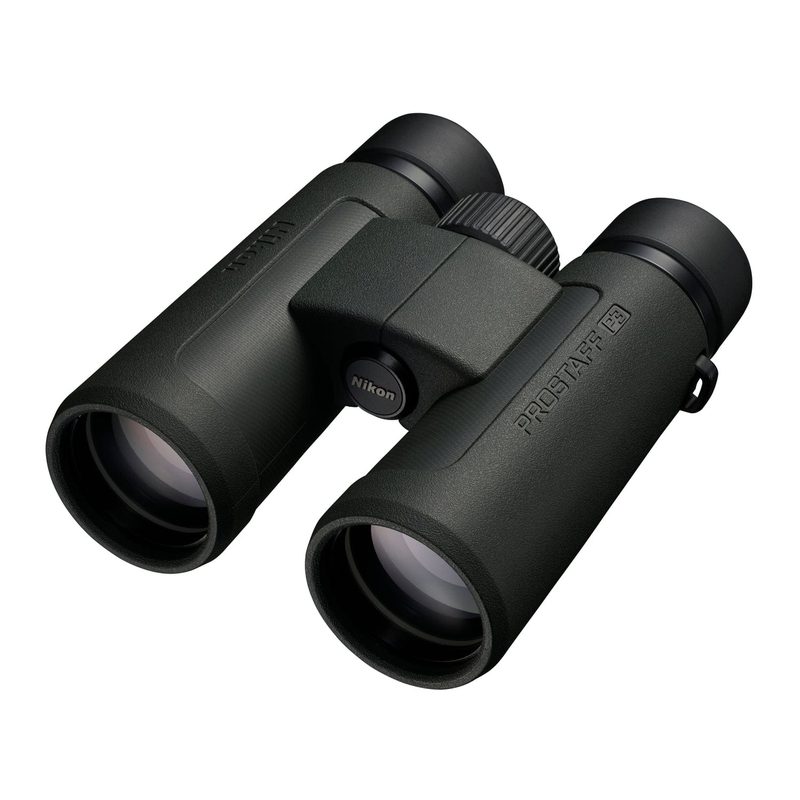
Nikon PROSTAFF P3 10x42 Binoculars
A 10x42 with a $170 list price, often found around $97, and fully multi-coated optics — Nikon's entry-level hunting binocular with enough eye relief for most glasses wearers.
Check price on Amazon ↗Which hunting binoculars are best for open country and long glassing sessions?
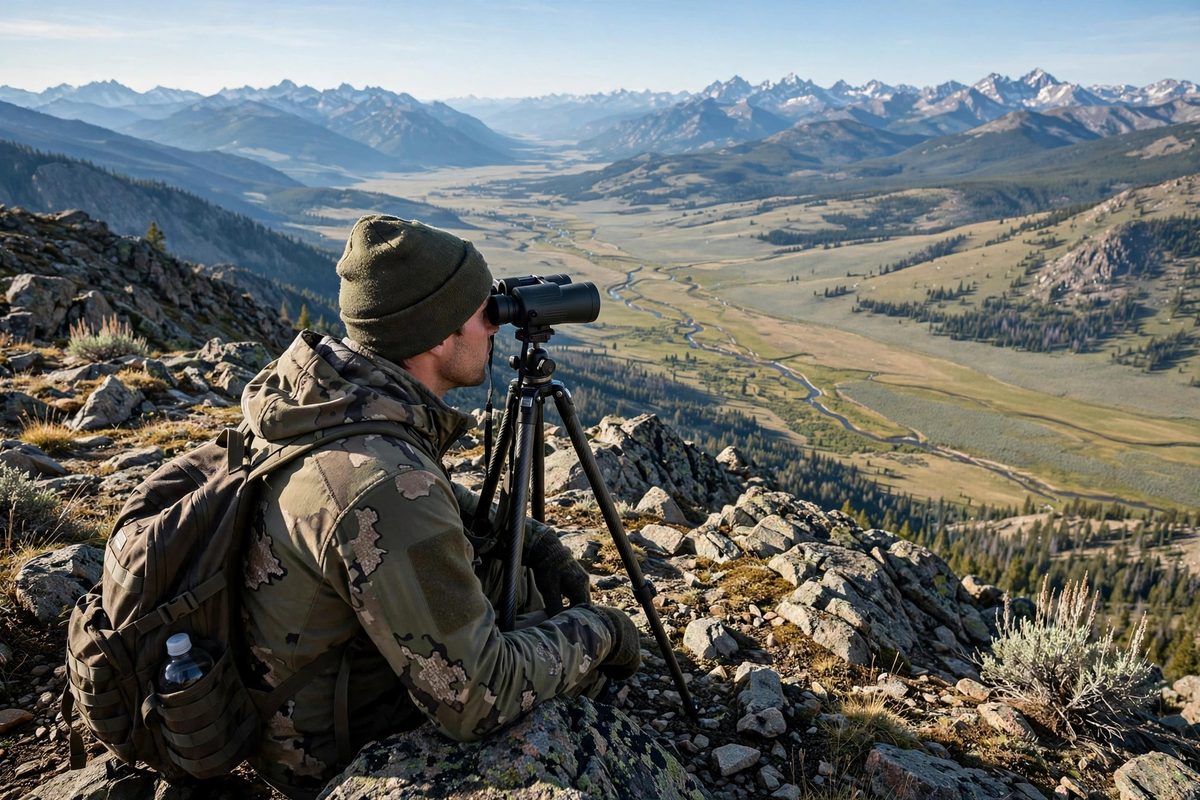
Open country is where binocular quality pays off fastest. Hours of glassing across basins and ridges punish narrow fields of view, short eye relief and soft edges, so the priorities here are a wide field of view, comfortable eye relief and glass that stays sharp across the whole image. The Nikon Monarch M7 10x42, with a 362 ft field of view at 1,000 yards and 16.5 mm of eye relief, is built for exactly this work, and the Leupold BX-4 Pro Guide HD 10x42 is its direct rival.
A tripod changes the equation too. Mounting a 10x42 on a tripod adapter removes hand shake entirely, which makes 10x — and even 12x — practical for all-day glassing. If you hunt mule deer, elk or pronghorn in open country, budget for a lightweight tripod and adapter alongside the binocular; the combination finds more game than a more expensive binocular held freehand. Our hiking gear guide covers the packs and supports that carry well alongside optics in the backcountry.
Weight still matters, even in open country. The Monarch M7 weighs 24 oz, which is manageable on a chest harness, and the BX-4 Pro Guide HD uses a magnesium body to keep weight down. But if the walk to the glassing point is long and steep, every ounce counts — which is why the lightweight options in the next sections of this guide deserve a look too.
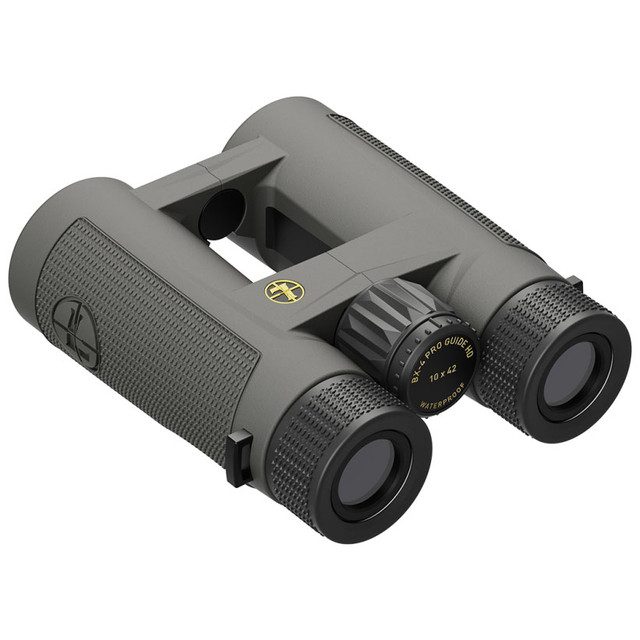
Leupold BX-4 Pro Guide HD 10x42 Binoculars, Shadow Gray
Leupold's Pro Guide HD in Shadow Gray, model 172666, averaging around $538 — Abbe-Koenig prisms, a wide field of view and a magnesium body built for long days behind glass in open country.
Check price on Amazon ↗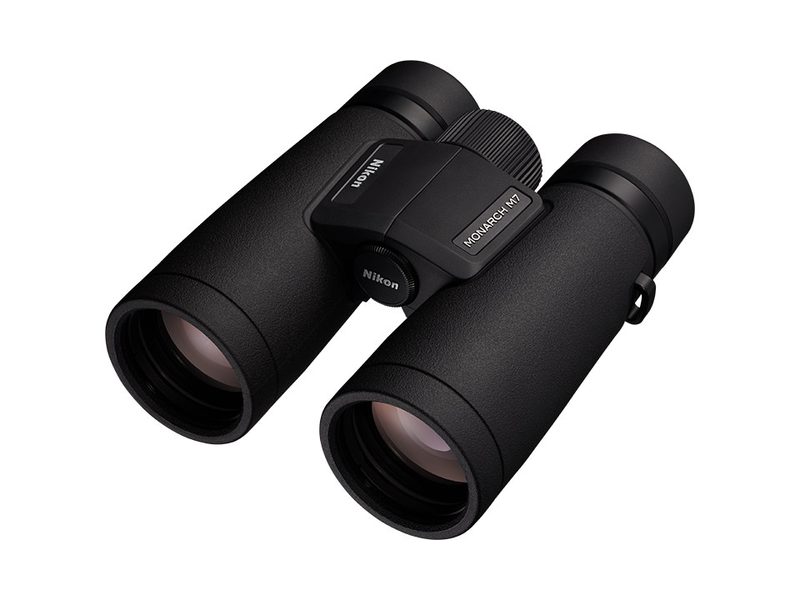
Nikon Monarch M7 10x42 Black Binoculars Bundle with Lens Pen and Cleaning Cloth
A 362 ft field of view at 1,000 yards, 16.5 mm of eye relief, a 24 oz body and an 8.2 ft close focus, listed at $549.95 — Nikon's premium hunting binocular, bundled here with a lens pen and cleaning cloth.
Check price on Amazon ↗Which hunting binoculars are best for thick timber and treestands?
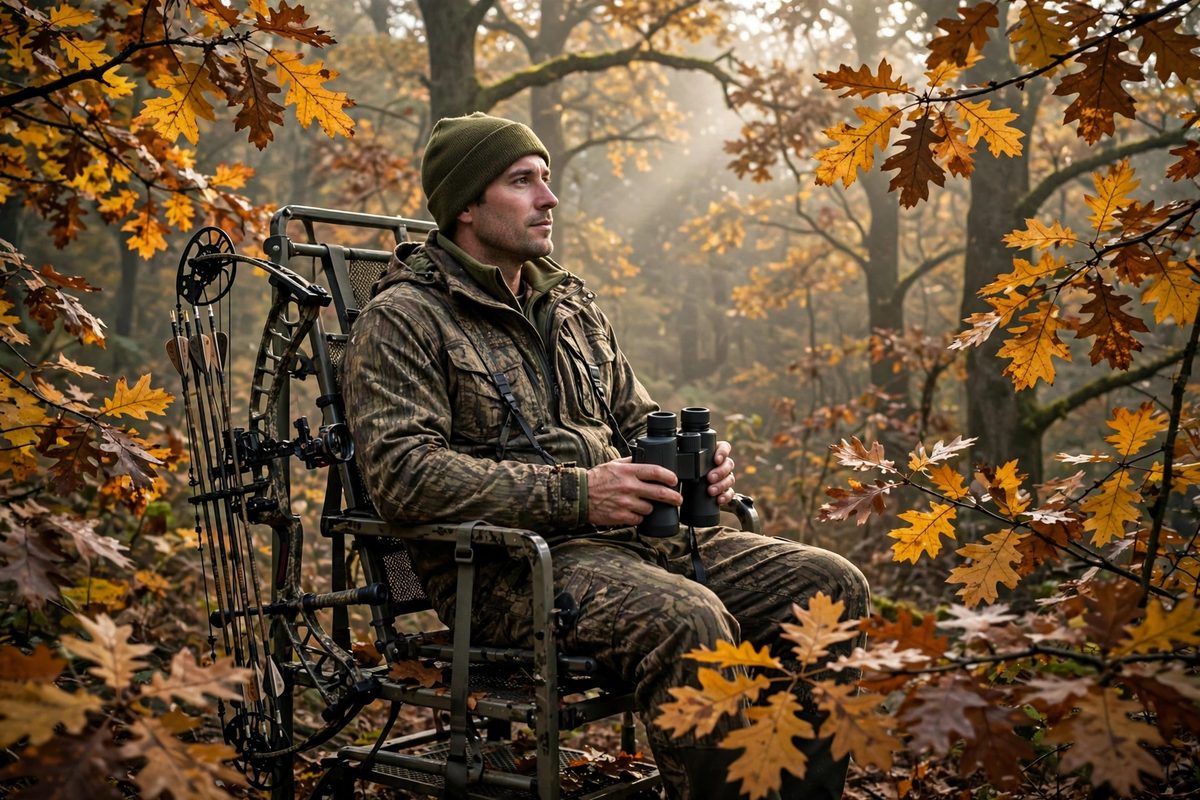
Thick timber and treestands reward a different binocular than open country. Game appears close and fast, often through branches and in poor light, so the priorities are a wide field of view, fast focus and a body that handles well in cold, gloved hands. An 8x42 is often the better tool here, but a bright 10x42 with a wide field of view — like the Leupold BX-2 Alpine HD 10x42, with its 342 ft field of view at 1,000 yards — works well too.
Close focus matters more in timber than most hunters expect. The BX-2 Alpine HD focuses down to 13.5 ft, which lets you pick apart the brush at bow range instead of staring at a blur. The Leupold BX-1 McKenzie HD 10x42, at 22 oz and 5.8 in long with a $199.99 list price, is compact enough to hang comfortably on a chest harness in a treestand without banging against the stand or your bow.
For treestand hunters, the rest of the setup matters as much as the glass: a quiet harness, a lens cloth within reach, and a way to keep the binocular from swinging. Our camping gear guides cover the storage and carry kit that keeps optics quiet and protected in the stand.
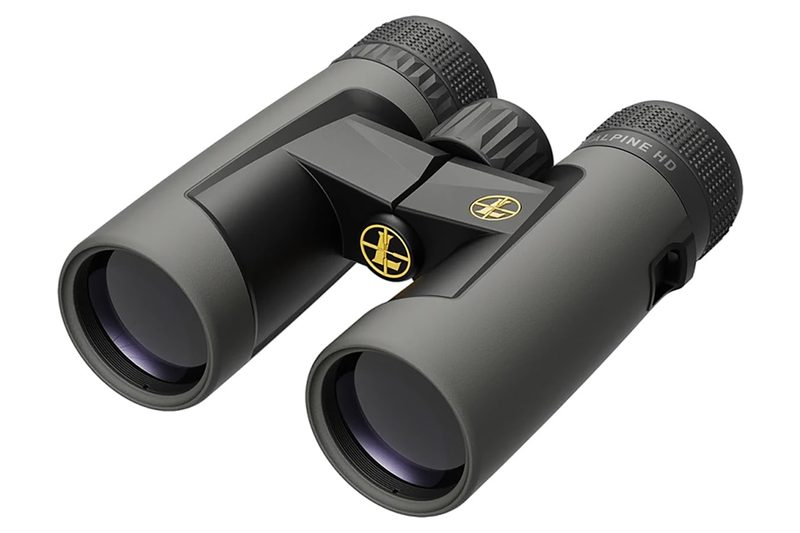
Leupold BX-2 Alpine HD 10x42 Binoculars
Abbe-Koenig prisms in a magnesium body, with a 342 ft field of view, 15 mm of eye relief, a 13.5 ft close focus and a 1 lb 12 oz weight, around $250 — a bright, rugged 10x42 for timber hunting.
Check price on Amazon ↗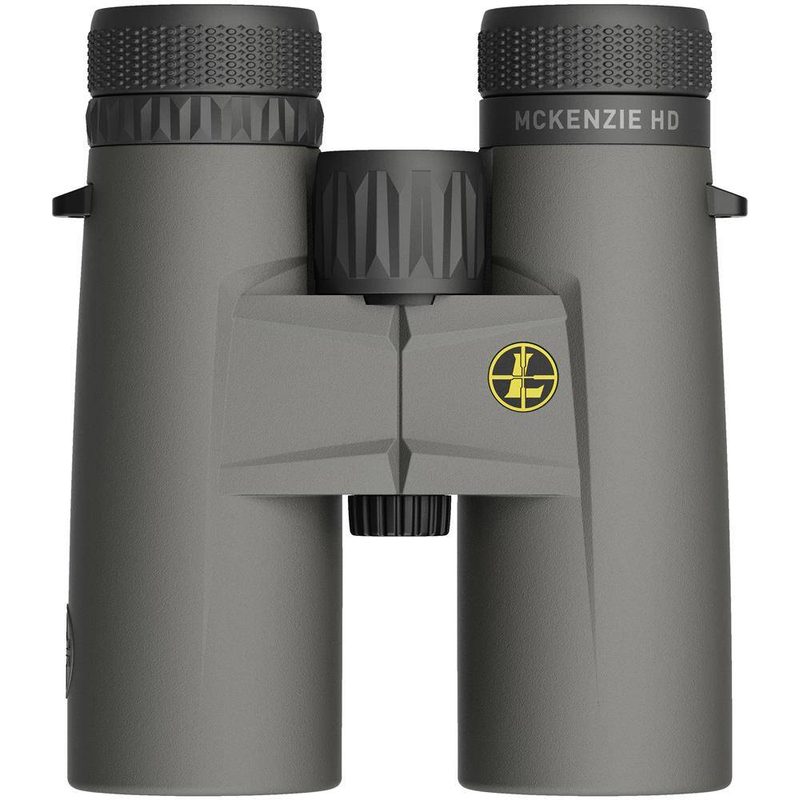
Leupold BX-1 McKenzie HD 10x42 Binoculars
A 10x42 with a $199.99 list price, a 22 oz body, a 5.8 in length and a 6.0-degree field of view — Leupold's most affordable HD hunting binocular, and a natural fit for treestand hunting.
Check price on Amazon ↗What is the lightest hunting binocular that still performs?
The lightest full-size hunting binoculars that still perform well weigh around 21 to 22 oz. The Vortex Diamondback HD 10x42 weighs 21.3 oz, the Leupold BX-1 McKenzie HD 10x42 weighs 22 oz, and the Celestron Nature DX 10x42 weighs 22.2 oz — all light enough to carry on a chest harness all day without noticing them. Below that weight, you are usually looking at compact 32 mm models, which give up low-light performance for the weight saving.
Weight matters because a binocular left in the truck finds nothing. Hunters who climb steep country, cover long miles, or hunt all day from a pack will use a light 10x42 far more than a heavy premium model that stays behind. The Maven C.1 10x42, around $350, is built around exactly this idea — a compact, light body with a 314 ft field of view that carries well on a harness.
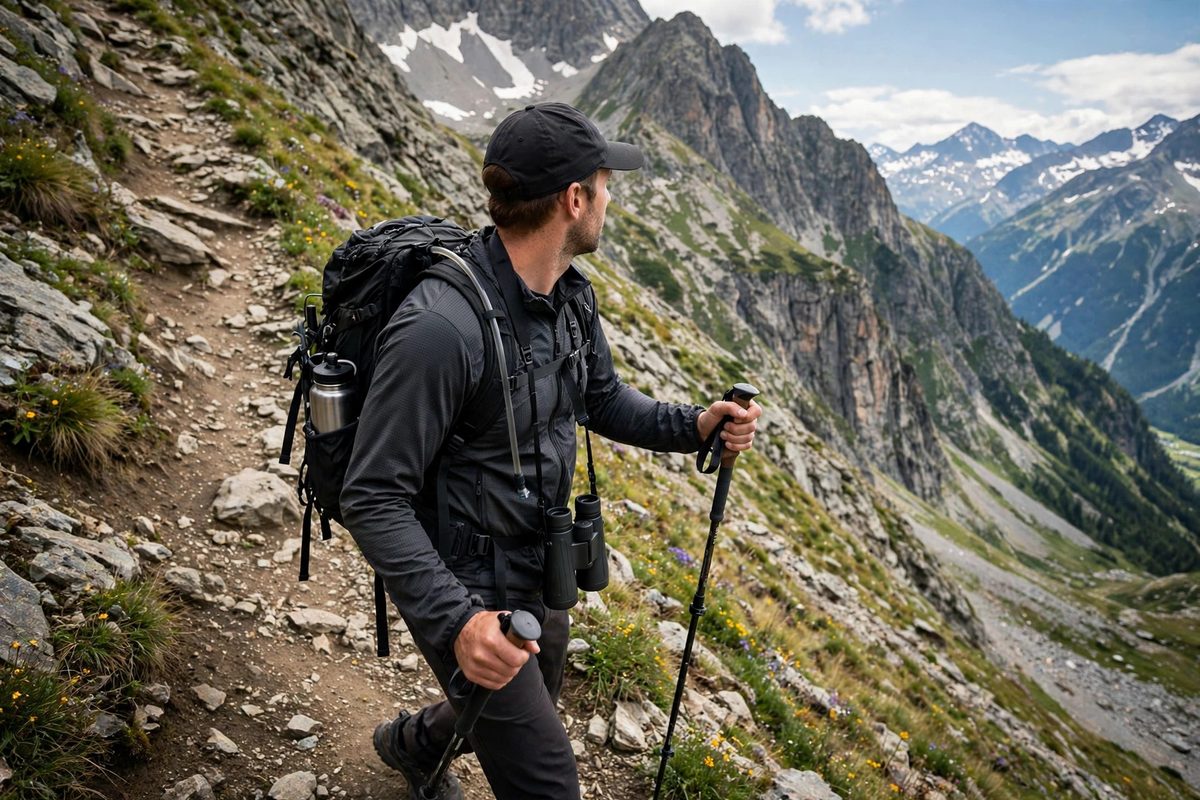
Carry method matters as much as weight. A chest harness keeps the binocular tight to your body, stops it swinging on steep ground, and puts it in your hands in a second. For the rest of your backcountry loadout, see our hiking gear guides and our hiking boot guide — the miles to the glassing point are part of the hunt too.
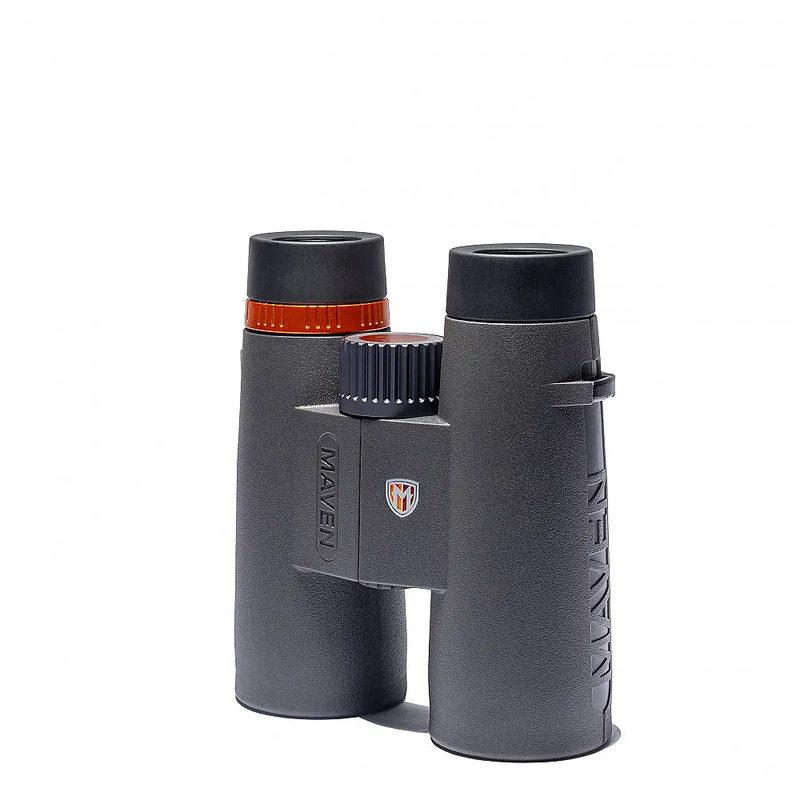
Maven C.1 10x42 Binoculars, Gray/Orange
A 10x42 with a 314 ft field of view, around $350, in a compact grey and orange body — Maven's entry-level hunting binocular, built light for hunters who climb for their glassing.
Check price on Amazon ↗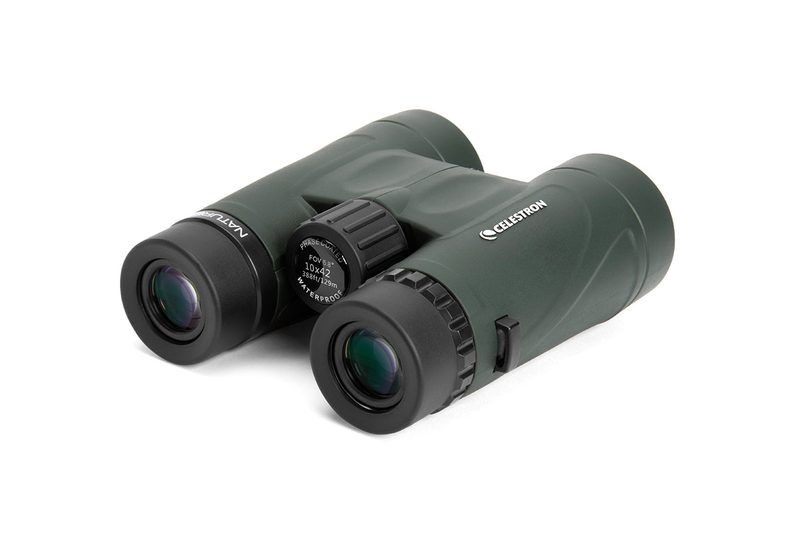
Celestron Nature DX 10x42 Binoculars
A 10x42 with a 304 ft field of view, 14 mm of eye relief and a 22.2 oz body for $169.99 — a light, compact roof-prism binocular that packs easily for backcountry hunts.
Check price on Amazon ↗Which hunting binoculars give the best value under $200?
Under $200, the best value in hunting binoculars is a waterproof, fogproof 10x42 with fully multi-coated glass — and several models in this guide hit that mark. The Burris Droptine 10x42, averaging around $175, and the Bushnell Trophy XLT 10x42 Bone Collector Edition, around $46 to $106, both offer the essentials: a 325 ft field of view on the Trophy XLT, 15.2 mm of eye relief, and a rugged body that survives a season of hard use.
The smart way to spend under $200 is to put the money into glass and sealing, not magnification. A good 10x42 at $150 will outperform a cheap 12x50 at the same price, because the cheaper model's coatings and prisms cannot keep up with its own magnification. The Nikon PROSTAFF P3 10x42, listed at $170 and often found around $97, and the Athlon Talos G2 HD 10x42, around $140 to $150, are both better buys than any budget 12x or 15x binocular.
Finally, remember that the binocular is only part of the setup. A chest harness — included with the Trophy XLT bundle in this section — keeps the binocular ready and protected, and a lens cloth in your pocket keeps the image clear. See all our gear advice in the blog index, and choose the binocular that matches where you hunt, not the one with the biggest numbers on the box.
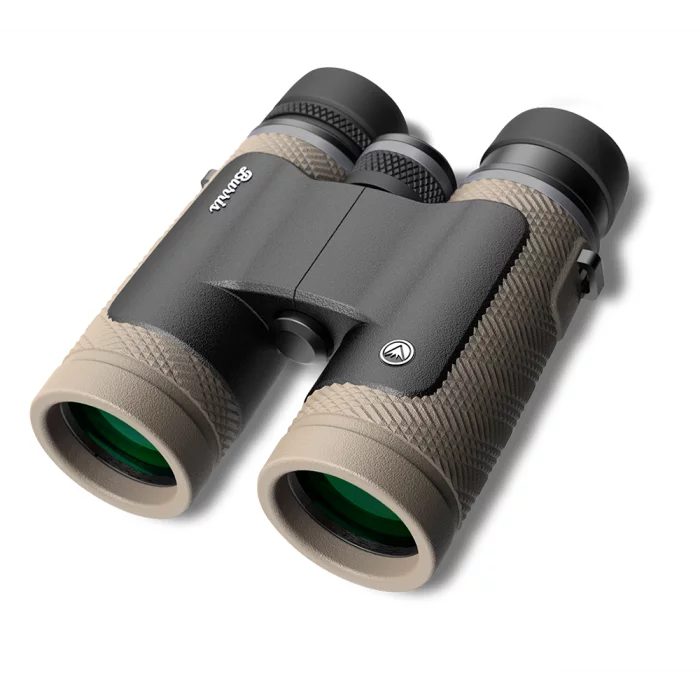
Burris Droptine 10x42 Binoculars
A 10x42 with an average price around $175, in a rugged armoured body with fully multi-coated optics — Burris's value hunting binocular, built for hunters who want solid glass without the premium price.
Check price on Amazon ↗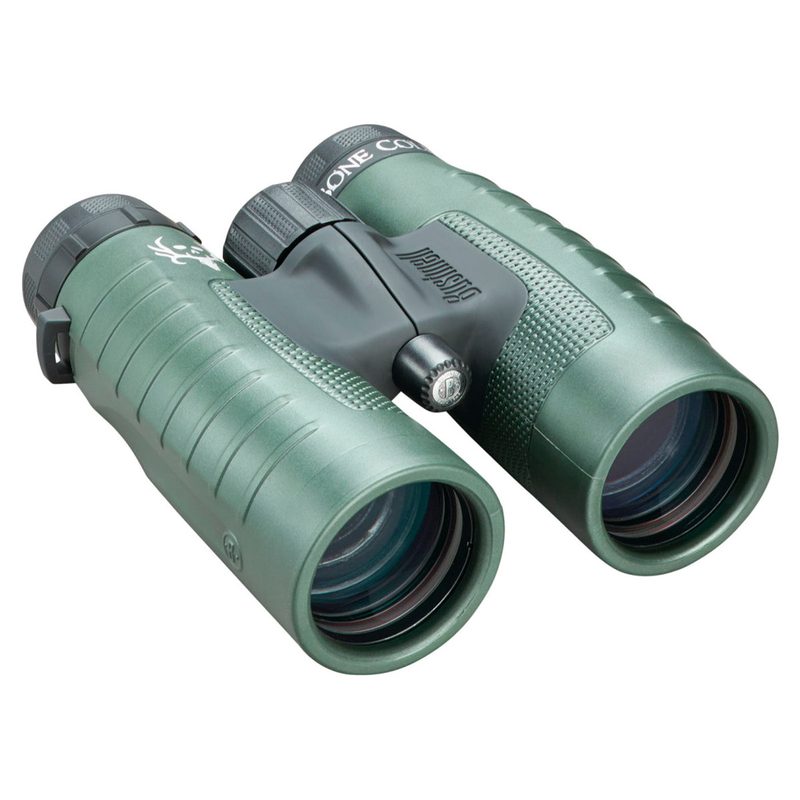
Bushnell Trophy XLT 10x42 Binoculars (Bone Collector Edition) with Deluxe Binocular Harness
A 10x42 with a 325 ft field of view, 15.2 mm of eye relief and a 1.56 lb body, around $46 to $106, bundled here with a deluxe binocular harness — the cheapest way into a usable hunting setup in this guide.
Check price on Amazon ↗Frequently asked questions
What magnification is best for hunting binoculars?
For most hunters, 10x magnification is the best all-round choice: it brings distant animals close enough to judge antlers and body size without the handshake problems of 12x or stronger. Hunters who glass in thick timber, hunt from a treestand, or struggle with a steady hold often prefer 8x, which gives a wider field of view and a steadier image. If you can only own one pair, 10x42 covers the most situations.
Are 10x42 binoculars good for hunting?
Yes — 10x42 is the most popular hunting configuration for good reason. The 10x magnification is strong enough for judging game at distance, and the 42 mm objective lens gathers enough light for dawn and dusk while keeping the binocular light enough to carry all day. Most of the best hunting binoculars sold today are 10x42 models, from budget options around $100 to premium glass near $500.
How much should I spend on hunting binoculars?
A solid hunting binocular starts around $100 to $150, where models like the Celestron Outland X 10x42 and the Vortex Crossfire HD 10x42 deliver fully multi-coated optics and waterproof sealing. The $200 to $350 range — the Vortex Diamondback HD, Leupold BX-2 Alpine HD and Athlon Argos G2 HD — is where image quality, build and warranty step up noticeably. Above $500, the Nikon Monarch M7 and similar premium models add better low-light performance and edge sharpness.
What is the difference between 8x42 and 10x42 binoculars?
The first number is magnification and the second is the objective lens diameter in millimetres, so 8x42 magnifies eight times through a 42 mm lens and 10x42 magnifies ten times through the same size lens. The 10x42 shows more detail at long range but has a narrower field of view and magnifies hand shake more; the 8x42 is steadier, brighter in dim light and easier to use in thick cover. For open country, 10x42 usually wins; for timber and treestands, 8x42 is often the better tool.
Do I need waterproof binoculars for hunting?
Yes. Hunting happens in rain, snow, fog and creek crossings, and a binocular that is not waterproof and nitrogen-purged will fog inside the barrels at the worst moment — usually at first light on a cold morning. Look for models rated waterproof and fogproof, with O-ring seals and a nitrogen or argon fill. Budget models such as the Athlon Talos G2 HD and the Bushnell H2O 10x42 both carry full waterproof and fogproof protection.
What eye relief do I need if I wear glasses while hunting?
Glasses wearers should look for at least 15 mm of eye relief, and 16 mm or more is better. Eye relief is the distance from the eyepiece at which you can still see the full field of view, and short eye relief forces you to press your glasses against the eyecups and lose the edges of the image. The Nikon Monarch M7 10x42 offers 16.5 mm, the Athlon Argos G2 HD 10x42 offers 16.1 mm, and the Celestron Outland X 10x42 offers 18.2 mm — all work well with glasses.
Are Vortex binoculars good for hunting?
Vortex is one of the most popular binocular brands among hunters, and its range covers every price point in this guide — the Crossfire HD 10x42 at around $149, the Diamondback HD 10x42 at around $190 to $240, and the Viper HD 10x42 with a list price of $489.99. Vortex binoculars are known for fully multi-coated optics, waterproof and fogproof construction, and a lifetime warranty that covers accidental damage. For a first serious hunting binocular, the Diamondback HD 10x42 is a widely recommended starting point.
That covers the essentials. Browse our hunting gear for the gear we cover, and see the blog for more buying guides as we add them.
As an Amazon Associate, we earn from qualifying purchases. See our Affiliate Disclosure for how links on this site work.