By the Gandermountains.us team ·
Gandermountains.us is an independent gear guide. We are not affiliated with Gander Mountain, Gander Outdoors, or Camping World, and Gander Mountain is a trademark of its owner. Nothing on this page is sold by or endorsed by the brand. When we name a product below, it is a current alternative from a real manufacturer — not Gander Mountain gear, and we will not pretend otherwise.
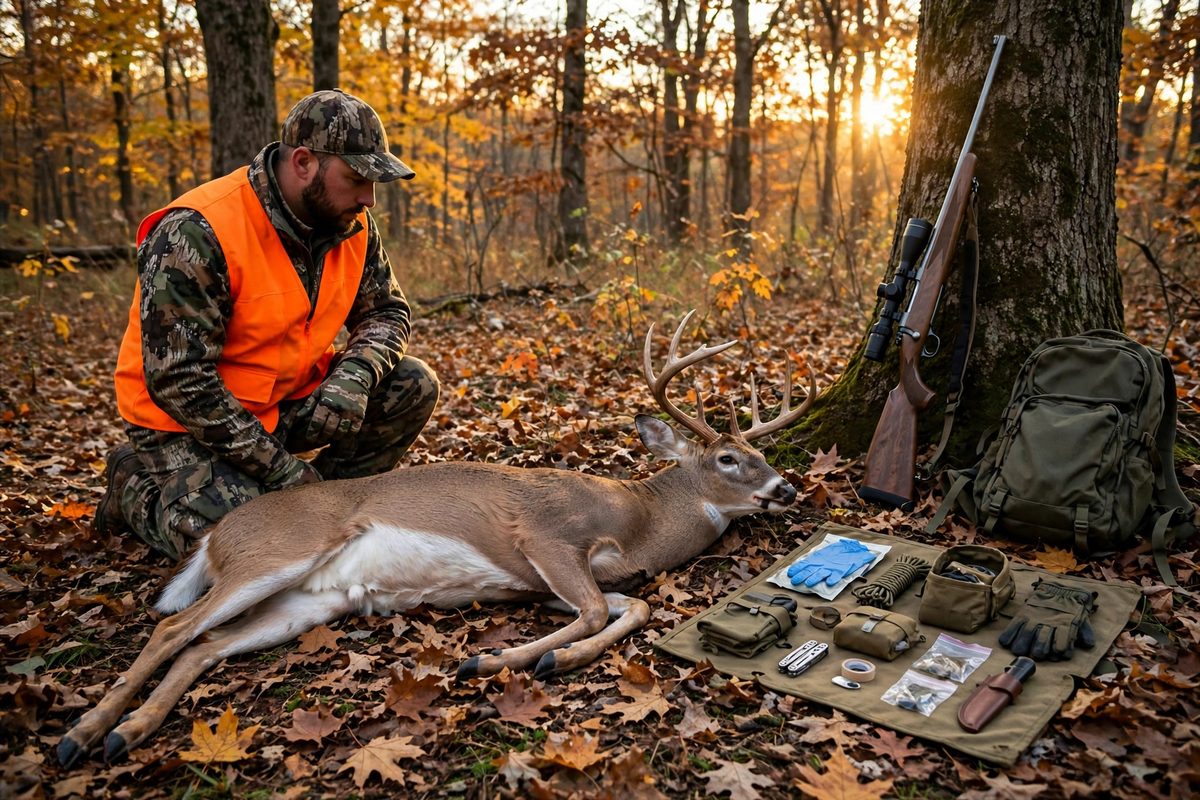
A clean field dressing job is the difference between venison that tastes like the best meat you have ever eaten and meat that spoils before it reaches the freezer. The work itself is simple — open the body cavity, remove the organs without spilling them, and cool the carcass as fast as you can — but the details matter: one nicked stomach or one punctured bladder can taint meat that took a whole season to earn.
This guide explains how to field dress a deer step by step, from the tools to pack and the tag to fill in first, through the cut sequence, removing the organs, avoiding the bladder and scent glands, cooling the carcass below 40°F (4°C), and getting the meat home clean. It also covers chronic wasting disease precautions and what to do with the hide. If you are still building your kit, start with our hunting gear guide and our hunting gear collection — then bring this guide to the field.
Direct answer: To field dress a deer, tag it first, lay it on its back, and make a shallow cut from breastbone to pelvis with a sharp gut-hook knife. Cut the diaphragm, free the windpipe, and roll the organs out without puncturing the stomach, bladder or intestines. Then prop the cavity open and cool the carcass below 40°F (4°C) quickly.
At a glance: how to field dress a deer
| Step | What to do | Why it matters |
|---|---|---|
| 1. Tag first | Fill in and attach the tag before moving the deer | Required by law in most states |
| 2. Position | Lay the deer on its back, head uphill, legs spread | Fluids drain out instead of pooling inside |
| 3. First cut | Gut hook from breastbone to pelvis, skin-deep only | Keeps the blade out of the stomach and intestines |
| 4. Open the chest | Saw the breastbone from the inside out | Keeps bone chips and hair out of the meat |
| 5. Remove organs | Free the windpipe, roll the organs out in one mass | Avoids puncturing the bladder, stomach or intestines |
| 6. Cool fast | Prop the cavity open, get below 40°F (4°C) | Bacteria multiply fastest between 40°F and 140°F |
| 7. Bag the meat | Breathable game bags, never sealed plastic | Meat cools, dries and stays clean and fly-free |
| 8. Transport | Wrap in a tarp, pack the cavity with bagged ice | Keeps the meat clean and cooling on the drive out |
What tools do you need to field dress a deer?
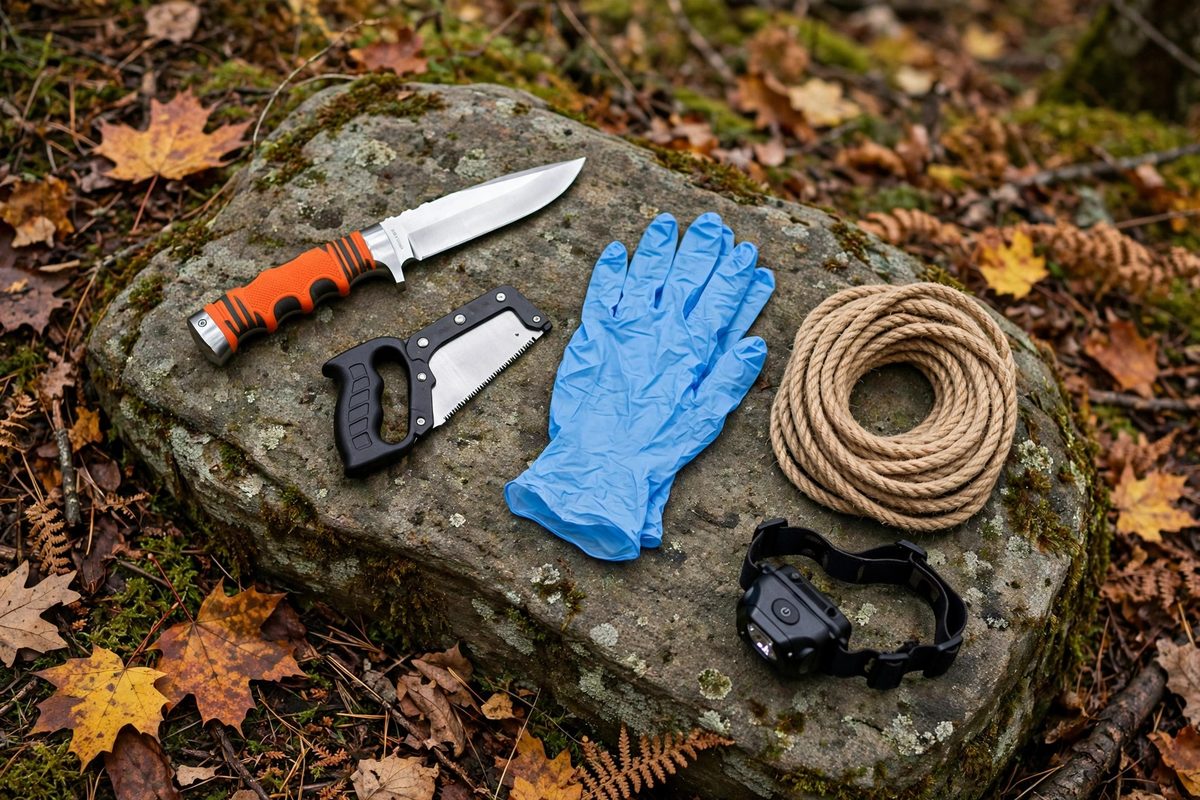
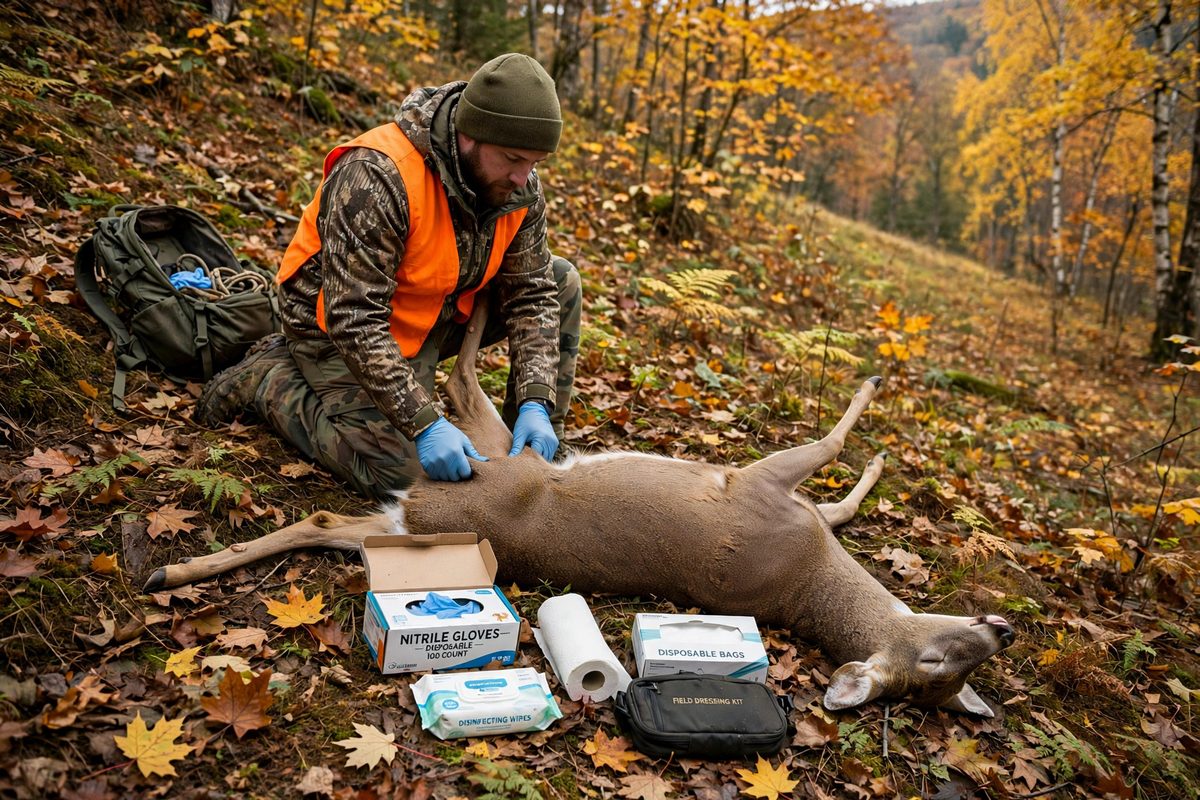
You need only a handful of tools to field dress a deer: a sharp fixed-blade knife with a gut hook, a small bone saw, disposable gloves, a length of rope or paracord, and a headlamp for low light. A gut hook matters more than blade length — it lets you open the belly skin without the point dropping into the stomach. Pack the kit the night before the hunt, because a forgotten knife at the truck means a long walk back or a ruined carcass.
Sharpness is the real tool. A dull knife forces you to push, and pushing is how stomachs and bladders get cut. Sharpen the blade before the season and carry a small sharpener in the kit; a knife that shaves hair on your arm is sharp enough. Gloves keep your hands clean and protect any small cuts from bacteria, and a headlamp keeps both hands free when the work runs past sunset — see our budget headlamp picks if yours is dim or heavy.
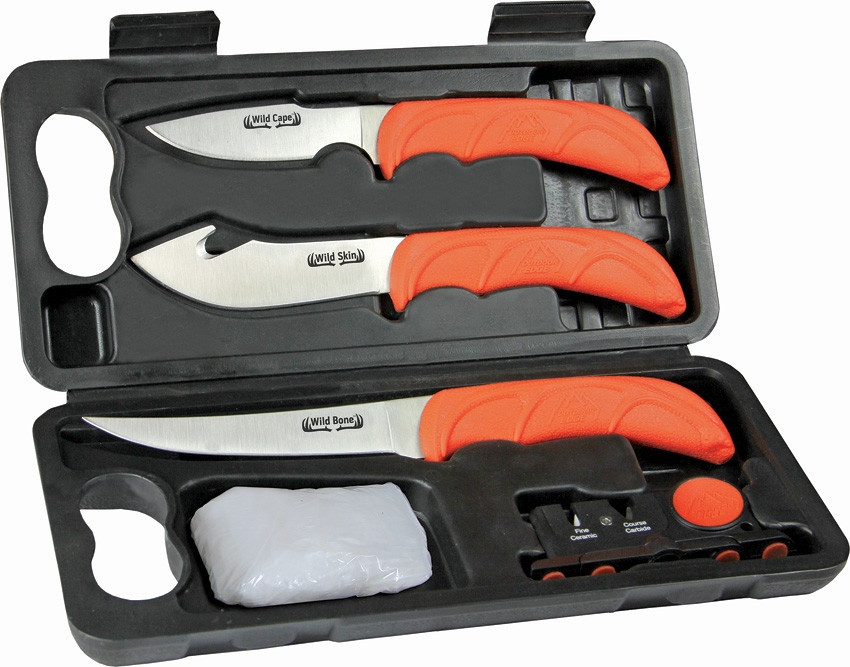
Outdoor Edge WildLite 6-Piece Field to Freezer Game Processing Knife Set
A compact 6-piece field-to-freezer set with a gut-hook skinner, caping knife and boning knife in blaze-orange handles, plus gloves and a two-stage sharpener in a hard case — everything for field dressing in one grab-and-go kit.
Check price on Amazon ↗What should you do first after recovering a deer?
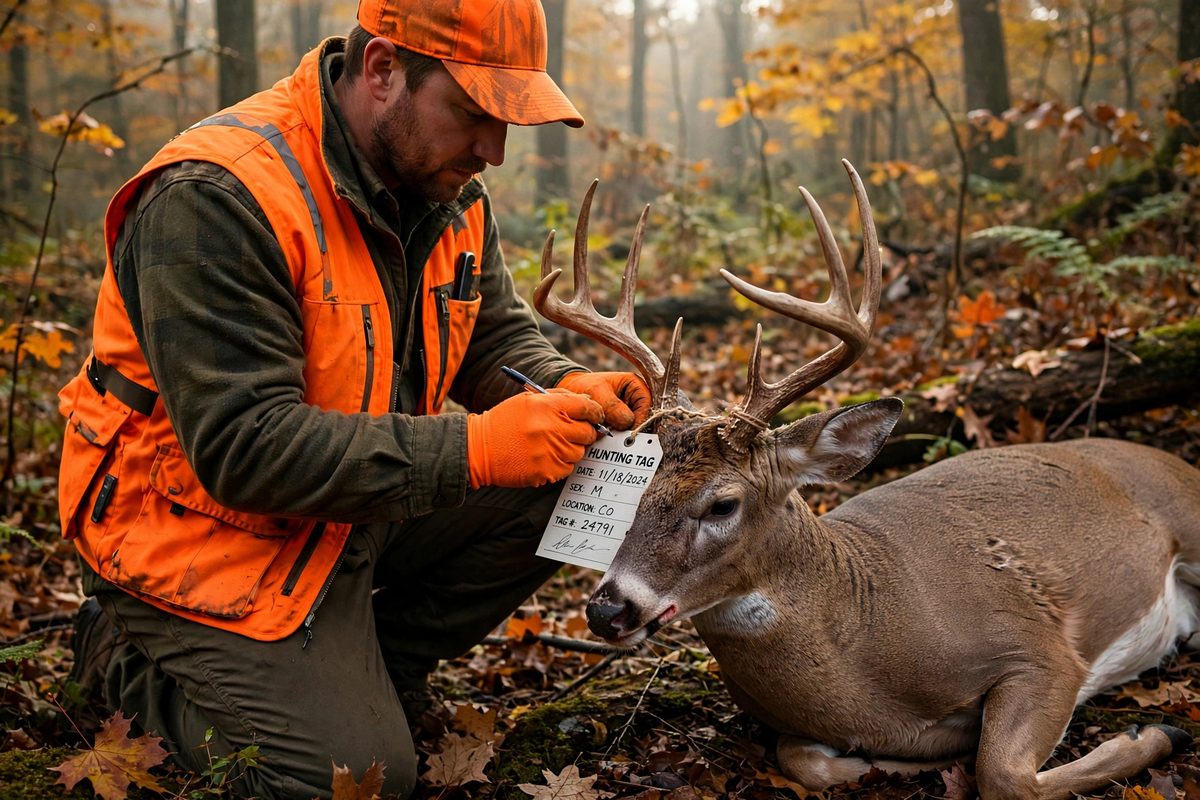
Tag the deer before you move it or start cutting. In most states the tag must be filled in and attached immediately after recovery, and moving an untagged deer can mean a fine even when the hunt itself was legal. Fill in the date, time and county, attach the tag to the antler or a leg as your state requires, and take a photo of the tag and the deer for your records before the work begins.
Once the deer is tagged, confirm it is dead before you kneel beside it — touch the eye with a stick or the tip of a knife and watch for any blink or flinch. Then unload your firearm or bow and set it aside, out of the way of the work area. This is also the moment to note the location and the time: if the deer ran far or the weather is warm, the clock on meat quality is already running.
How do you position a deer for field dressing?
Lay the deer on its back with the head uphill and the hind legs spread. A gentle slope lets fluids drain away from the chest cavity instead of pooling inside it, and the uphill head keeps the windpipe and oesophagus draining downward when you free them later. If the ground is flat, roll the deer slightly to one side while you work, or prop the downhill side with a log so the cavity drains.
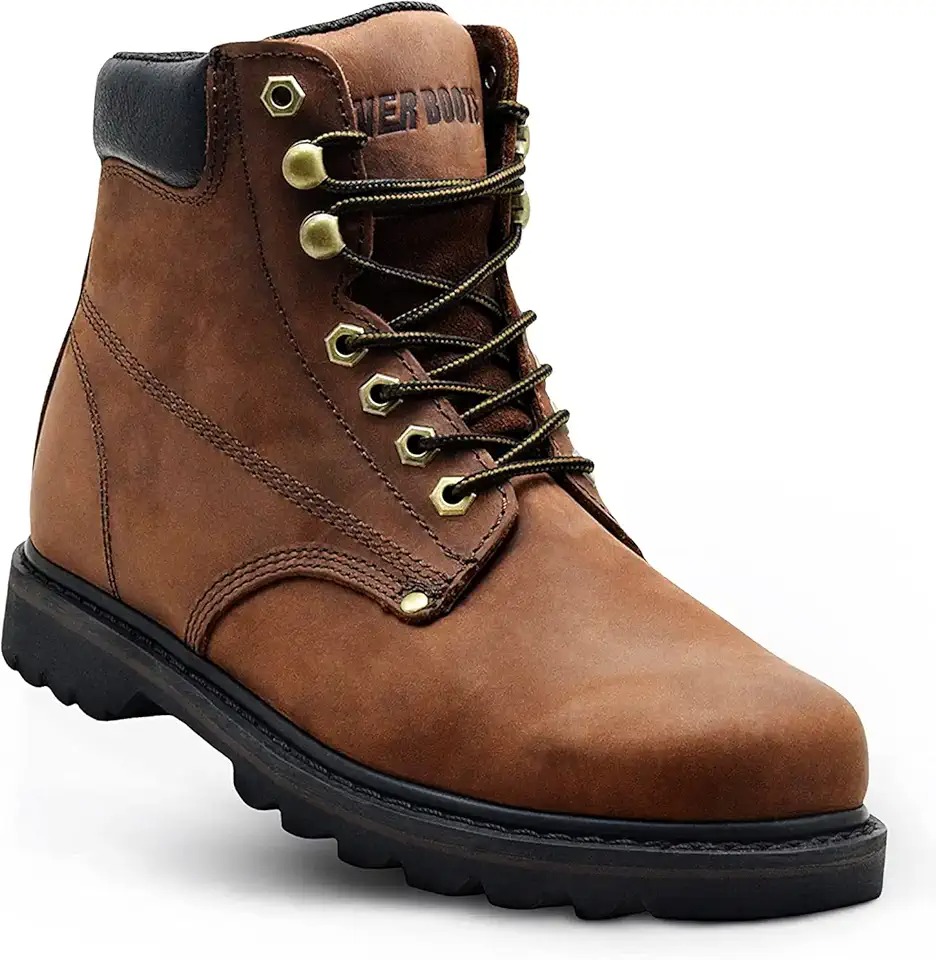
Spread the hind legs and tie them apart with rope or paracord to nearby saplings, or have a hunting partner hold them. A deer that rolls onto its side halfway through the job spills stomach contents across meat you wanted to keep. Clear leaves and sticks from under the deer first — a clean work surface matters, and a tarp underneath the carcass keeps dirt out of the cavity. Good boots with grip help on wet slopes; our hiking boot guide explains what to look for in rough, muddy ground.
How do you make the first cut when field dressing a deer?
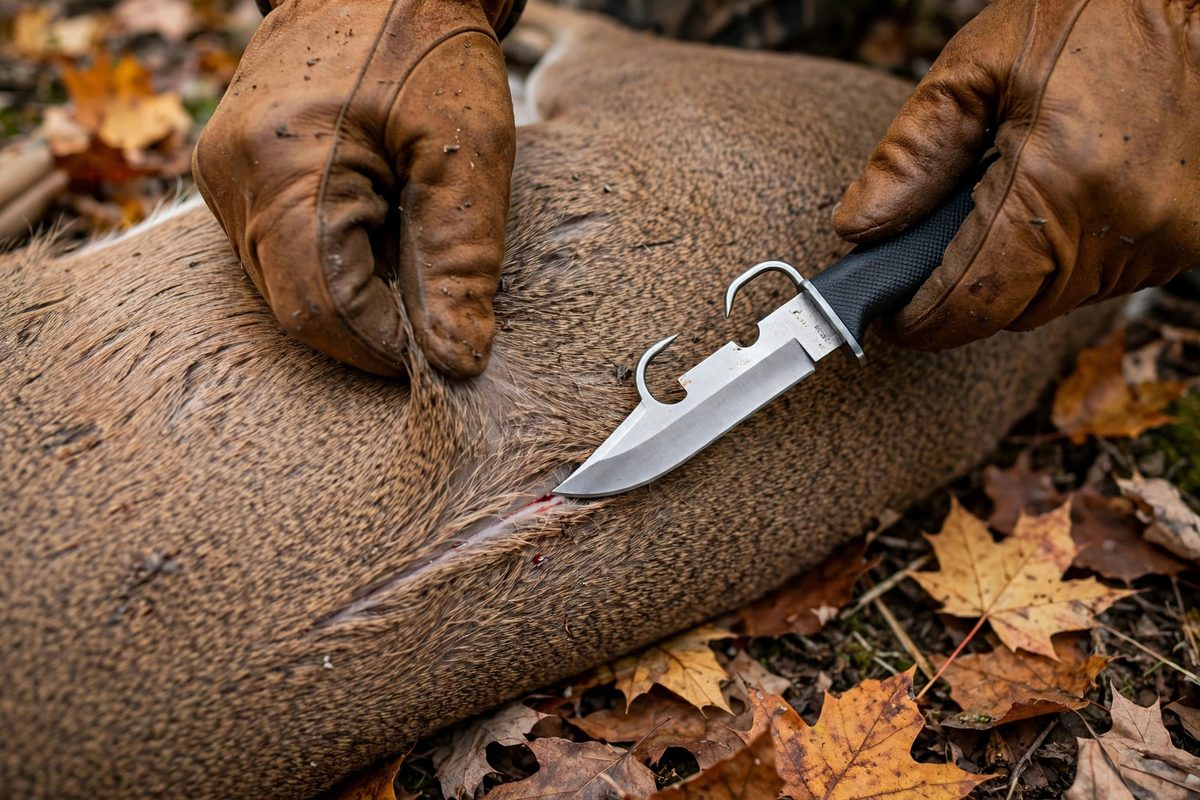
Start the cut with the gut hook at the base of the breastbone and draw it toward the pelvis, cutting only skin deep. The gut hook's rounded tip rides under the skin while the edge cuts upward, so the point cannot drop into the stomach or intestines below. Use short, controlled strokes and let the blade do the work — if you are forcing it, the blade is dull or the angle is wrong.
Cut around the genitals and the anus, freeing them with a shallow circle so the whole lower tract can be pulled out with the organs later. Keep the cut shallow around the belly: the stomach wall lies just under the skin, and a deep first cut is the most common way beginners spoil meat. Around the chest, cut through the skin and the thin muscle layer only, then stop — the bone saw takes over from here.
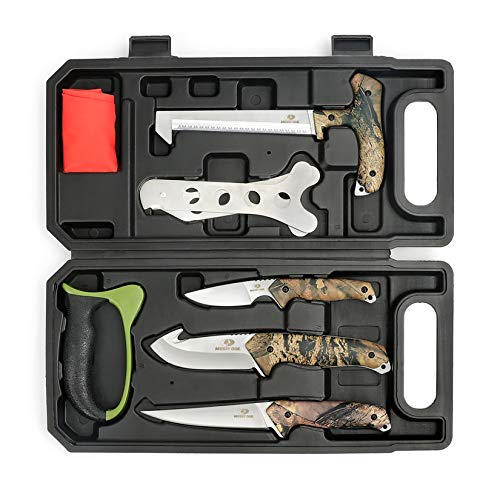
Mossy Oak Hunting Field Dressing Kit, 8-Piece Portable Butcher Game Processor Set
An 8-piece field dressing kit with camo-handled gut-hook skinner, caping and boning knives, a wood and bone saw, brisket spreader, sharpener and gloves in a hard carry case — a complete kit for opening and processing a deer in the field.
Check price on Amazon ↗How do you open the chest cavity of a deer?
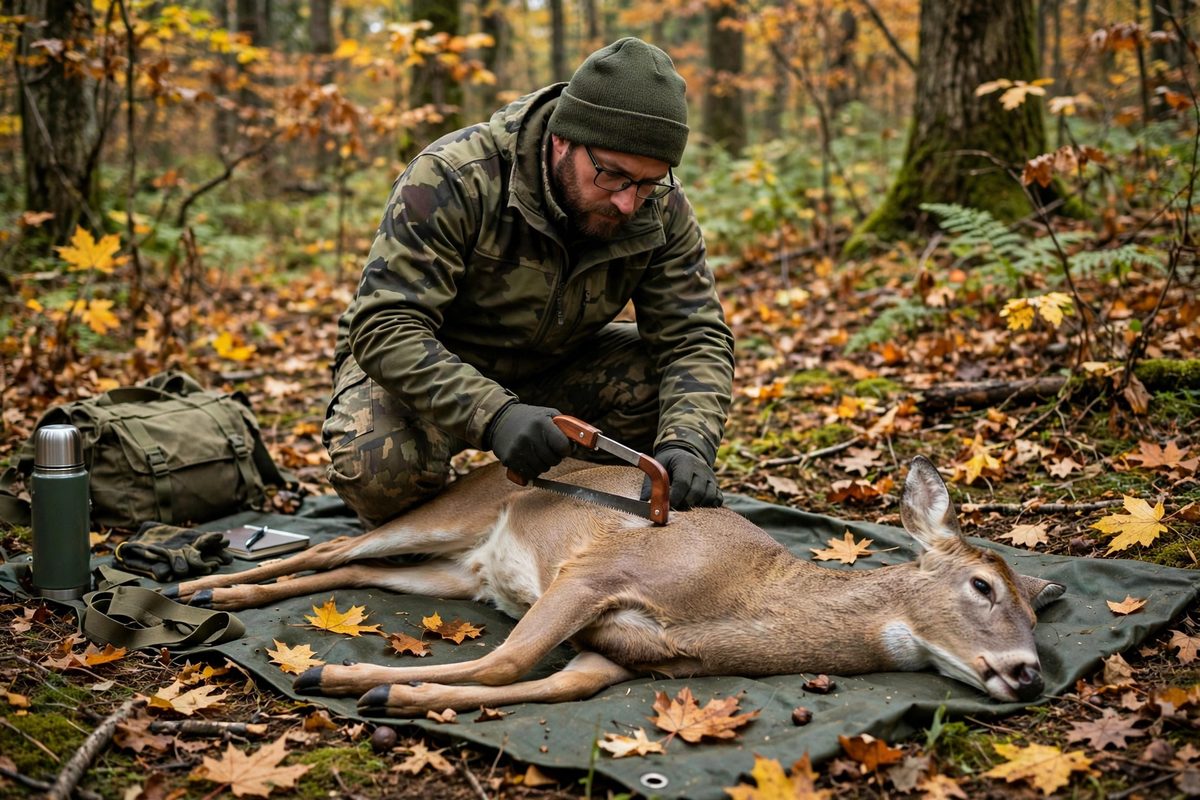
Open the chest by sawing through the breastbone (sternum) from the inside out. Slide the saw under the breastbone, teeth facing outward, and cut upward through the bone so the blade moves away from the organs. Sawing from the outside in drives bone chips and hair into the cavity; cutting from the inside keeps the meat clean and gives you a clear view of what you are doing.
Once the breastbone is split, spread the ribs apart to reach the diaphragm — the thin sheet of muscle that separates the chest from the belly. Cut the diaphragm free around its edges where it meets the ribs, working carefully near the spine. With the diaphragm cut, you can reach up into the chest to free the windpipe and the oesophagus, which is the next step.
How do you remove the organs without spoiling the meat?
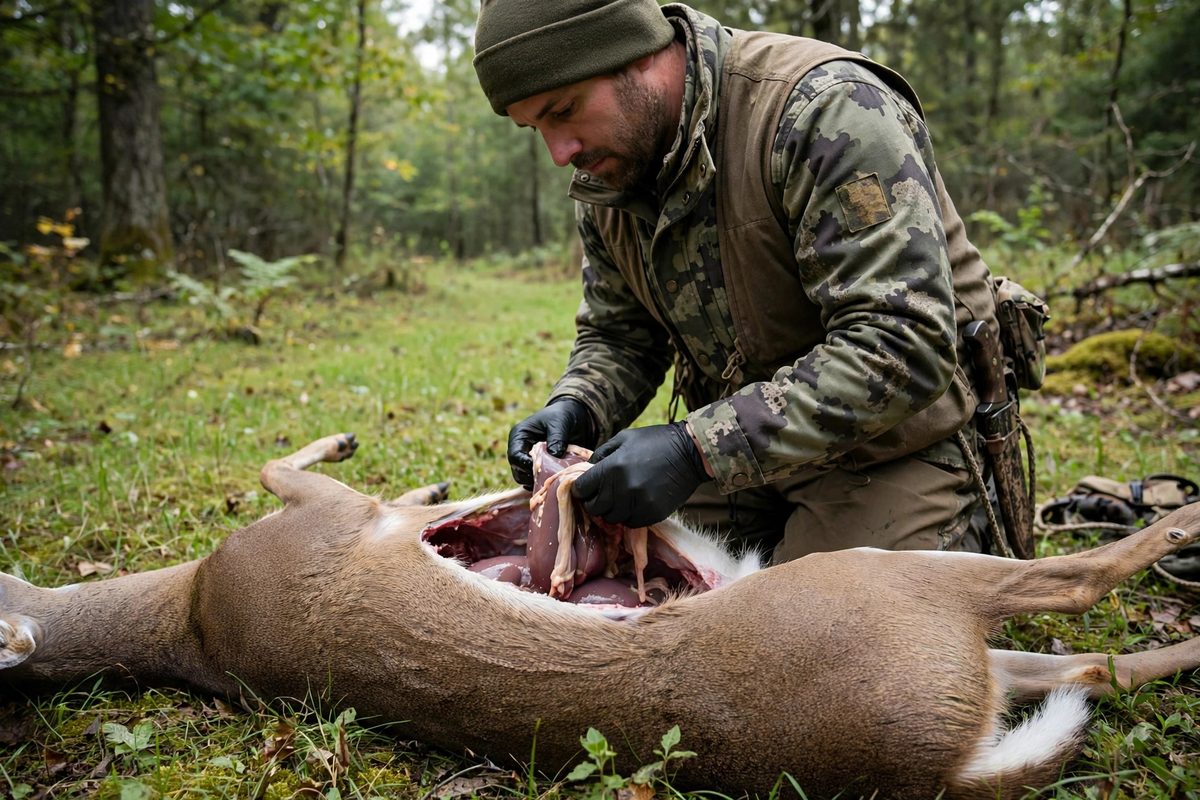
Free the windpipe and oesophagus high in the chest, then pull them down while you roll the organs out toward the pelvis in one connected mass. The lungs, heart, liver and stomach come out together if you keep them attached — cut the few remaining attachments at the diaphragm and around the pelvis rather than pulling hard. Roll the deer onto its side and let gravity help the organs slide out onto the ground.
The whole job is about what you do not cut: never puncture the stomach, the intestines or the bladder, and keep the knife away from the scent glands on the inside of the hind legs. If the bladder is full, lift it out gently with the organs — do not squeeze it. Check the liver as it comes out: a healthy liver is dark red-brown and smooth, while spots, abscesses or a bad smell are reasons to keep the meat separate and ask a processor or wildlife agency for advice. Save the heart and liver if you eat them; they are the first organs to chill and the easiest to carry out.
How do you cool the carcass and handle CWD precautions?
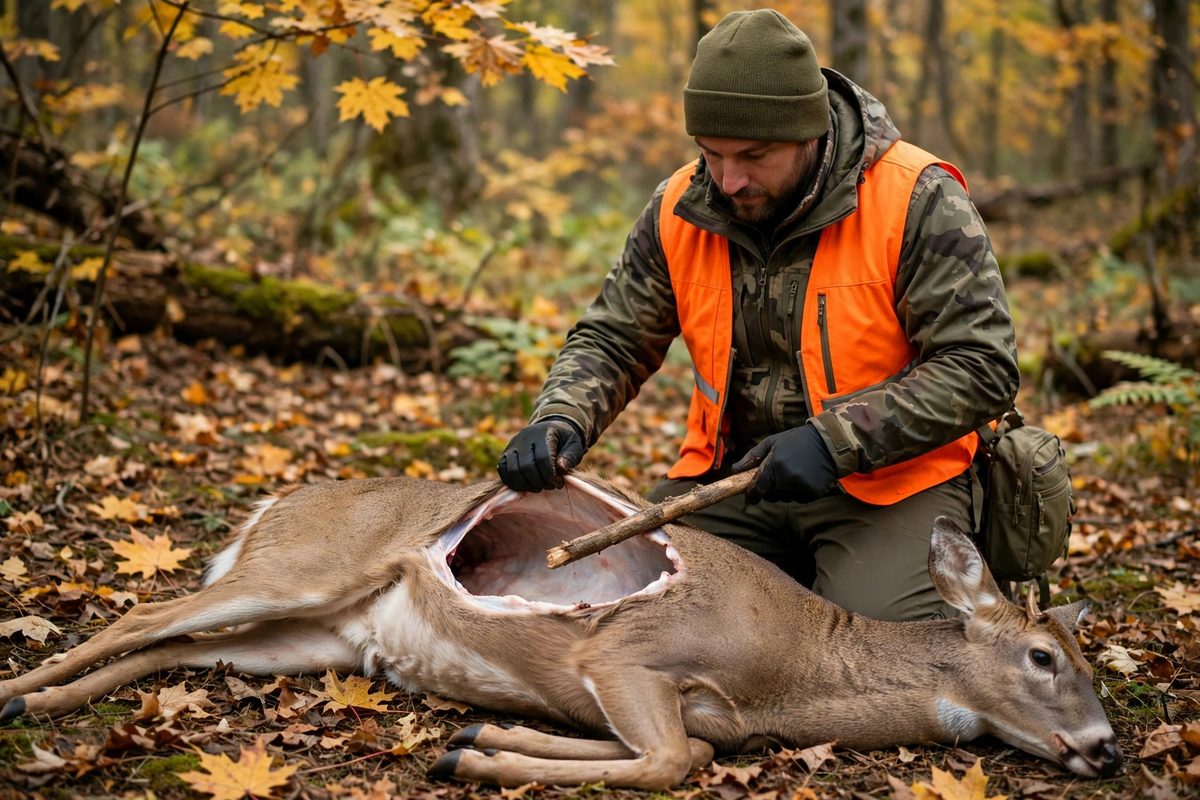
Cool the carcass below 40°F (4°C) as fast as you can, because bacteria multiply fastest between 40°F and 140°F. Prop the chest cavity open with a clean stick so air moves through it, and hang the deer in the shade with good airflow if you are not moving it right away. In warm weather above 50°F, do not hang a whole deer for hours — quarter it, bag the meat and get it on ice, because a whole carcass cools very slowly from the inside out.
Chronic wasting disease (CWD) changes how you handle the carcass in many states. CWD is a fatal prion disease of deer, elk and moose caused by misfolded proteins called prions, and it spreads through contact with infected animals and contaminated ground. Many states require the head to be submitted for CWD testing in management zones, and several ban moving a whole carcass, brain or spinal tissue across state lines. Check your state wildlife agency's CWD rules before the season, wear gloves, avoid cutting through the spine or brain, and do not eat meat from an animal that tests positive.
How should you bag and protect the meat after field dressing?
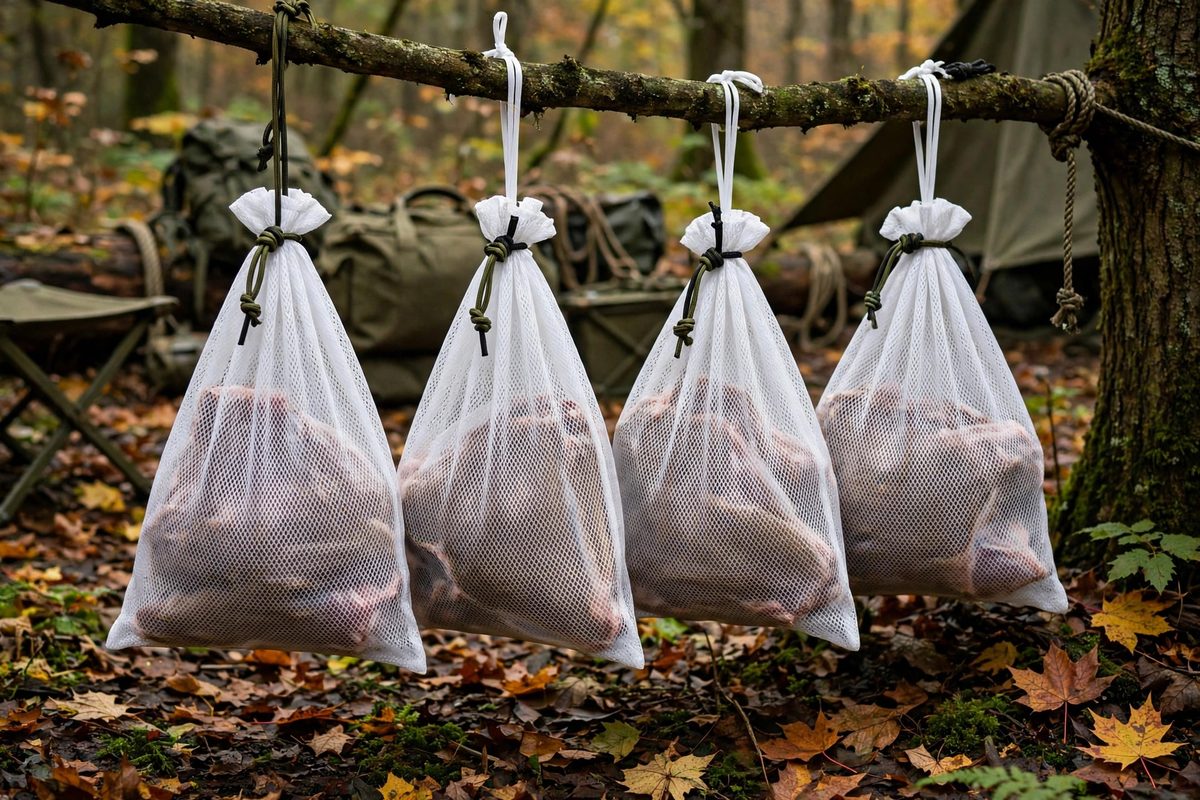
Bag the meat in breathable game bags as soon as it is cut, and never use plastic bags or a sealed container for warm meat. Game bags let air move around the meat so it cools and forms a dry outer layer, while keeping flies, dirt and leaves off. Plastic traps heat and moisture, and warm meat sealed in plastic spoils faster than meat left open to the air.
If you are quartering in the field, bag each quarter separately so the bags hang and cool evenly, and tie the drawstrings tight. Hang the bags in the shade with space between them — bags touching each other trap heat. On the walk out, keep the bags off the ground and out of the sun, and get them into a cooler with ice as soon as you reach the truck. See more field-tested gear ideas in our blog index and our apparel picks for the layers that keep you warm while the meat cools.
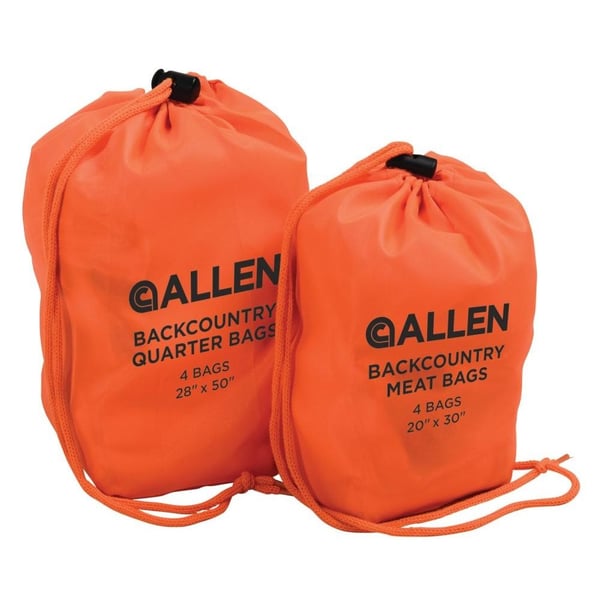
Allen Company Backcountry Quarter Bags, 4-Pack, 28 x 50 Inches
Four heavy-duty, breathable, reusable quarter bags with drawstring closures and a storage pouch, sized 28 by 50 inches for deer quarters — they keep meat clean, let it breathe and keep flies off on the pack out.
Check price on Amazon ↗How do you transport a field-dressed deer?
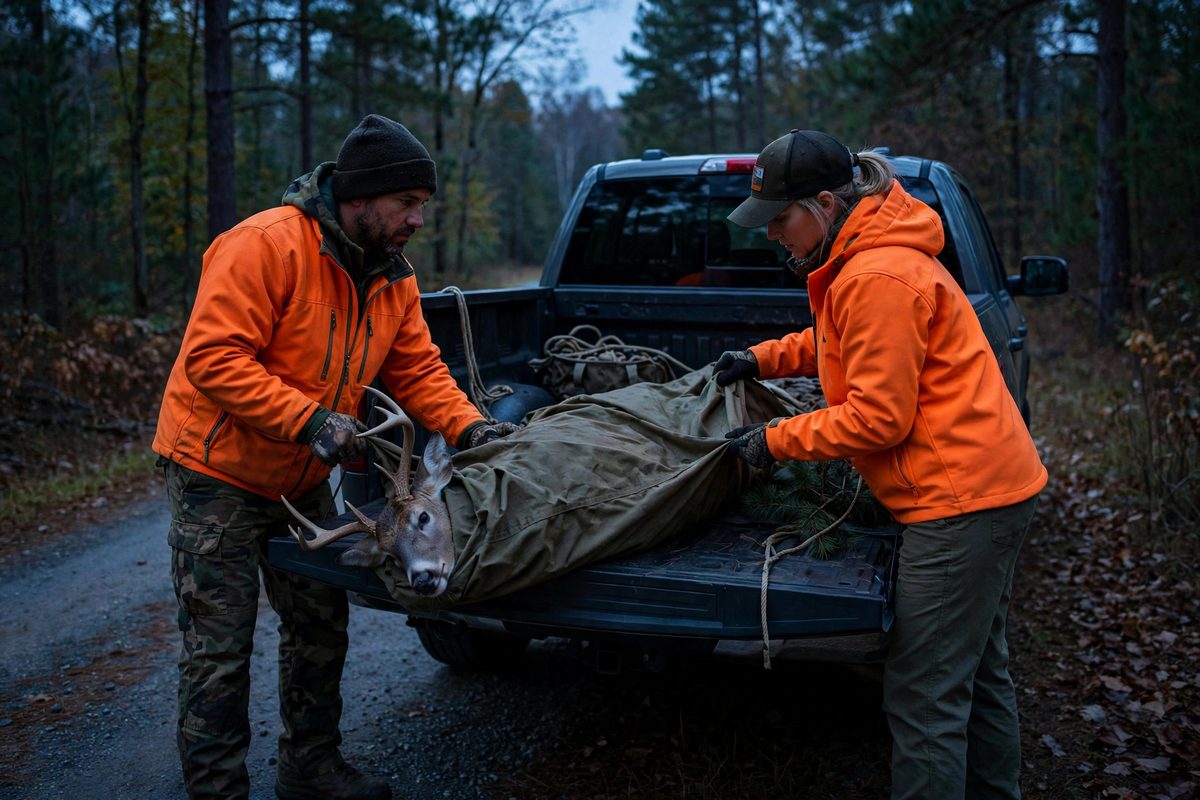
Wrap the field-dressed deer in a clean tarp for the ride out, and keep it out of the sun. A tarp keeps dirt, road dust and flies off the meat and keeps the truck bed clean, and it is required in some states where an exposed carcass on a public road can draw a fine. Lay the deer on its back in the truck bed so any remaining fluids drain out of the cavity rather than pooling inside it.
Drive straight to a processor or to cold storage — do not stop for errands with a warm deer in the truck. If the drive is long, pack bagged ice into the body cavity before you leave; it cools the meat from the inside, where it matters most. A deer that arrives at the processor warm and dirty costs you meat, because the processor has to trim away everything that touched dirt or spoiled.
What do you do with the hide, and how do you clean up?
Skin the deer as soon as practical after field dressing, working the hide off with short knife strokes while pulling it away from the meat. A hide left on a warm carcass holds heat in and slows cooling, so if you are keeping the hide, take it off at camp rather than leaving it until the processor. Salt the flesh side generously the same day if you plan to keep or sell it, and keep it cool and dry — a salted hide keeps, an unsalted one rots.
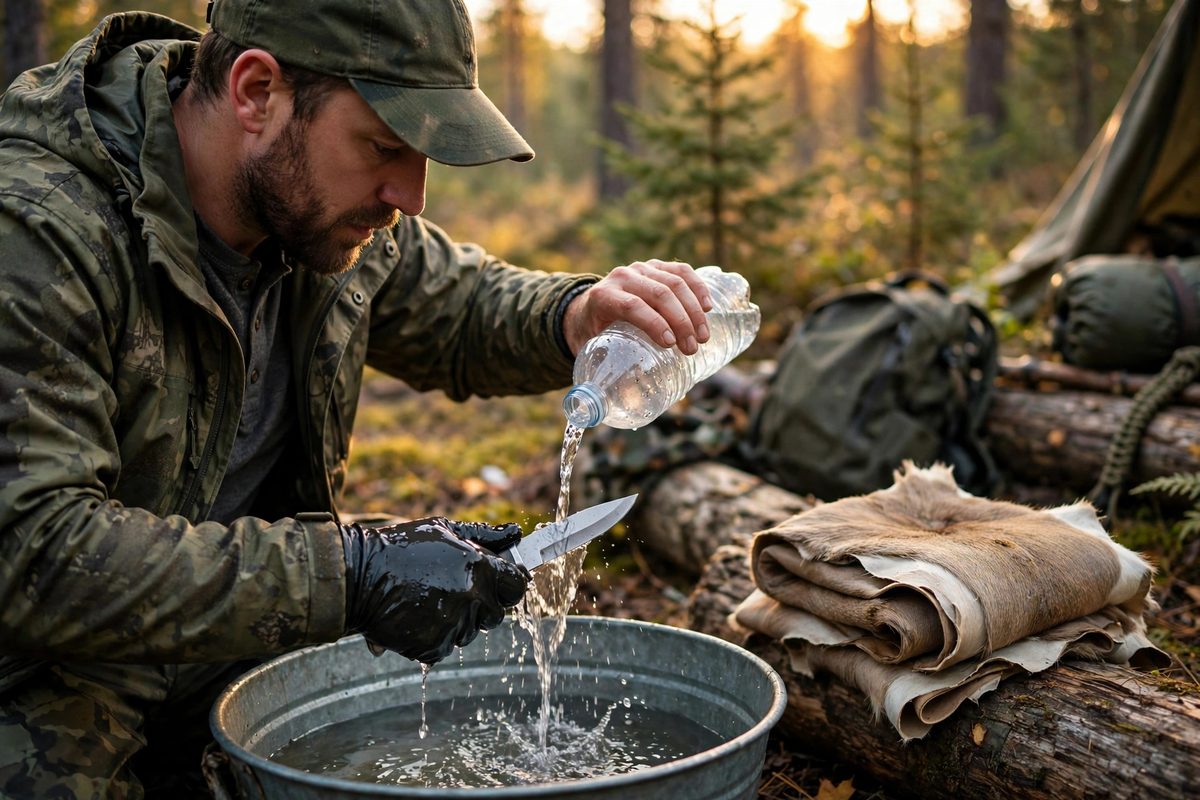
Clean up before you leave the site: wash your hands and tools with clean water and soap, or at least rinse them well, and wipe the knife dry before it goes back in its sheath. Bury the gut pile or leave it where the law allows — in many areas the remains feed scavengers, but some CWD zones require the remains to stay where the deer fell, so check the local rules. Pack out your gloves, wipes and any rubbish; the next hunter should find the spot as clean as you found it.
Frequently asked questions
Do I have to tag a deer before field dressing it?
In most states, yes — the deer must be tagged immediately after recovery, before you move it or start field dressing. Tagging rules, seasons and reporting requirements vary by state, so check your state wildlife agency's rules before the season and carry your tag and a pen in your pack.
How soon after the shot should I field dress a deer?
Start as soon as you have recovered the deer and tagged it — ideally within an hour of the shot, and sooner in warm weather. Bacteria multiply fastest between 40°F and 140°F (4°C and 60°C), so every hour the organs stay inside a warm carcass in warm weather shortens the meat's life. In cold weather below 40°F, you have more time, but do not leave it overnight.
What happens if I puncture the stomach or intestines?
If the stomach or intestines are nicked, rinse the cavity with clean water as soon as you can and trim away any meat that touched stomach contents. A small puncture does not ruin the whole deer, but contaminated meat must be cut away generously — do not try to wash it and keep it. Keep the bladder intact throughout; if urine spills, rinse and trim the affected meat.
Can I transport a whole field-dressed deer across state lines?
Yes, in most cases — but check your state's rules first. Many states require the carcass to be quartered or boned out before it leaves a CWD management zone, and several states ban bringing a whole carcass, brain or spinal tissue across state lines. When in doubt, bone the meat out in the field and leave the spine and head behind where the law allows.
What is chronic wasting disease (CWD) and should I worry about it?
Chronic wasting disease is a fatal prion disease of deer, elk and moose that is spreading across North America. It does not affect the meat's taste, and there is no confirmed case of CWD passing to people, but health agencies advise against eating meat from a CWD-positive animal. Many states require testing in CWD zones — submit the head for testing where required and wait for results before eating the meat.
How long can a field-dressed deer hang before it spoils?
A field-dressed deer still needs cold: the cavity must cool below 40°F (4°C) as fast as possible. Prop the cavity open with a stick, hang the deer in the shade with good airflow, or pack the cavity with bagged ice. In warm weather, quarter the deer and get the meat into game bags and a cooler with ice within a few hours — a whole carcass cools slowly from the inside.
What is the minimum gear I need to field dress a deer?
You do not need a big kit: a sharp fixed-blade knife with a gut hook, a small bone saw, disposable gloves, a length of rope or paracord, and a headlamp cover almost every situation. A compact field dressing kit that holds the knife, saw, gloves and sharpener in one case is the simplest way to make sure nothing gets left behind at the truck.
Is the deer hide worth keeping?
Yes — the hide has value if it is handled well. Skin the deer as soon as practical, salt the flesh side generously if you plan to keep or sell it, and keep it cool and dry. In many areas, processors and taxidermists buy or accept hides, and some states run hide-collection programs. A hide left on a warm carcass, or left to rot, is worth nothing.
That covers the essentials. Browse our hunting gear for the gear we cover, and see the blog for more buying guides as we add them.
As an Amazon Associate, we earn from qualifying purchases. See our Affiliate Disclosure for how links on this site work.